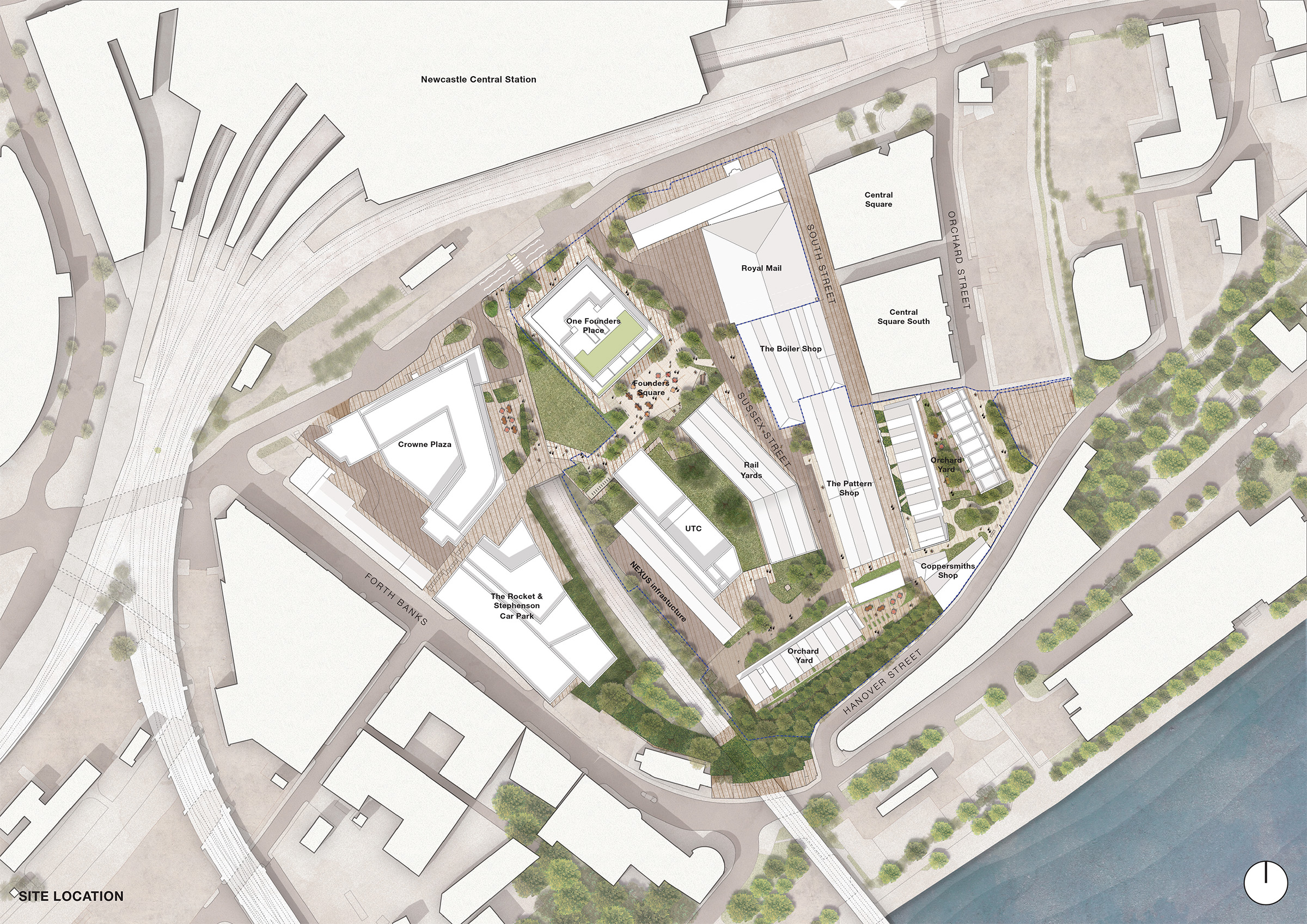
One Founders Place is a landmark office development within the emerging Founders Place masterplan which regenerates a historically significant site into a vibrant, mixed-use urban district celebrating Newcastle’s industrial heritage while creating a sustainable, thriving community for the future.
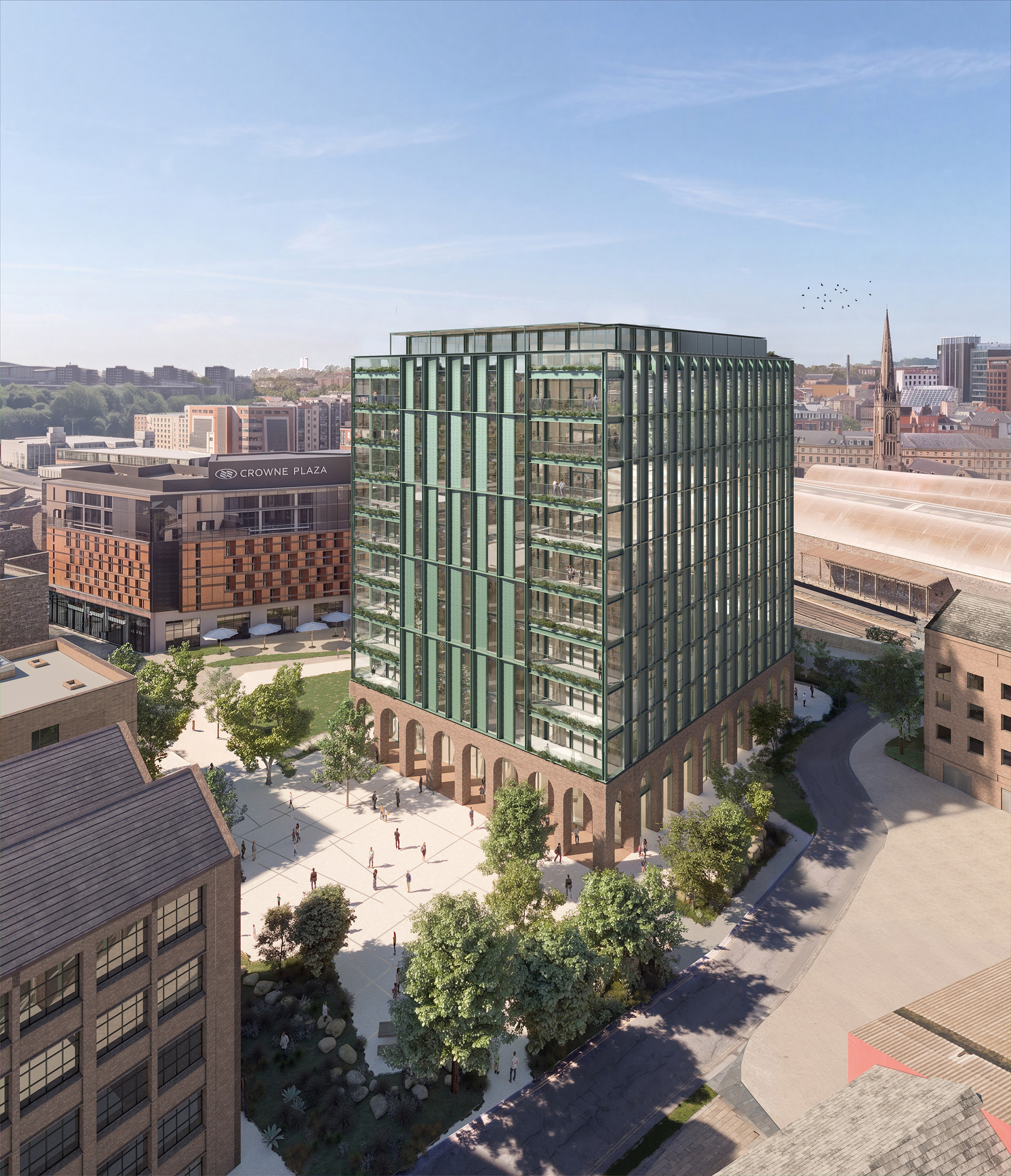
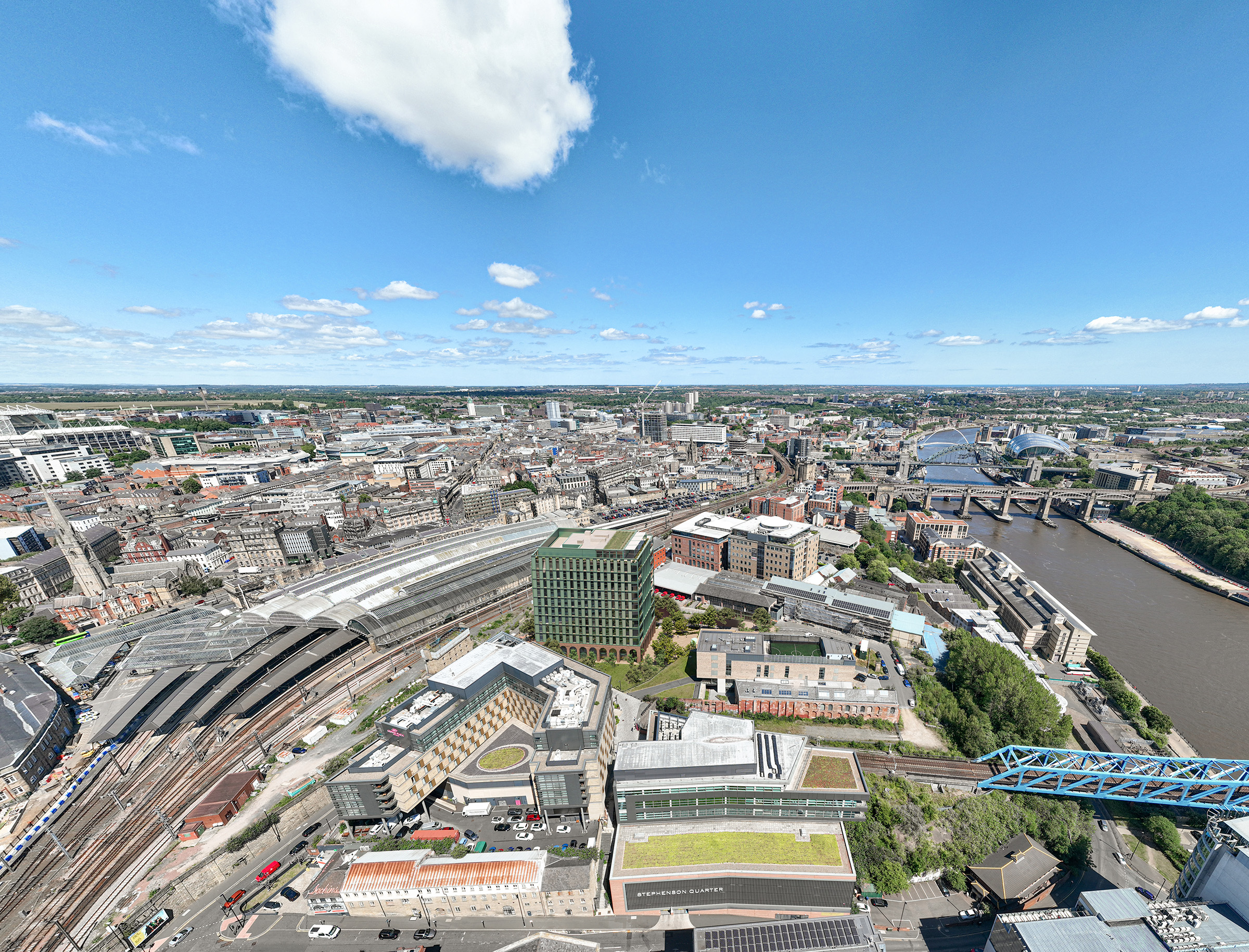
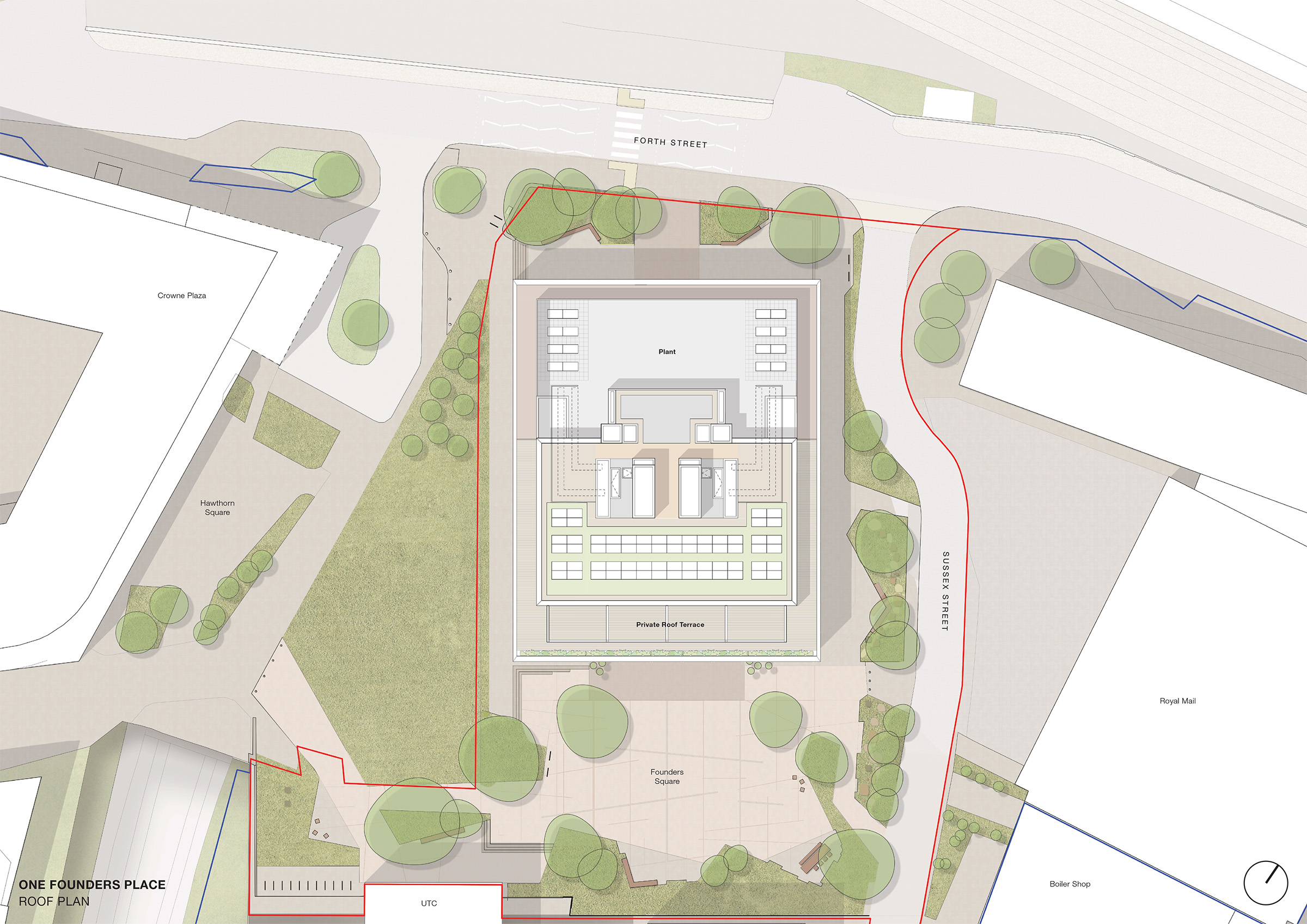
Located adjacent to the Grade I listed Newcastle Central Station, One Founders Place is located in the northern edge of the masterplan forming the gateway to Founders Place and addressing Founders Square, a key new public space at the heart of the masterplan. The site sits where George and Robert Stephenson’s first purpose built locomotive factory was established in 1823. Their innovative engineering work drove the global Industrial Revolution, giving this site and the remaining historic buildings a unique character and history of entrepreneurship in the heart of the city which the scheme looks to respectfully reference and move into the next future phase of use.
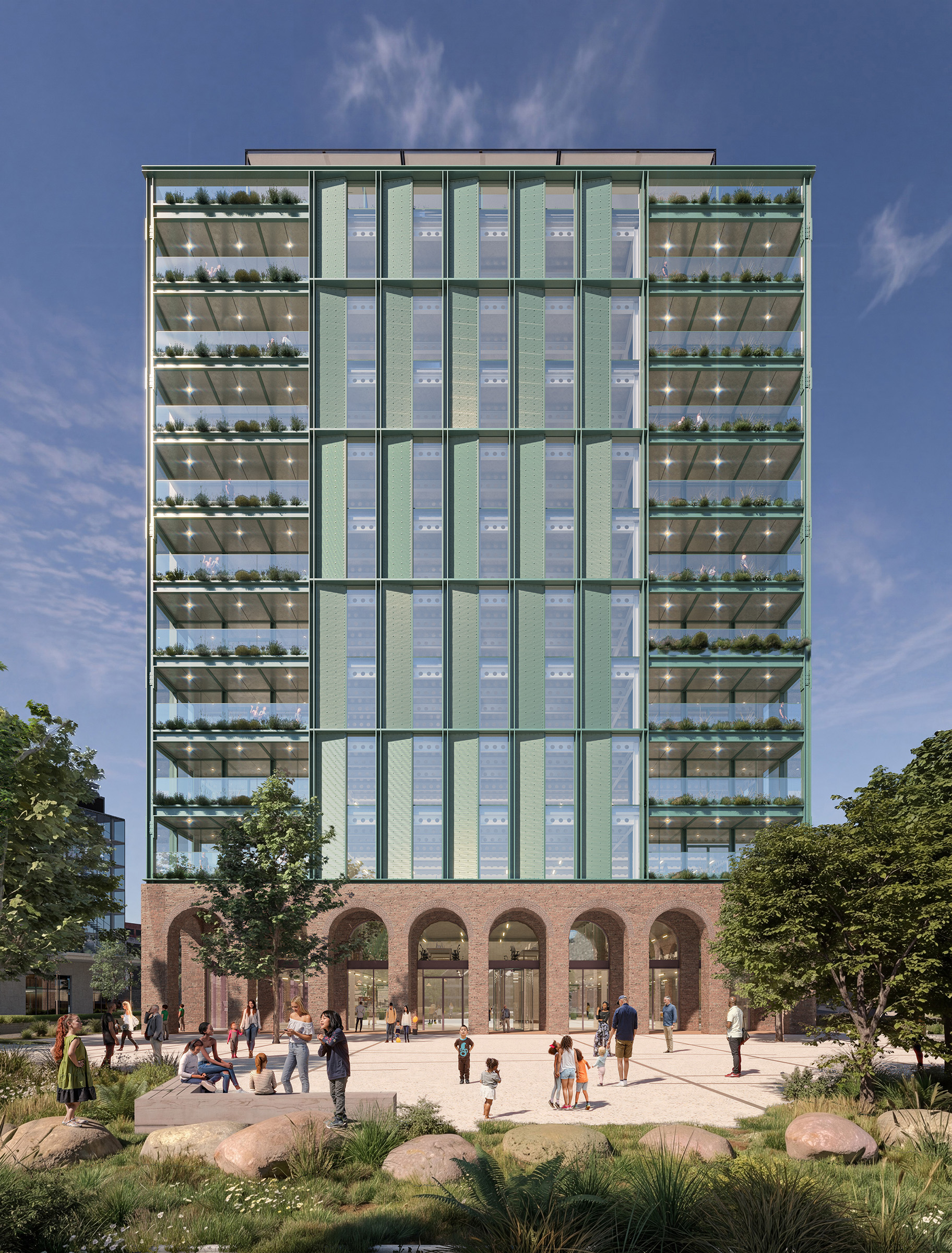
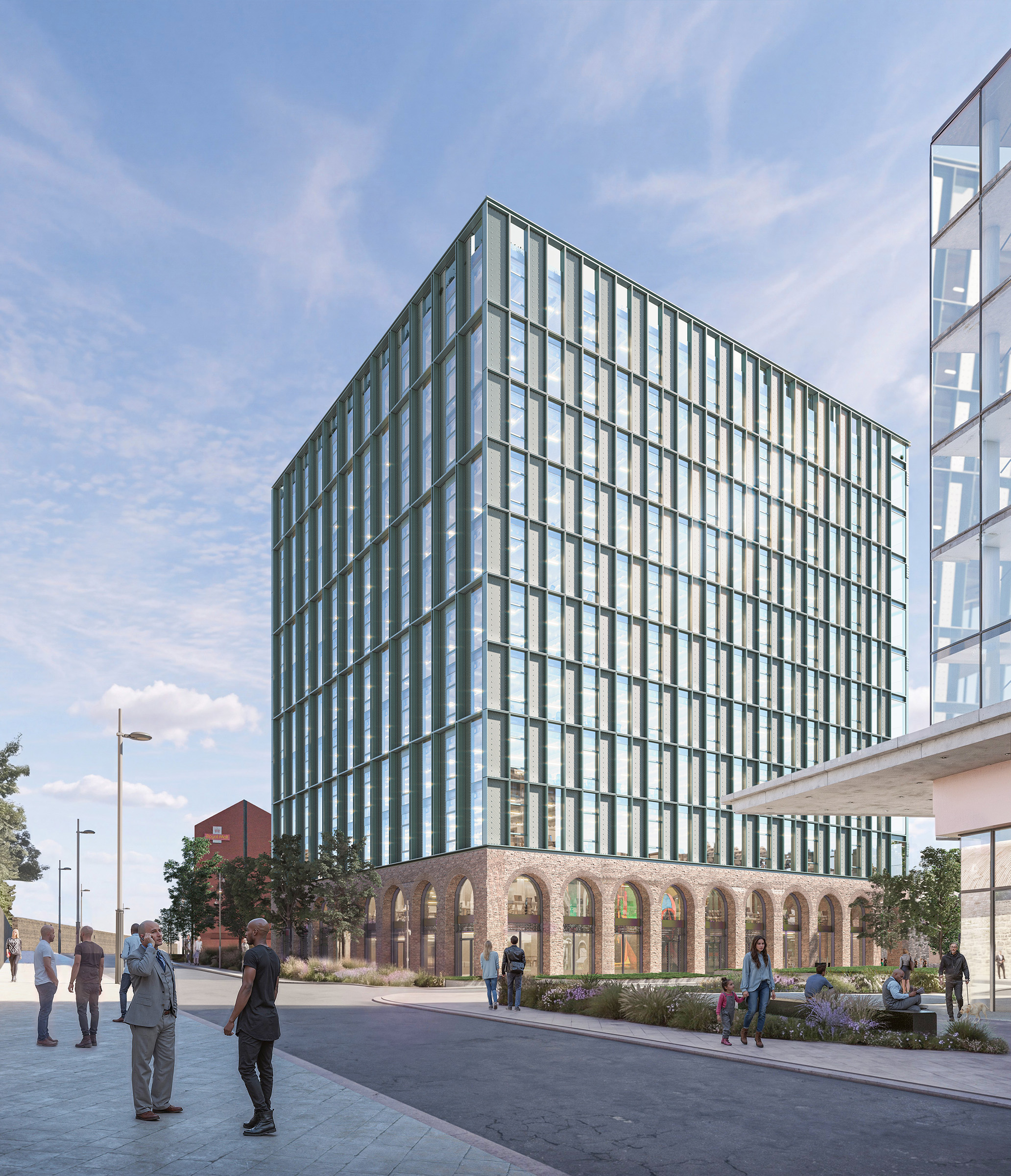
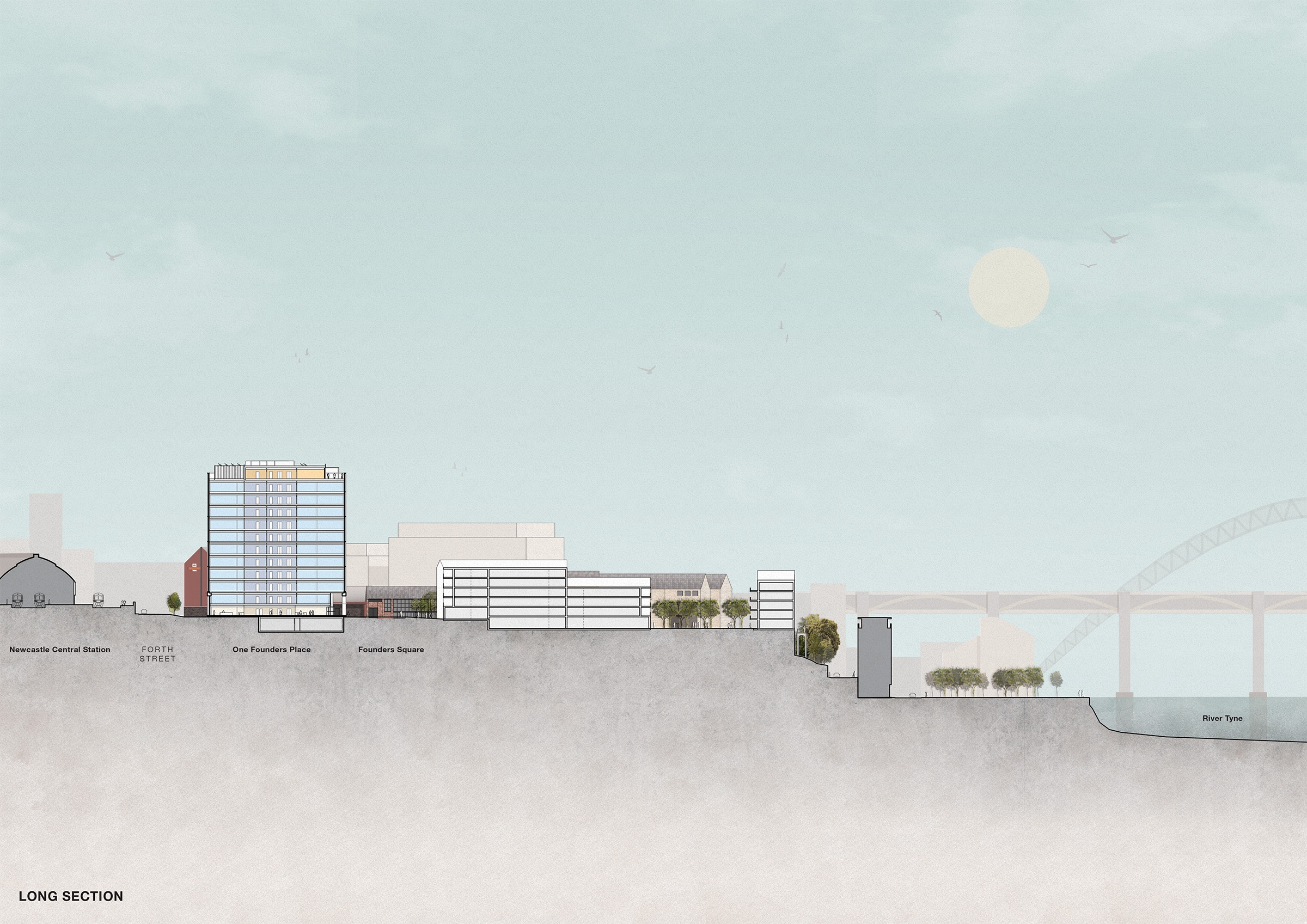
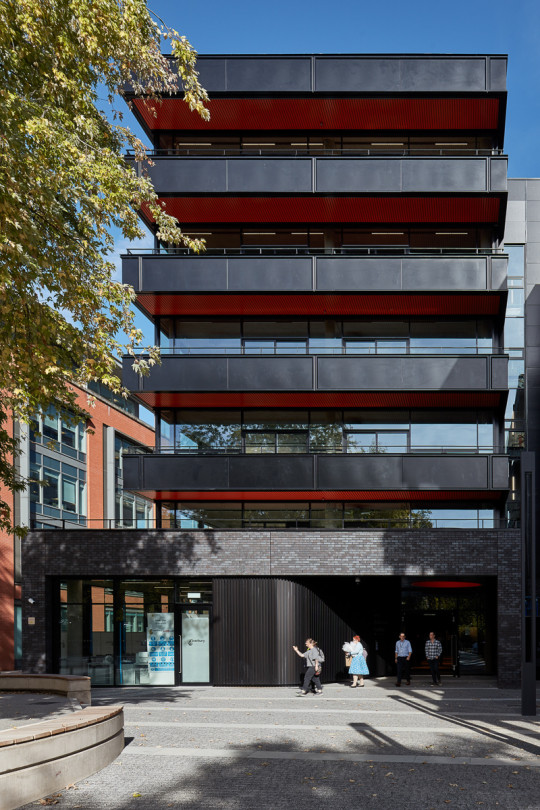
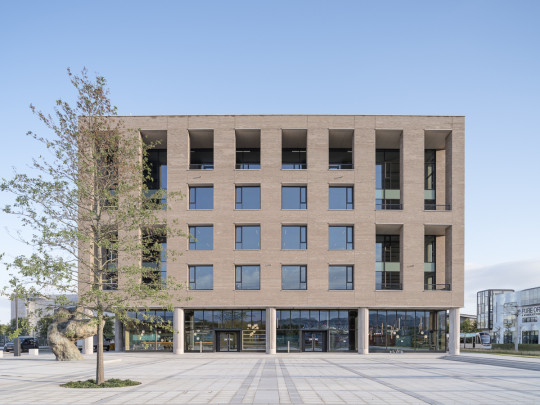
The new ten-storey building, offering 100,000 square feet of flexible, adaptable workspace, has a distinctive cubic form making it highly visible. The external facades take inspiration from the unique industrial heritage of the site with the brick plinth and arches denoting the historic workshops and railway infrastructure and a modern steel frame representing the industrial steelwork found across the site and the city’s famous bridges.
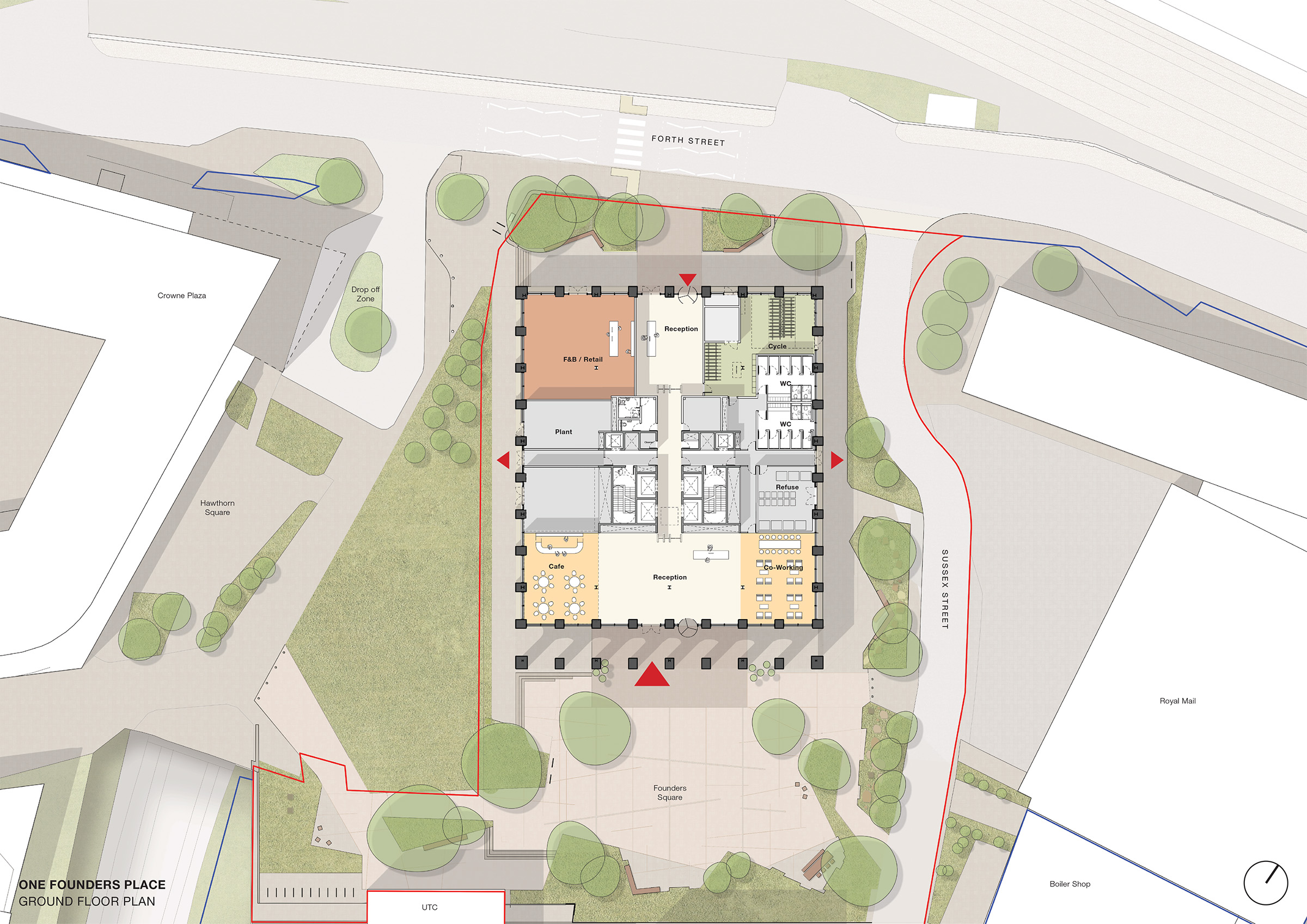
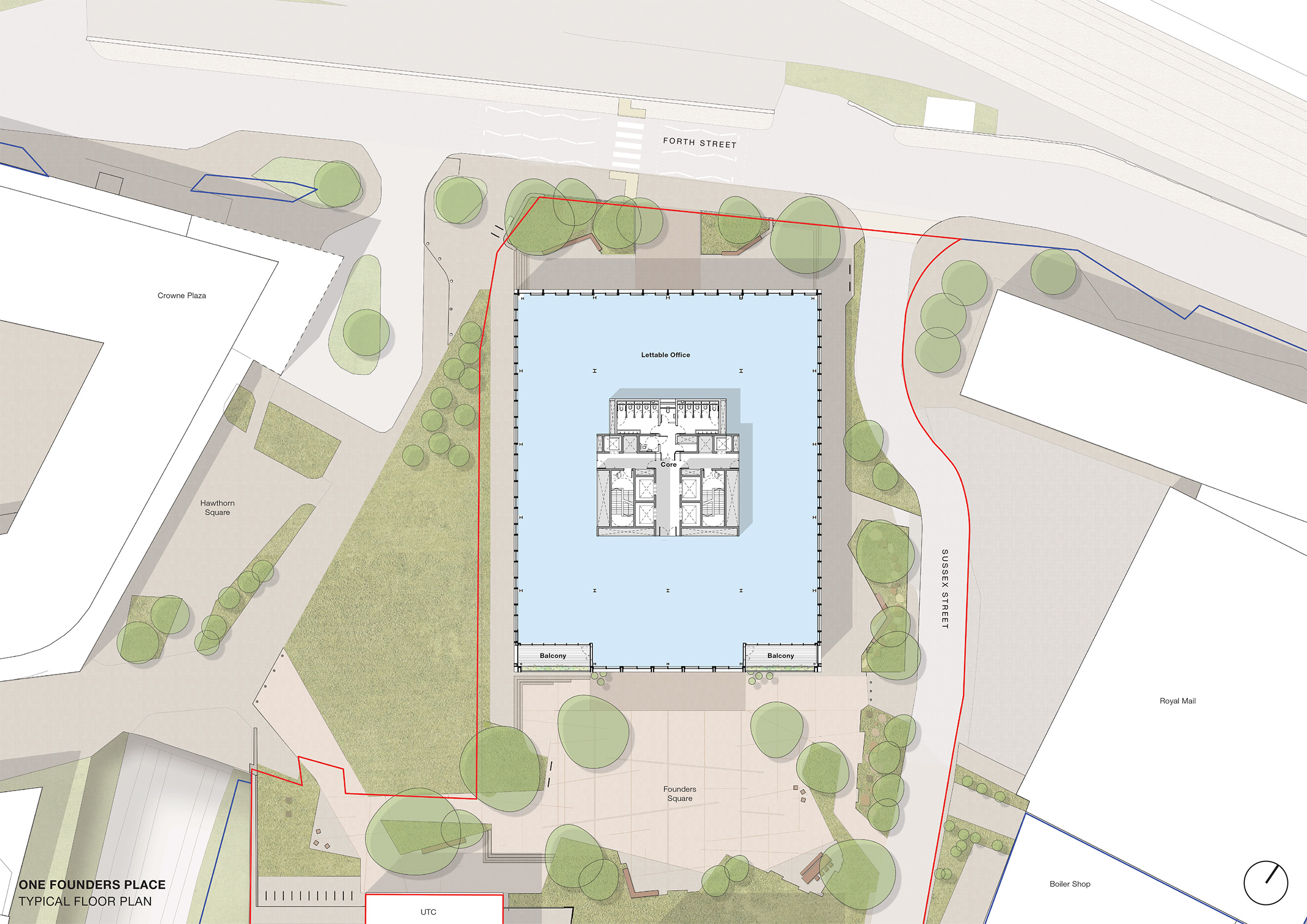
A dynamic and active ground floor comprising of retail, café, breakout spaces and building entrance animates the new public realm and the wider site. At upper levels, a new central core provide access to flexible open floorplates, with access to south facing terraces on each office floor providing fantastic views over the River Tyne and bridges. At roof level there is a shared amenity space and roof terrace for building users.
Central to developing the design is a commitment to sustainability with the project targeting a minimum of BREEAM Excellent. In addition, the building will target a low-embodied carbon number by supplying the project using local northern-based supply chains, minimising transport and other low-carbon initiatives.