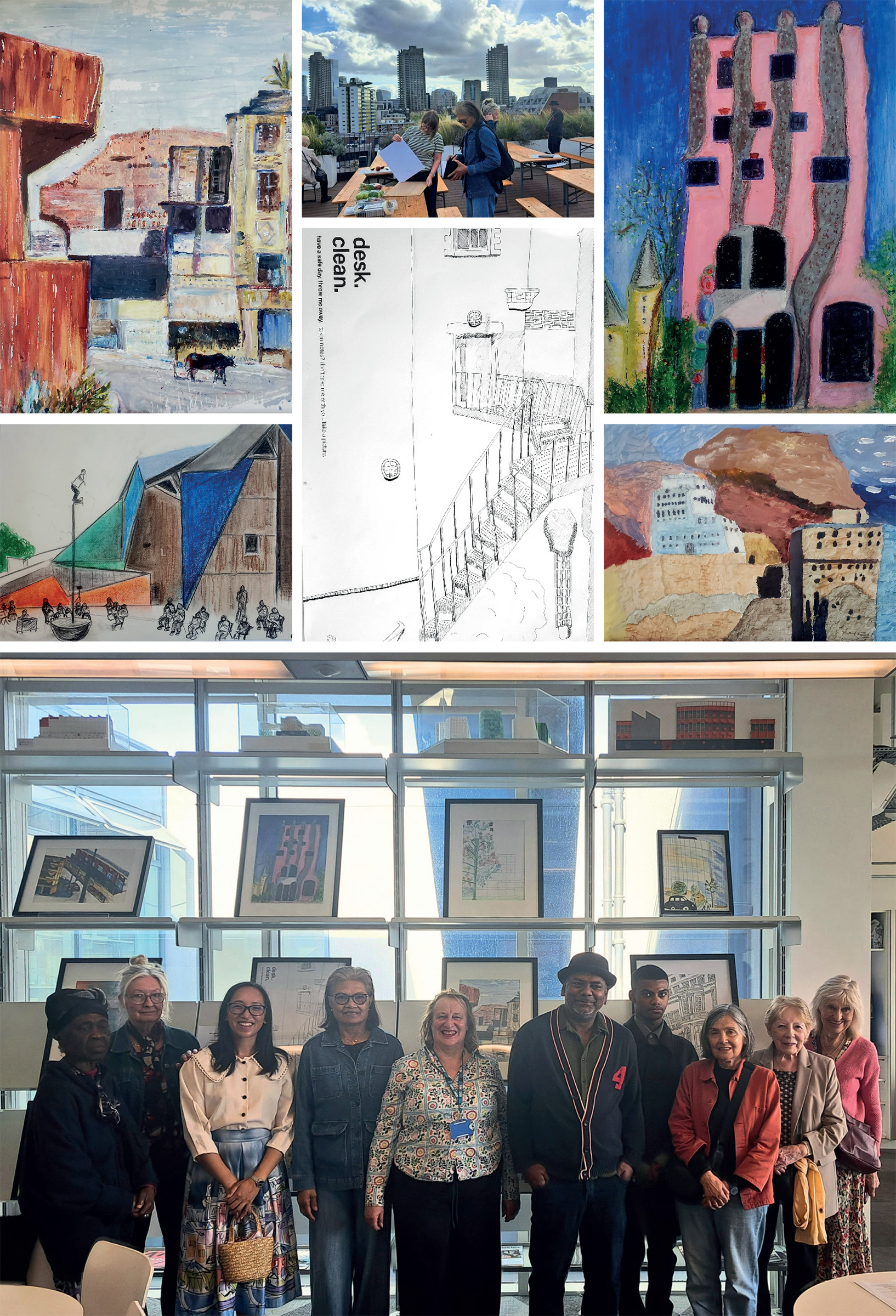
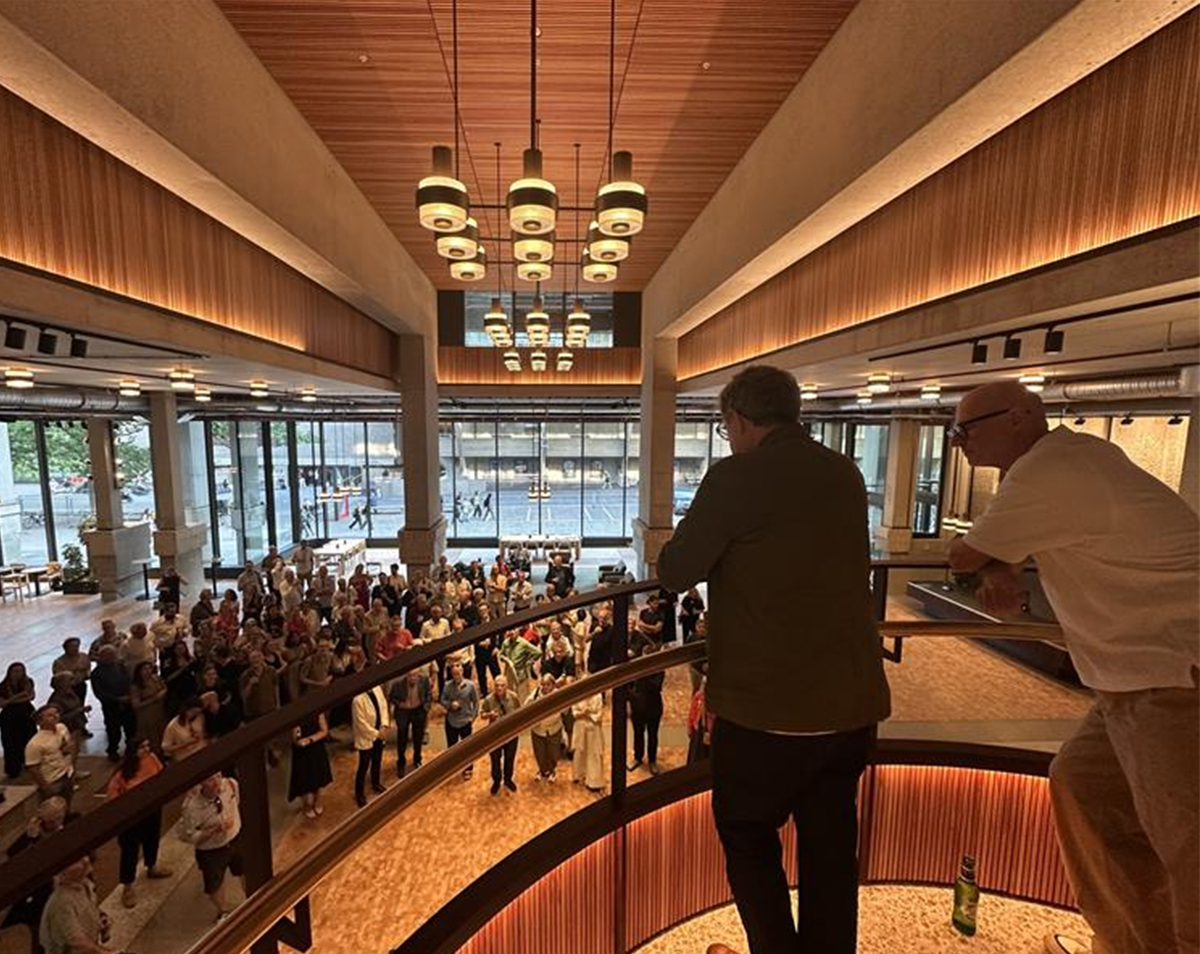
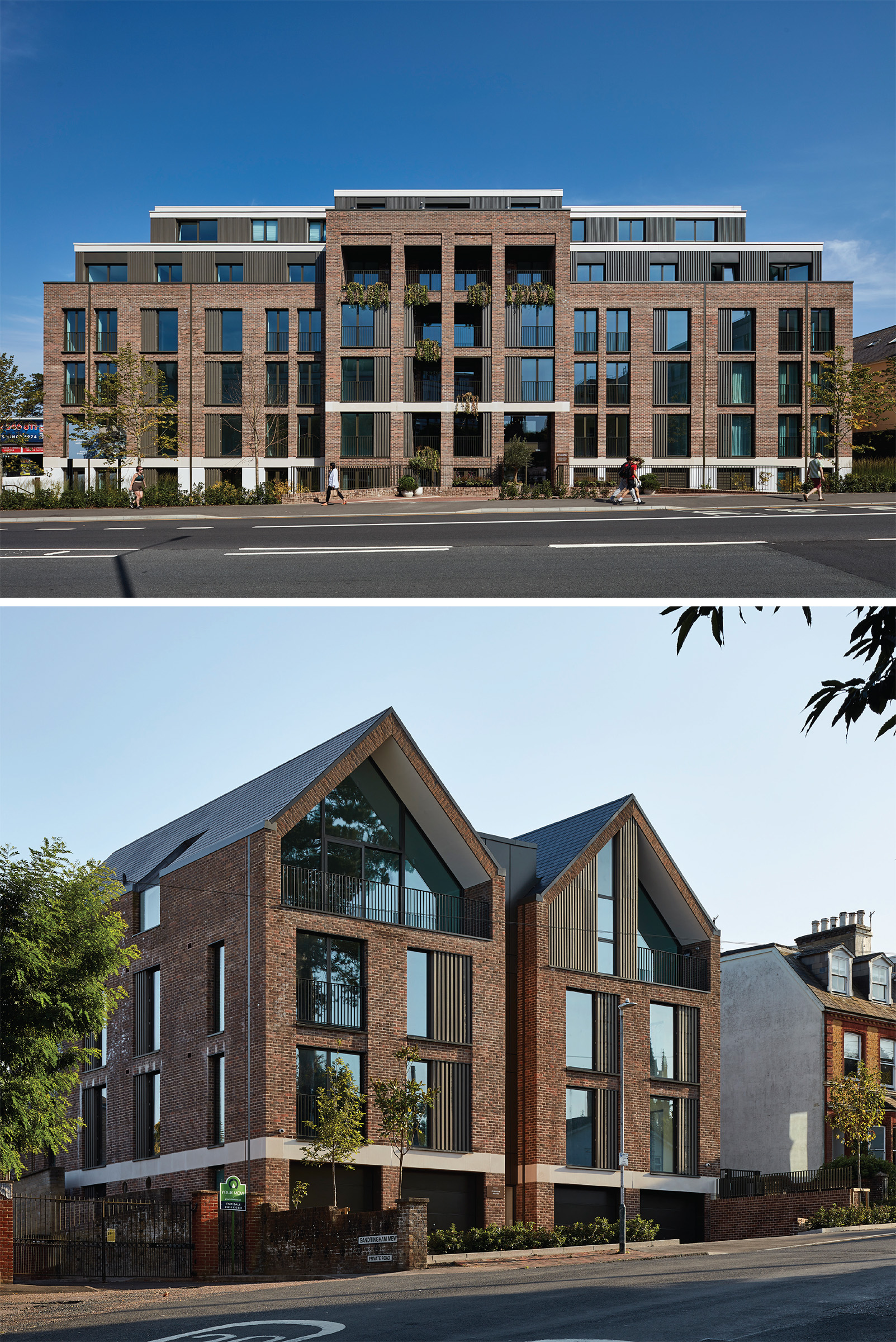
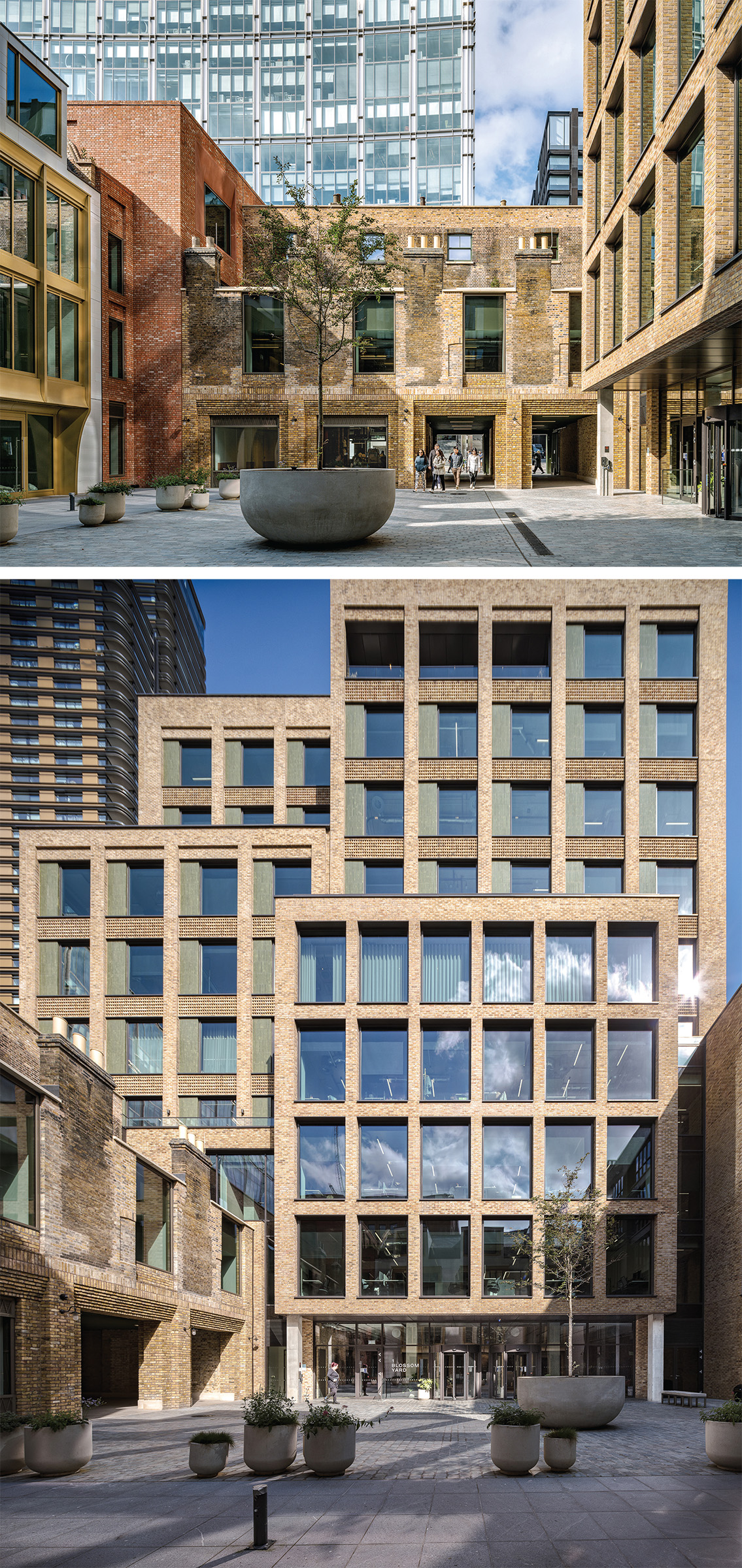
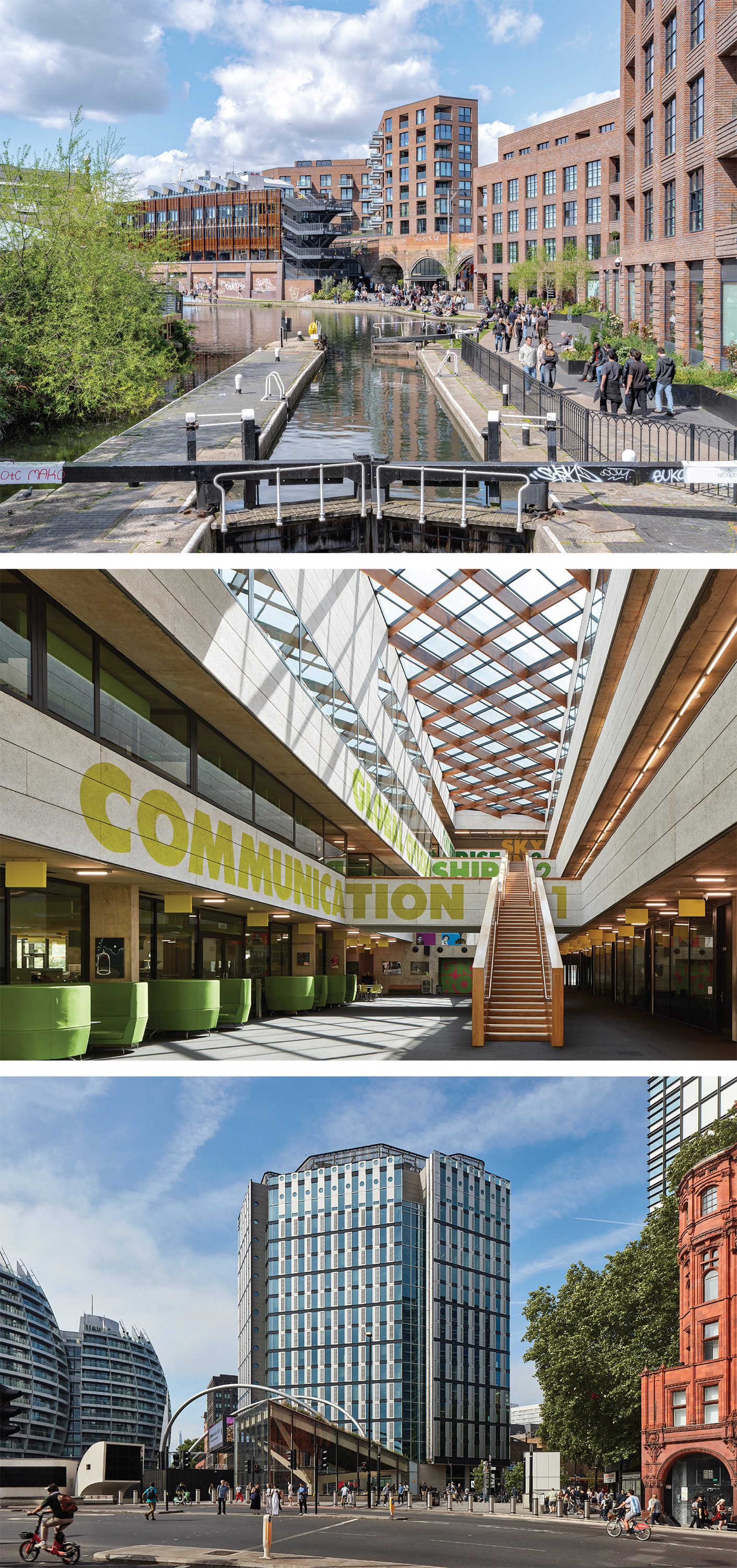
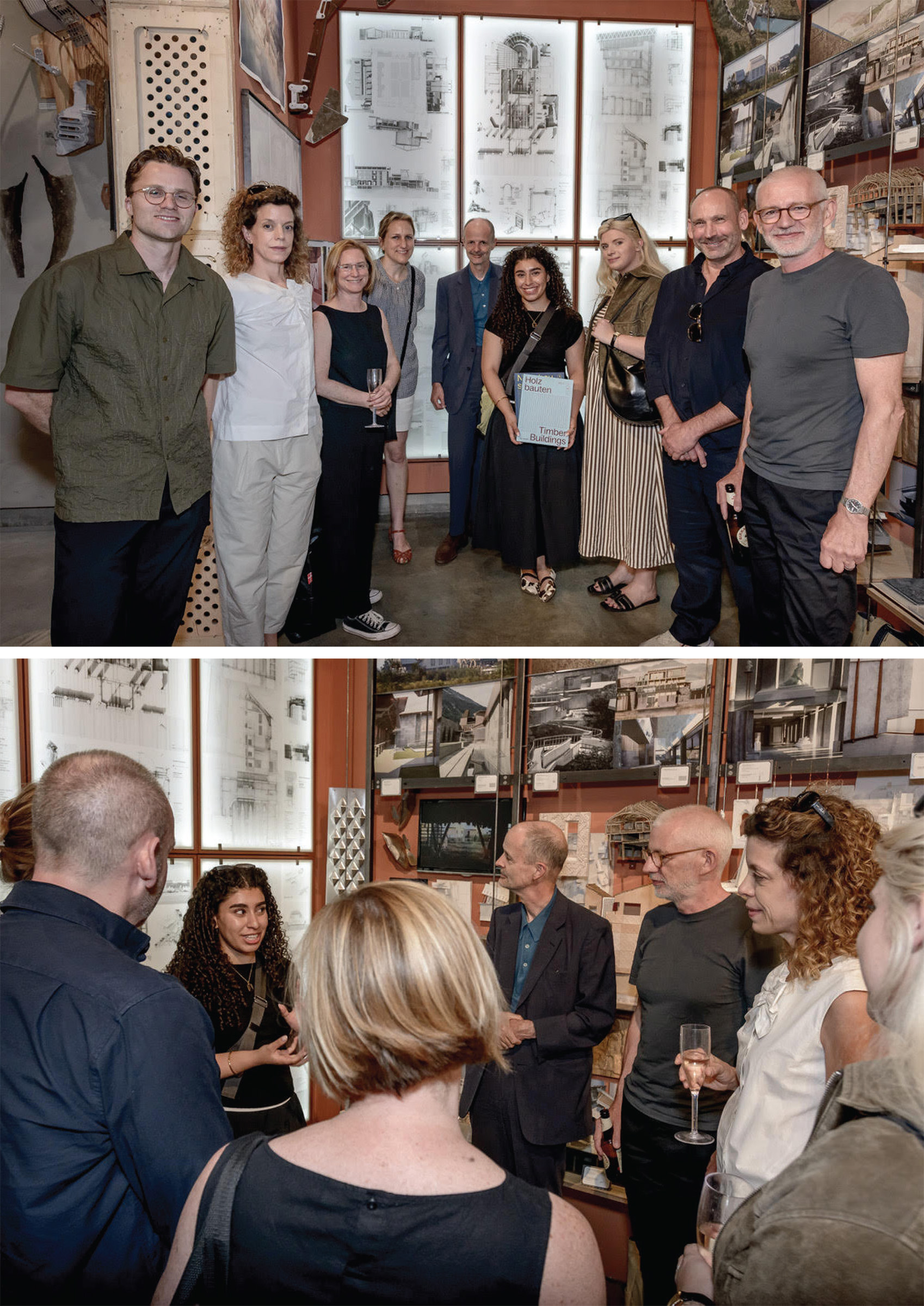
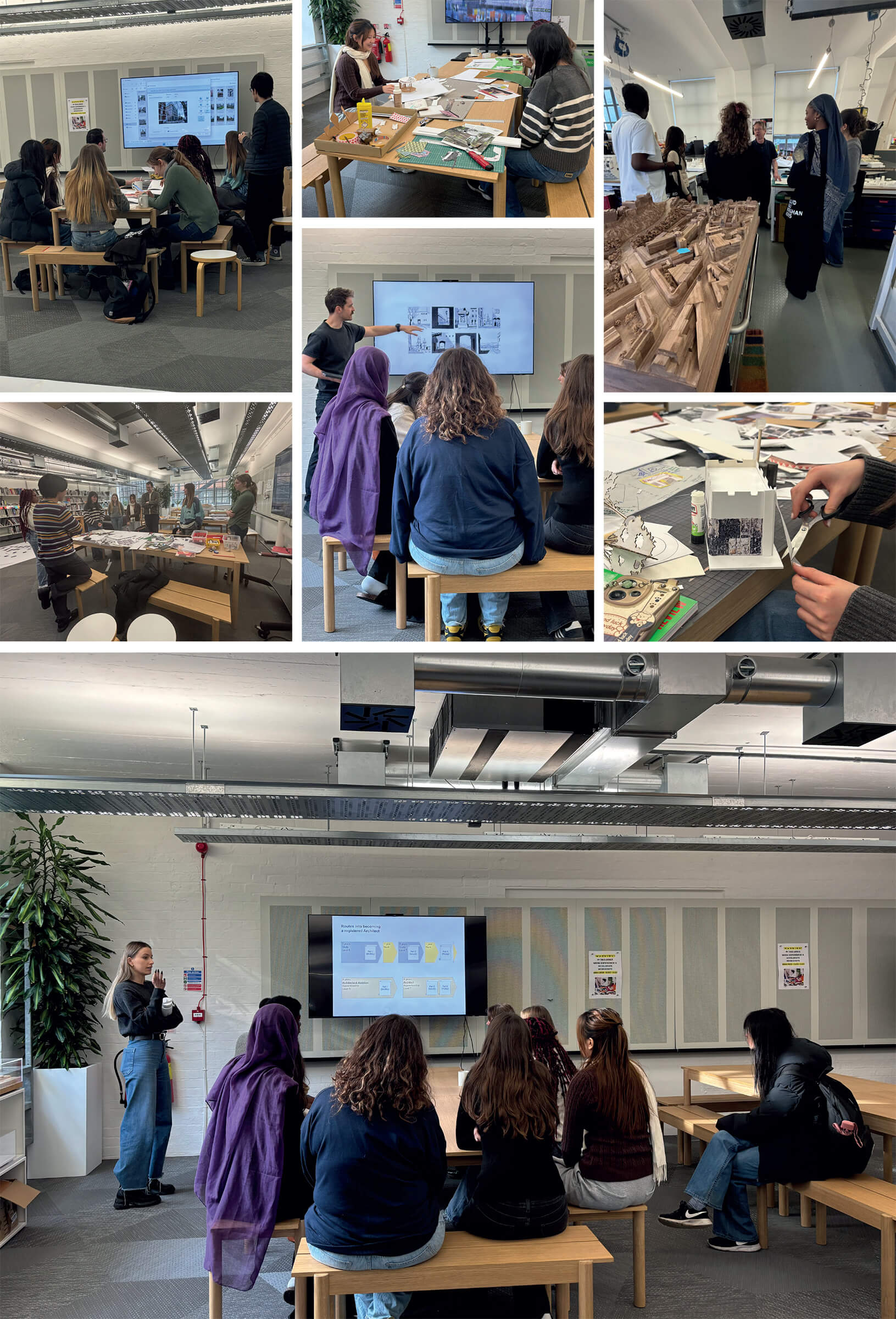
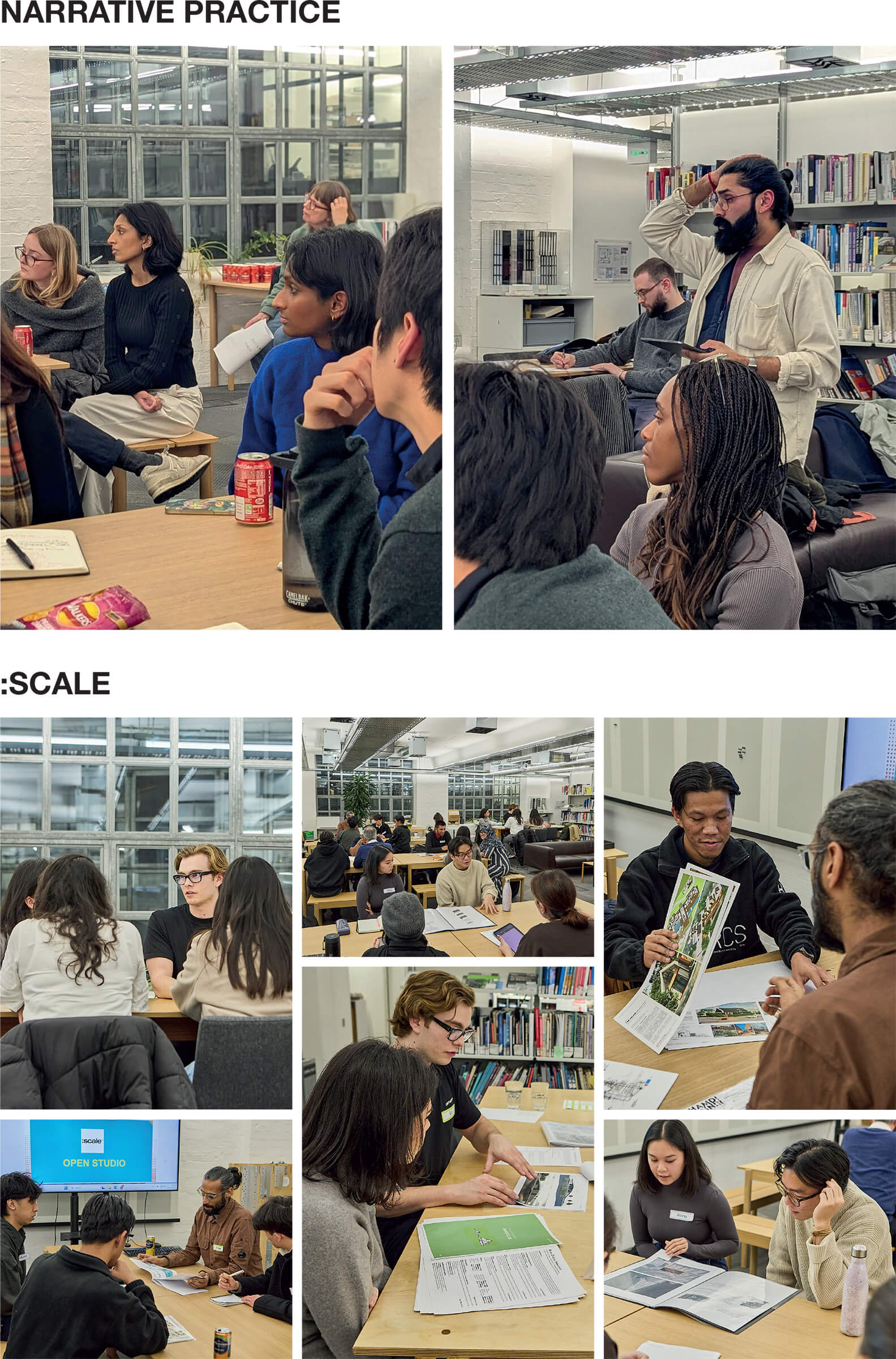
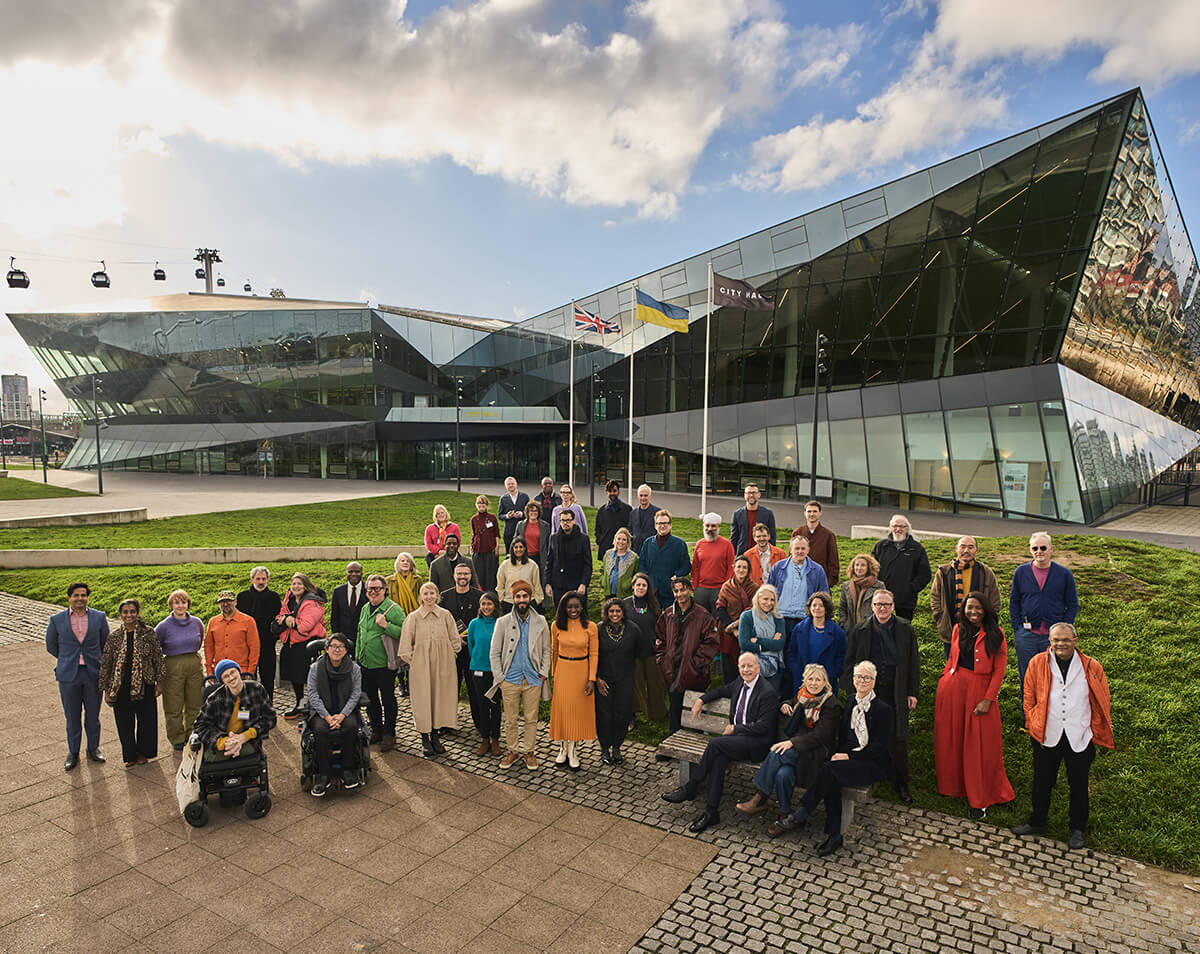
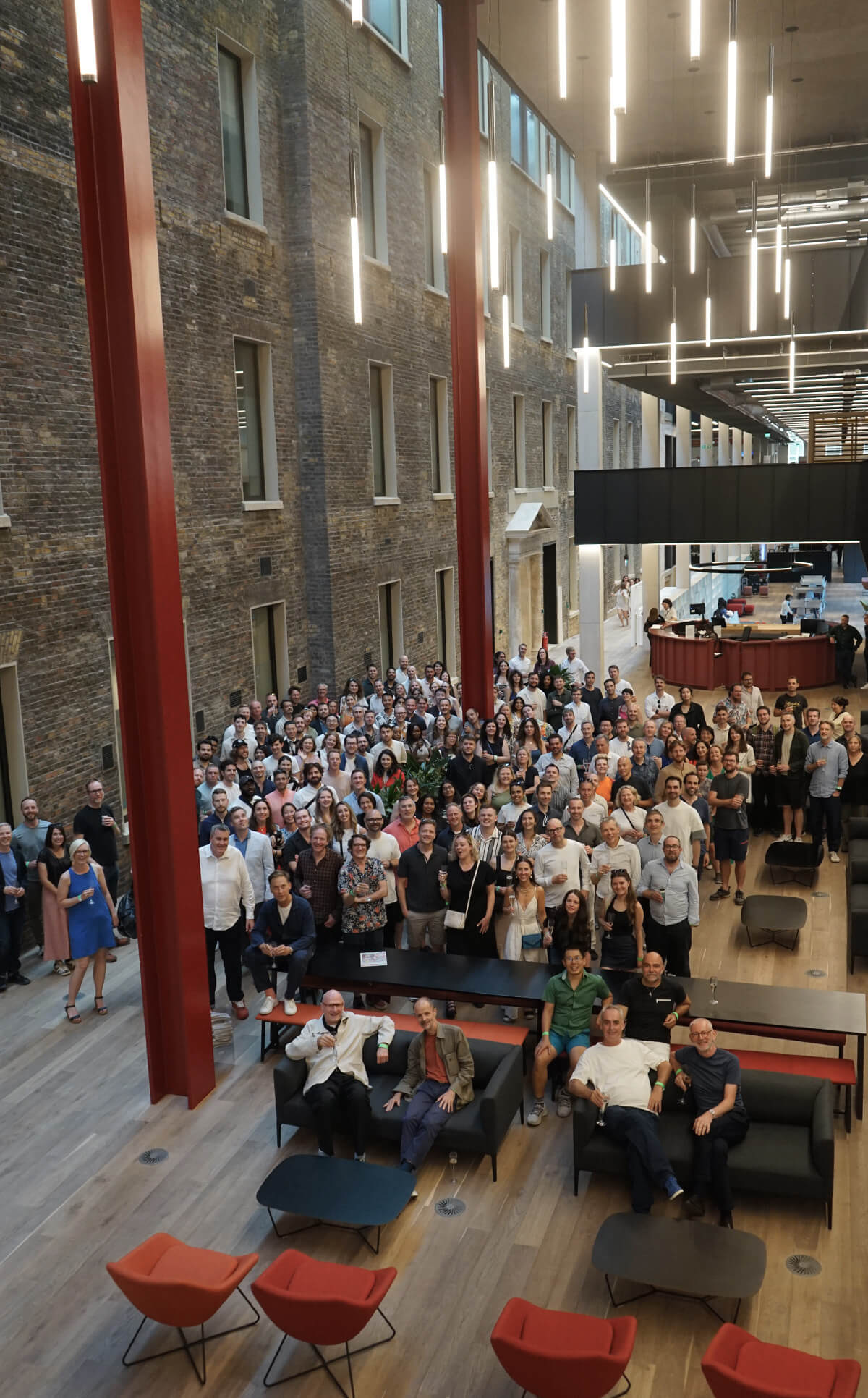
At the beginning of October an art group from St Luke’s Community centre visited AHMM’s Moreland Studios for the opening of the group’s art exhibition within the studio. They also had a chance to find out more about how architects use drawing in general practice, participate in a sketching workshop, and take a tour around the building
Since early summer, the group has been exploring the theme of architecture and the built environment. This exhibition marks the launch of a new programme bringing local community creativity directly into corporate spaces.
The AHMM Partnerships group has supported St Luke’s since 2016 as a way to support people living within the local community close to our offices, providing financial support as well as supporting their Job Club programme and carrying out pro bono design work for their community café and shop. The art group is variety of creative art classes led by practicing artists open to the St Luke’s community, including printing, drawing, photography, crafts, and painting.
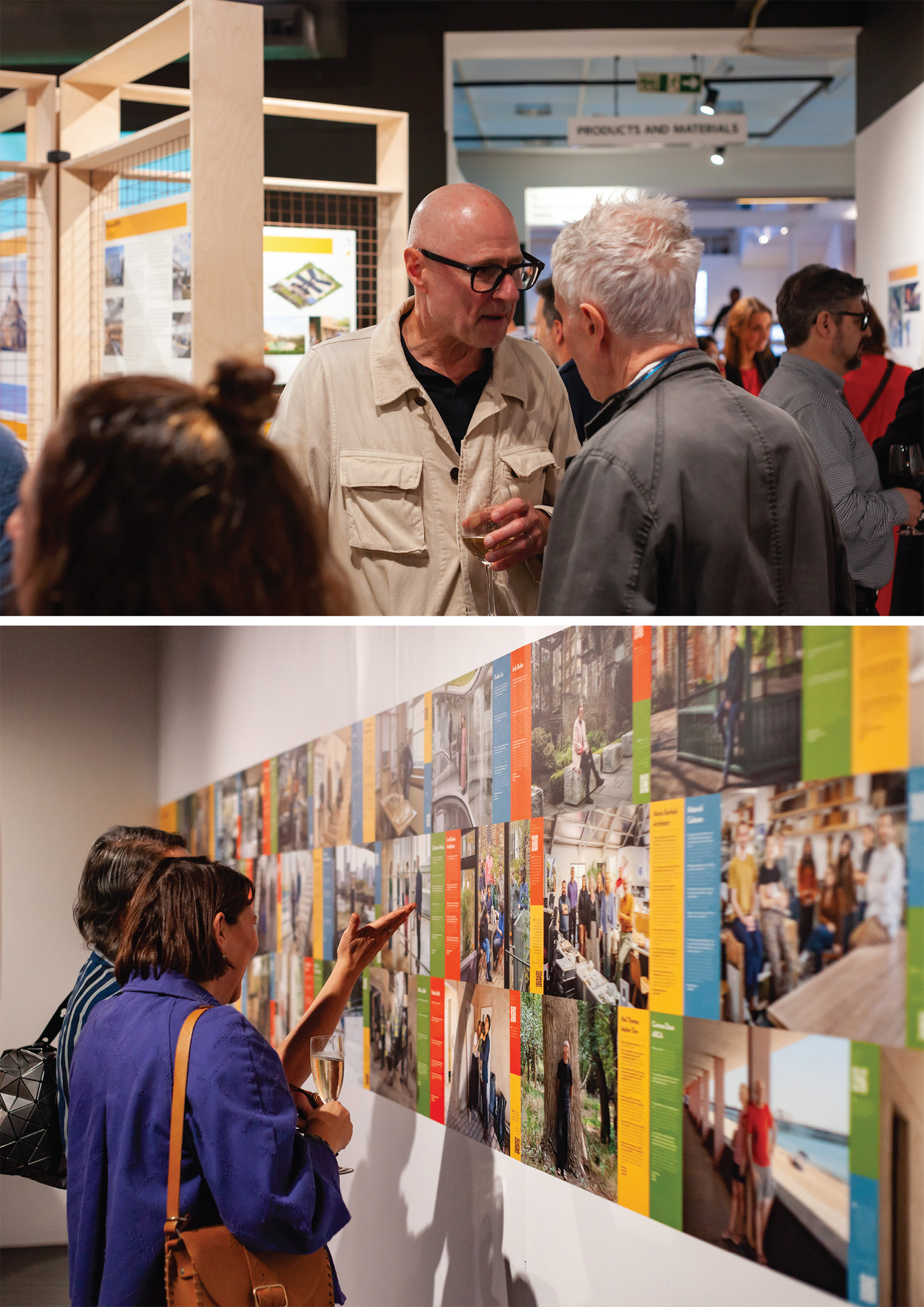
Last week a group of colleagues from AHMM attended the launch party and opening night of Regenerative Design 2026, a month-long exhibition and events programme hosted at The Building Centre by the Regenerative Architecture Index.
Running throughout October and sponsored by AHMM, the programme brings together leading voices to explore the ideas, innovations and challenges shaping regenerative design. Through workshops, roundtables, case studies and panel discussions, attendees will gain practical insights into systems thinking, circularity, adaptive reuse, biodiversity, social value and participatory design.
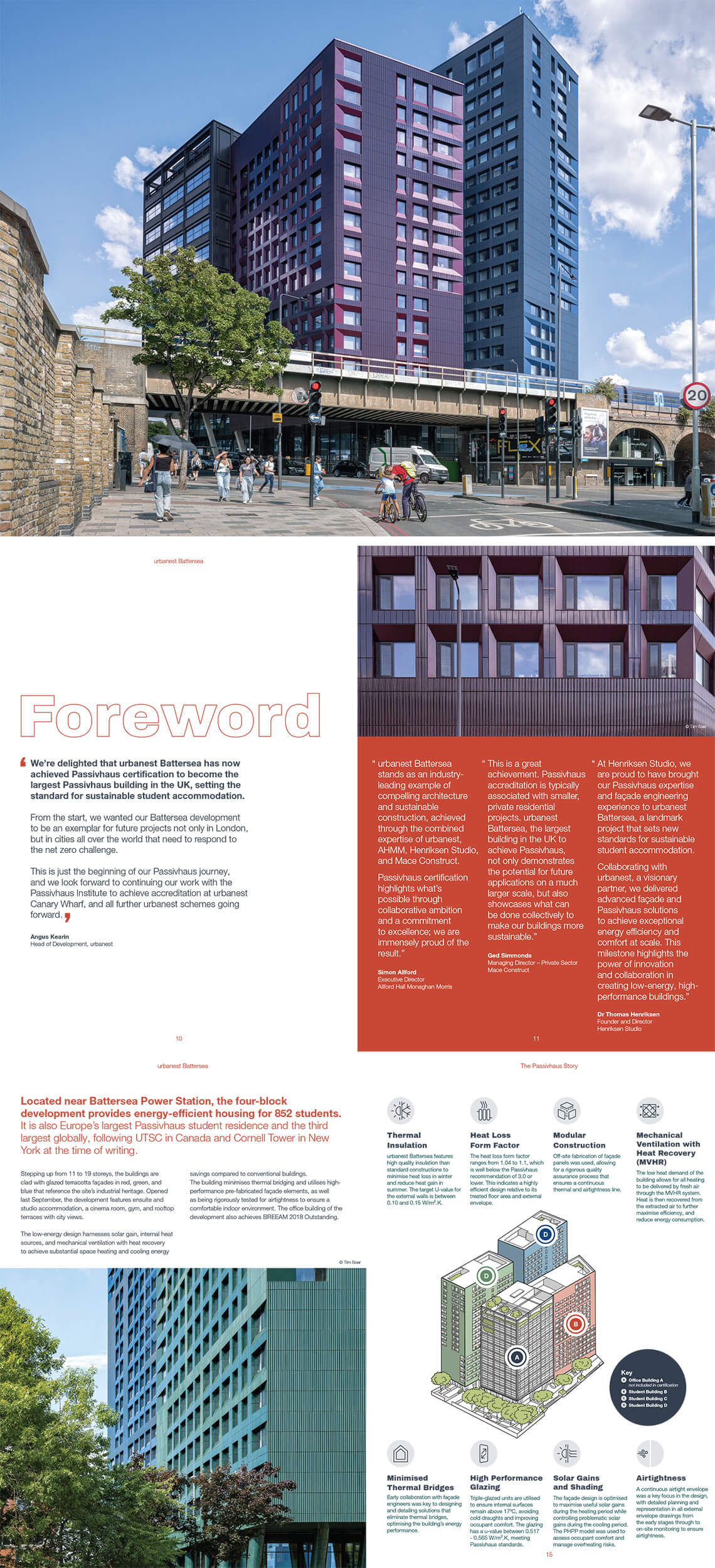
As a member of the Regenerative Architecture Index (RAI), AHMM has two boards featured in the exhibition. One showcases the Passivhaus approach at urbanest Battersea, the largest built Passivhaus certified in Europe and the eighth largest in the world at the time of certification in May 2026; the other focuses on the Changing Places room at 1 Broadgate, a large accessible washroom with specialised equipment and features for people with limited mobility or complex needs requiring assistance from another person.
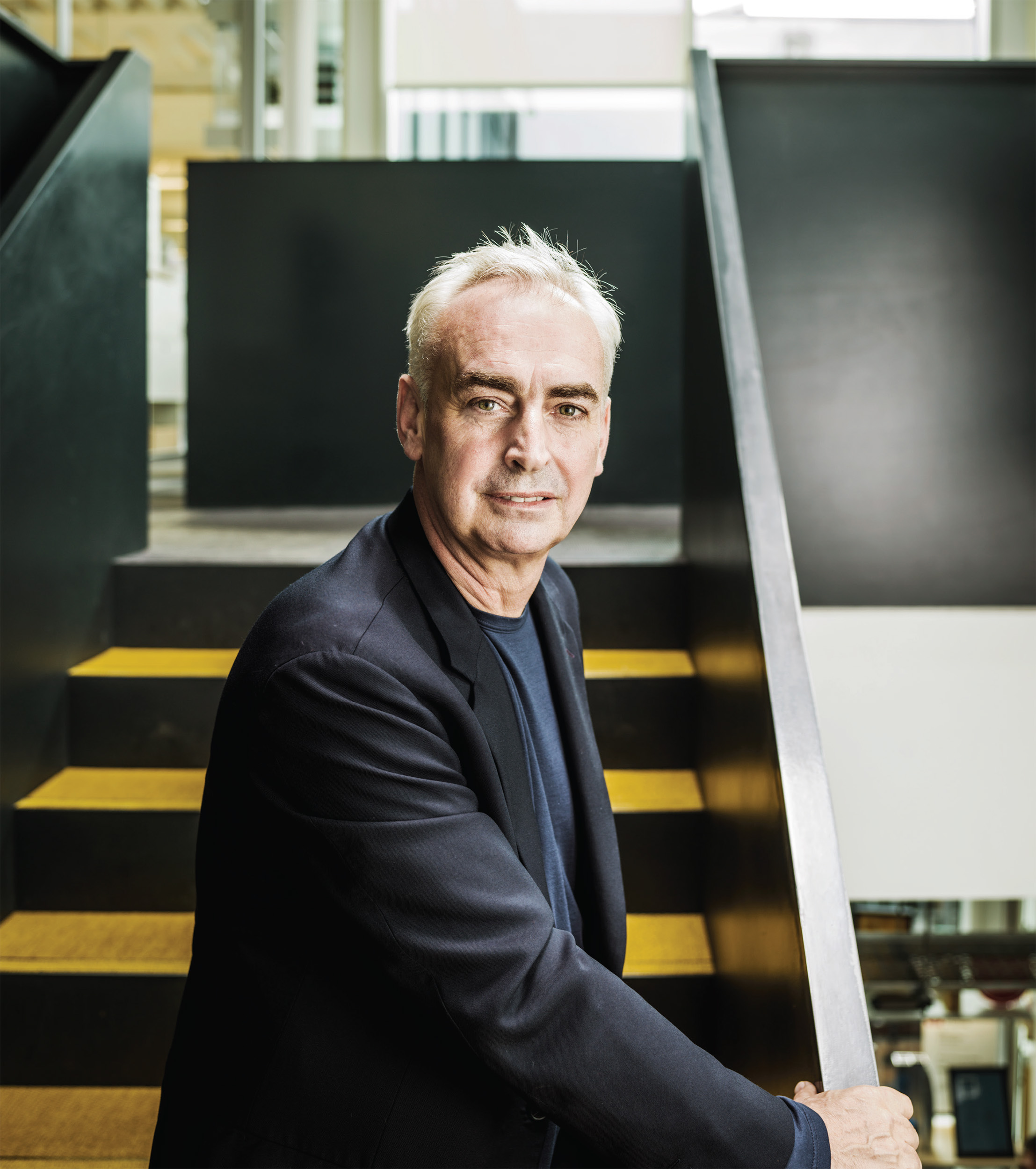
AHMM Associate Director and Head of Sustainability, Dr Craig Robertson, also spoke to AT about why the practice is in support of the exhibition, sharing knowledge across the profession, and the practice's journey towards regenerative Design. He discusses the importance of building performance data, post-occupancy evaluation and cracking the relationship between the commercial and regenerative imperatives. Please visit here to read the full interview.
Launched by Architecture Today and UK Architects Declare in 2024, the RAI sets out to benchmark practices’ progress in the move towards regenerative working and projects. The index recognises the need for a built environment that isn’t merely reducing its negative impacts but has positive impacts for today and the long term.
For more information about Regenerative Design 2026 please visit here.
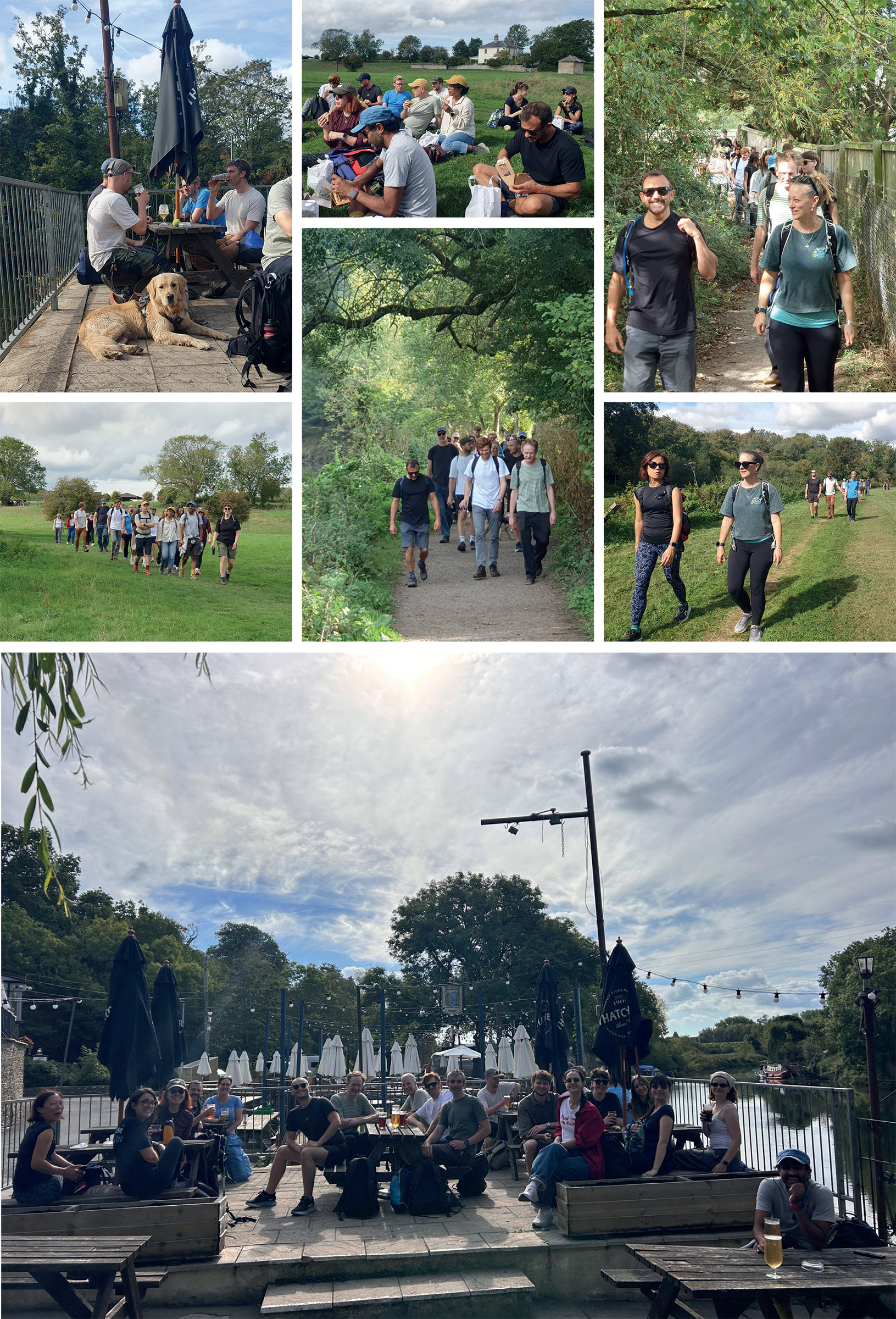
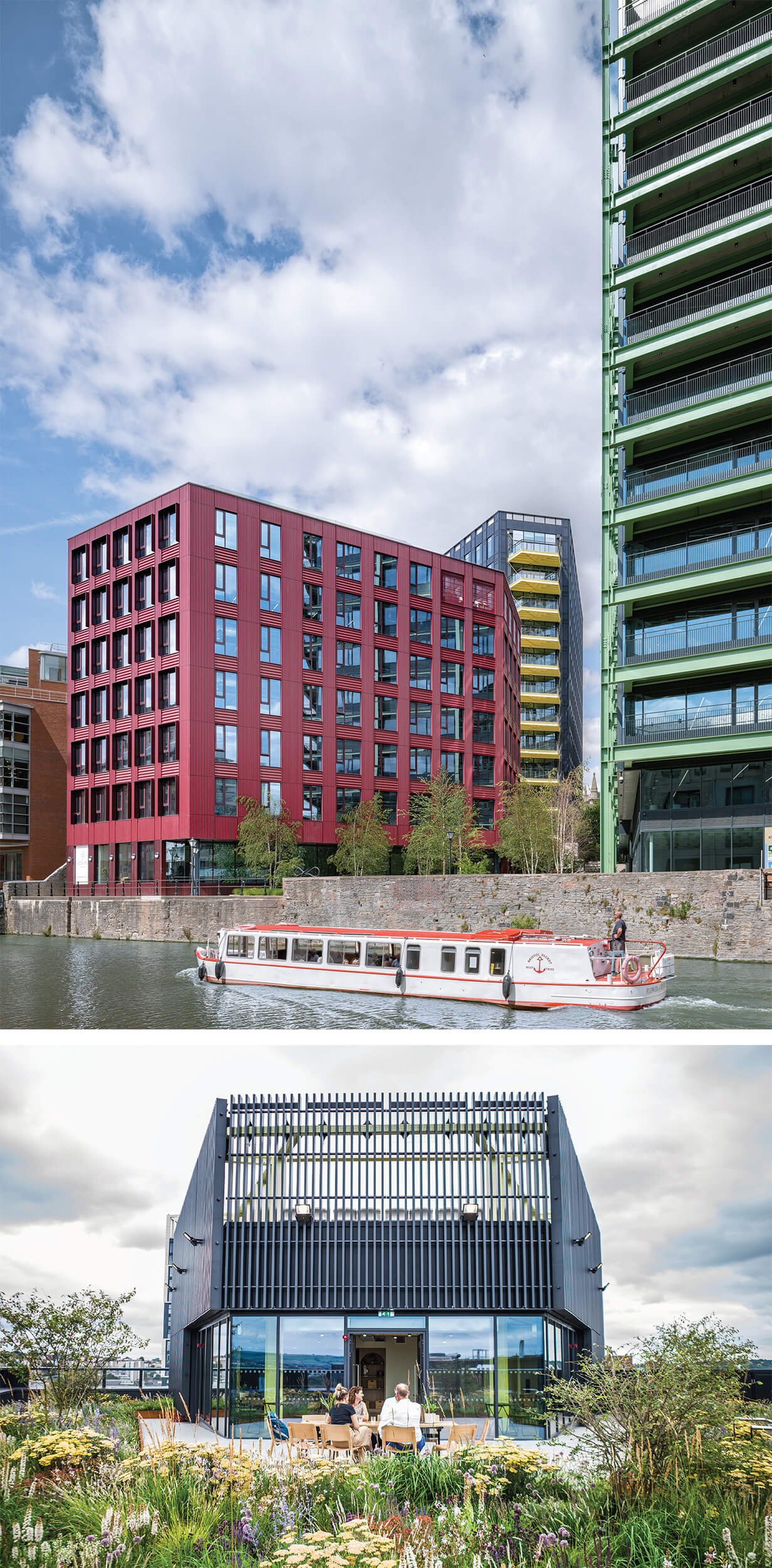
Last Friday, 25 September, a group of colleagues from the Bristol office walked the 24.5km from our office at Portwall Square to Bath as part of the Bristol office-wide challenge to collectively complete 125,000,000 steps before the end of March 2027 in support of their Charity of the Year, One25.
Accumulating 1.04 million steps in one day, the group passed many landmark destinations, however, the highlights of the day were the enthusiastic canine tag-alongs who kept morale high – particularly Homer who features in many a photograph.
One25 is a Bristol-based charity supporting women who have experienced trauma and are street sex-working to survive, helping them move from crisis towards independence within the community. Working with compassion and without judgement, One25 builds a relationship with each woman, providing one-to-one specialist support as well as access to healthcare professionals and wellbeing at their hub.
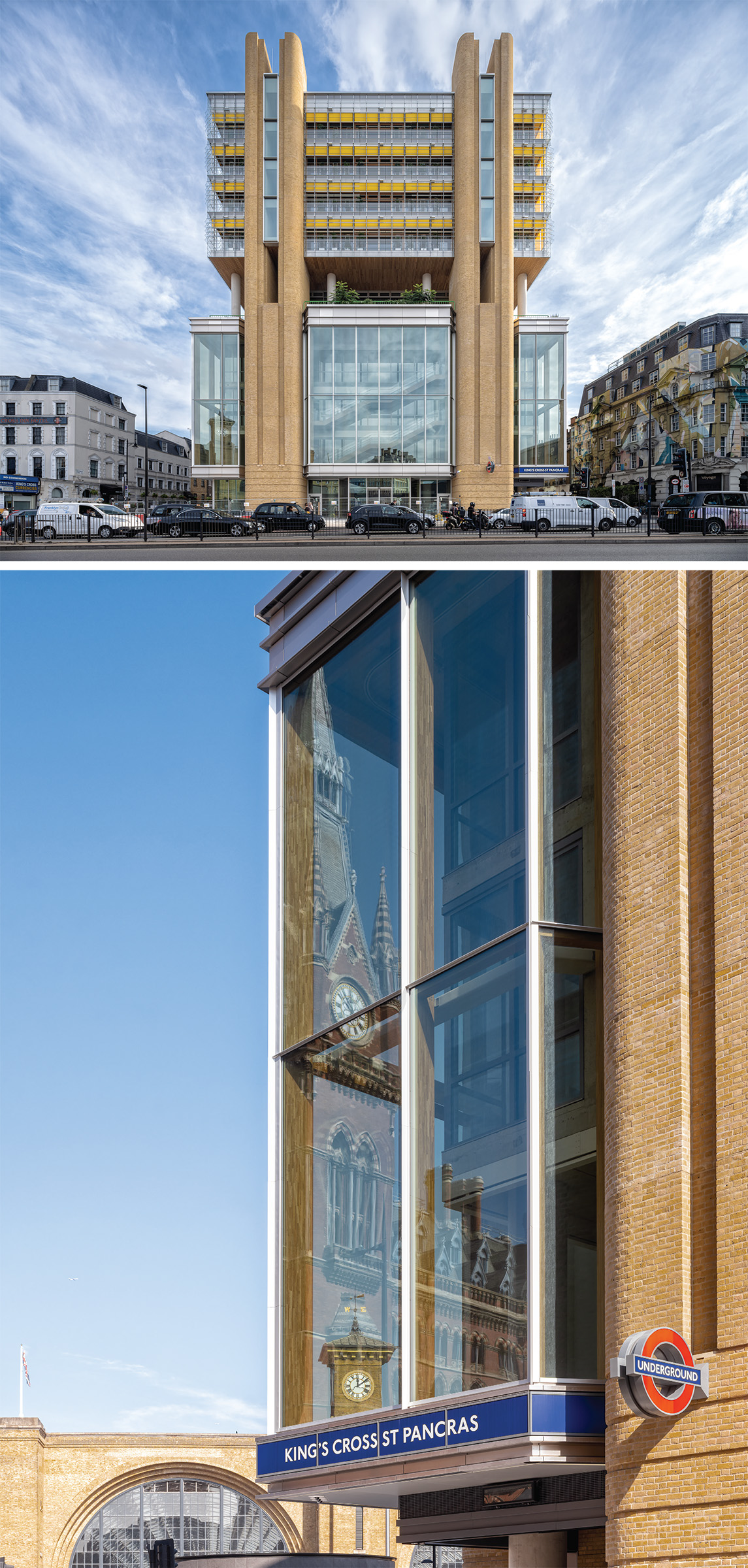
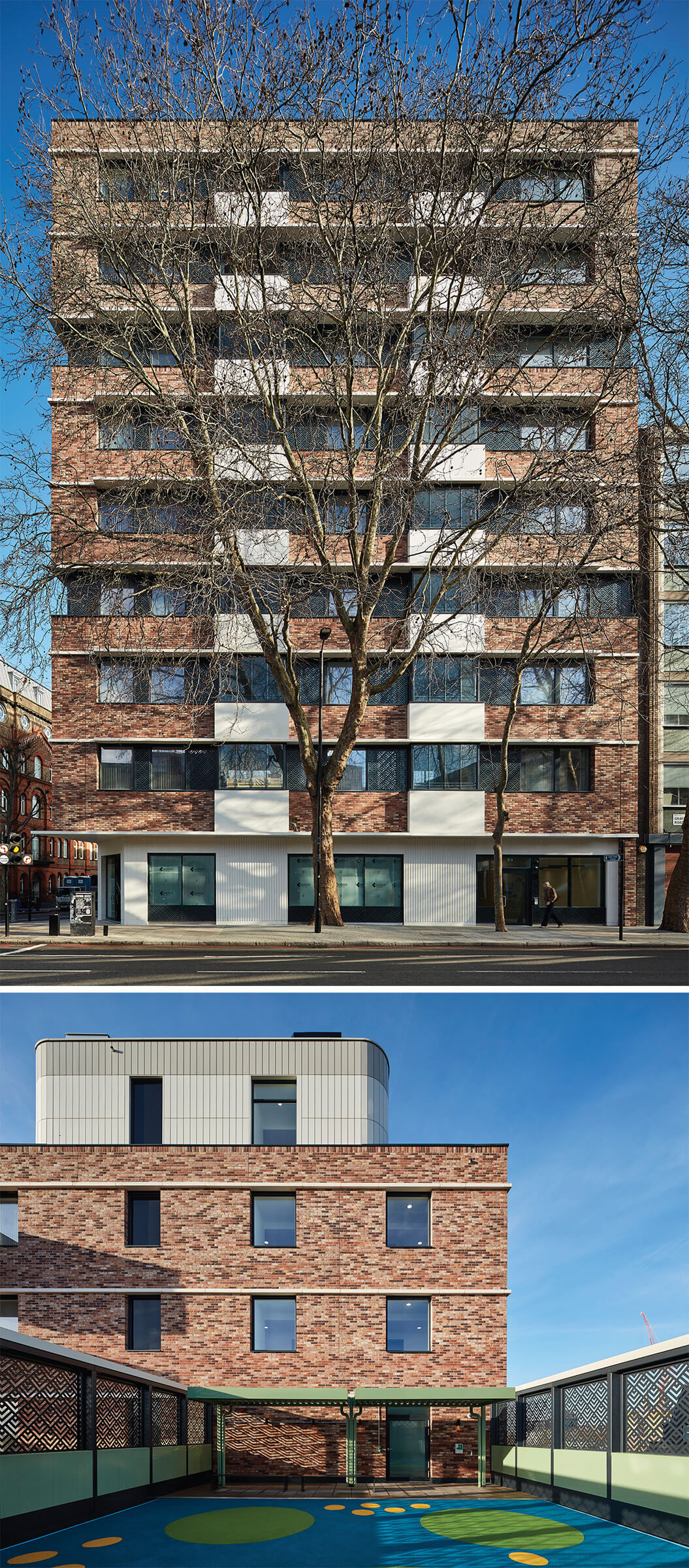
A new Tube entrance located within the recently completed Belgrove House has officially opened, providing step-free access to King's Cross St Pancras station from Euston Road for the first time.
Designed to be innovative, highly sustainable and an example of carbon emissions reduction in construction, operation and future refurbishment, Belgrove House brings together specialist workspace, public facing amenities and major transport improvements in a single integrated development, giving both a strong civic presence which repairs the street edge and strengthens the Euston Road frontage and a strategic role within one of London’s most connected locations.
Integrated into the building's north-west corner, the new entrance is set to improve the experience of passengers using one of London's busiest stations and represents the latest milestone in the Mayor of London and Transport for London (TfL)'s plans to make the capital's transport network as accessible as possible.
The new entrance's integration within the 25,000 sq ft research, development and office building enabled the removal of two former black stone-clad entrance boxes, which previously occupied a significant portion of the busy pavement.
This addition not only improves access and journeys for Londoners but also contributes to the creation of high-quality public realm in this busy and historic part of the city. The opening marks the full practical completion of the building, which has been designed to support innovation within London’s Knowledge Quarter.
Deputy Mayor for Transport, Seb Dance, said: "This new entrance at King's Cross St Pancras will make journeys easier for the many customers who use this busy station every day and support our ongoing work to improve accessibility across the network, as we build a fairer, more inclusive London for everyone."
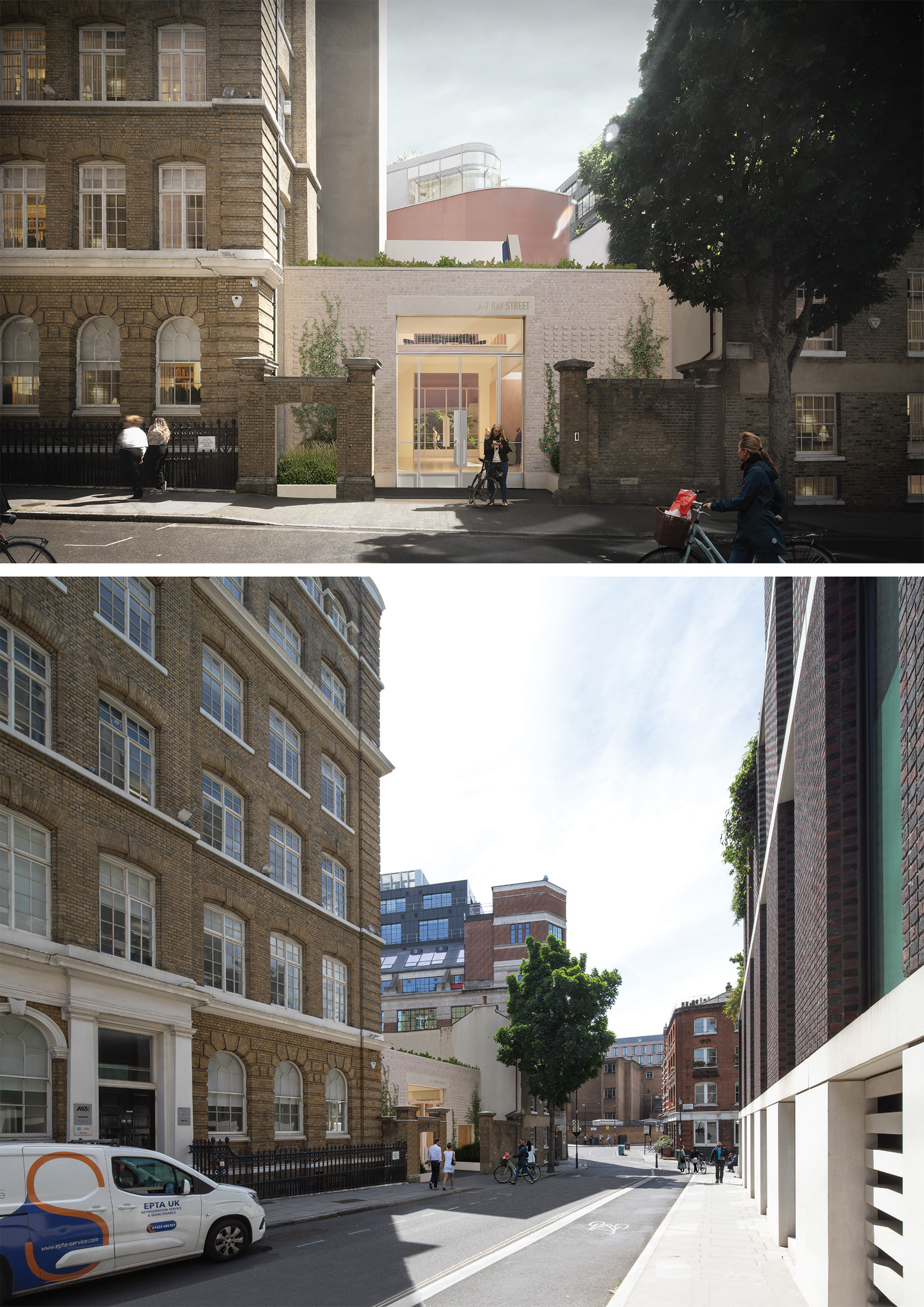
The redevelopment of 3-7 Ray Street, a Grade II listed building located within the Clerkenwell Green Conservation area, north of Farringdon Station, has received planning permission. Developed for Adena Properties Investment Inc, the proposals reveal and restore the internal features of the six-story existing Type Foundry building, add a modest two storey side extension and upgrade the outdated building amenities and facilities.
The proposals prioritise high impact, low intervention work to retain the character and industrial heritage of the existing building whilst providing necessary building upgrades and amenities. The proposed extension works closely with the existing fabric as a simple 1 part 2 storey pavilion building, creating a new visible and accessible entrance to the building and a clear view through into a new garden created around the existing chimney stack. A lightweight pavilion at the rear of the garden will provide improved generous cycling storage.
Building services and elements of the building fabric are upgraded to improve its energy efficiency and make it fit for 21st century office occupiers. An all-electrical strategy will reduce lifetime carbon emissions to a minimum, as well as safeguard the building for future use.
AHMM Associated Director, Dermot Reynolds, comments: "Ray Street is a clever reinvention of a tired but characterful mid-19th century type foundry building. It prioritises simple but necessary interventions that reveal heritage, solves problems and compliment the host building. We look forward to bringing this building back into use as successful and desirable office space."
Hayley Allen, Adena Property Investments Inc, comments: “We’re delighted to have secured planning permission for Ray Street and to be working with the team at AHMM again. They’ve brought a great vision to the project, finding a thoughtful way to breathe new life into a building with so much character and history, while retaining what makes it special."
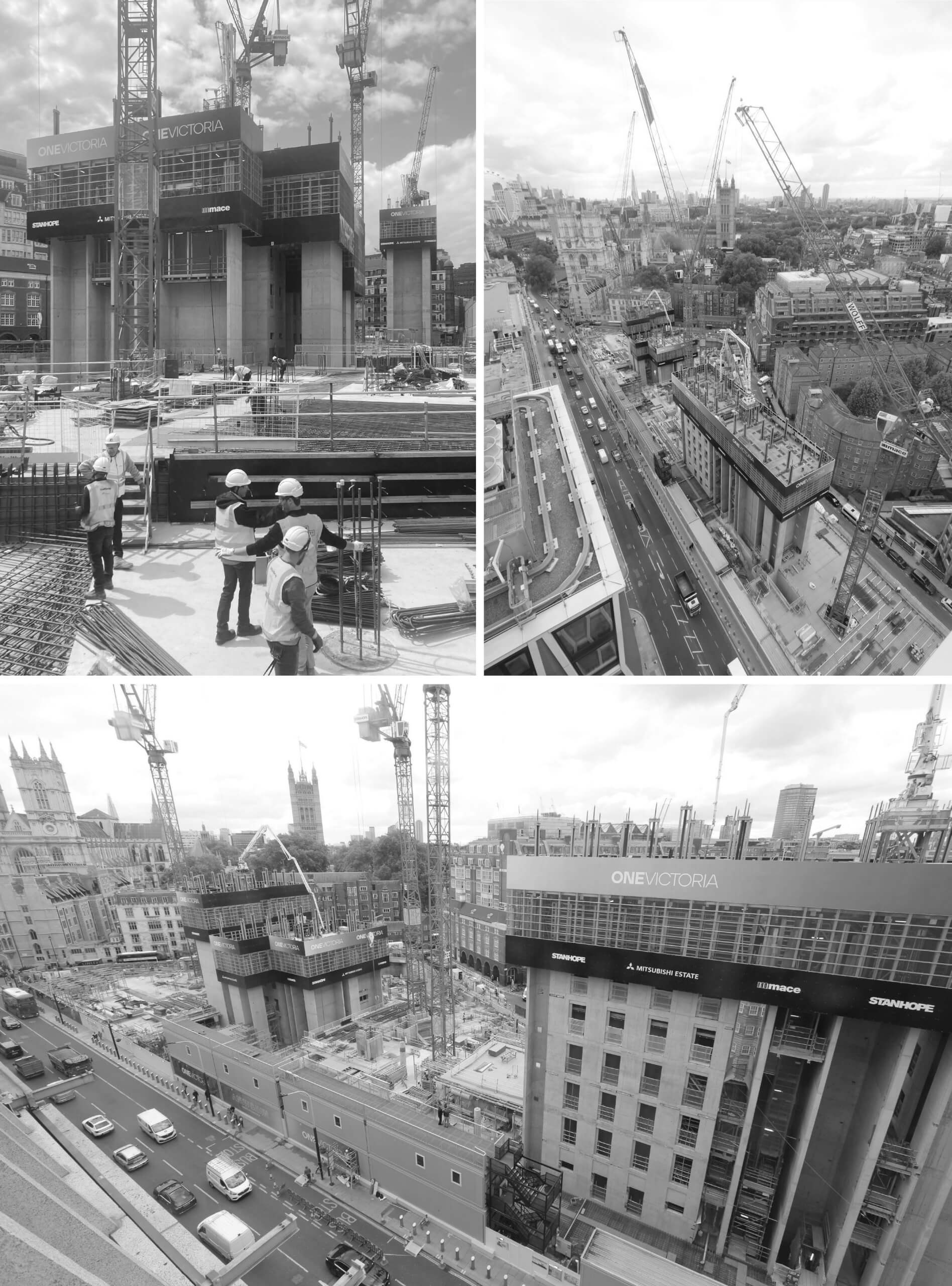
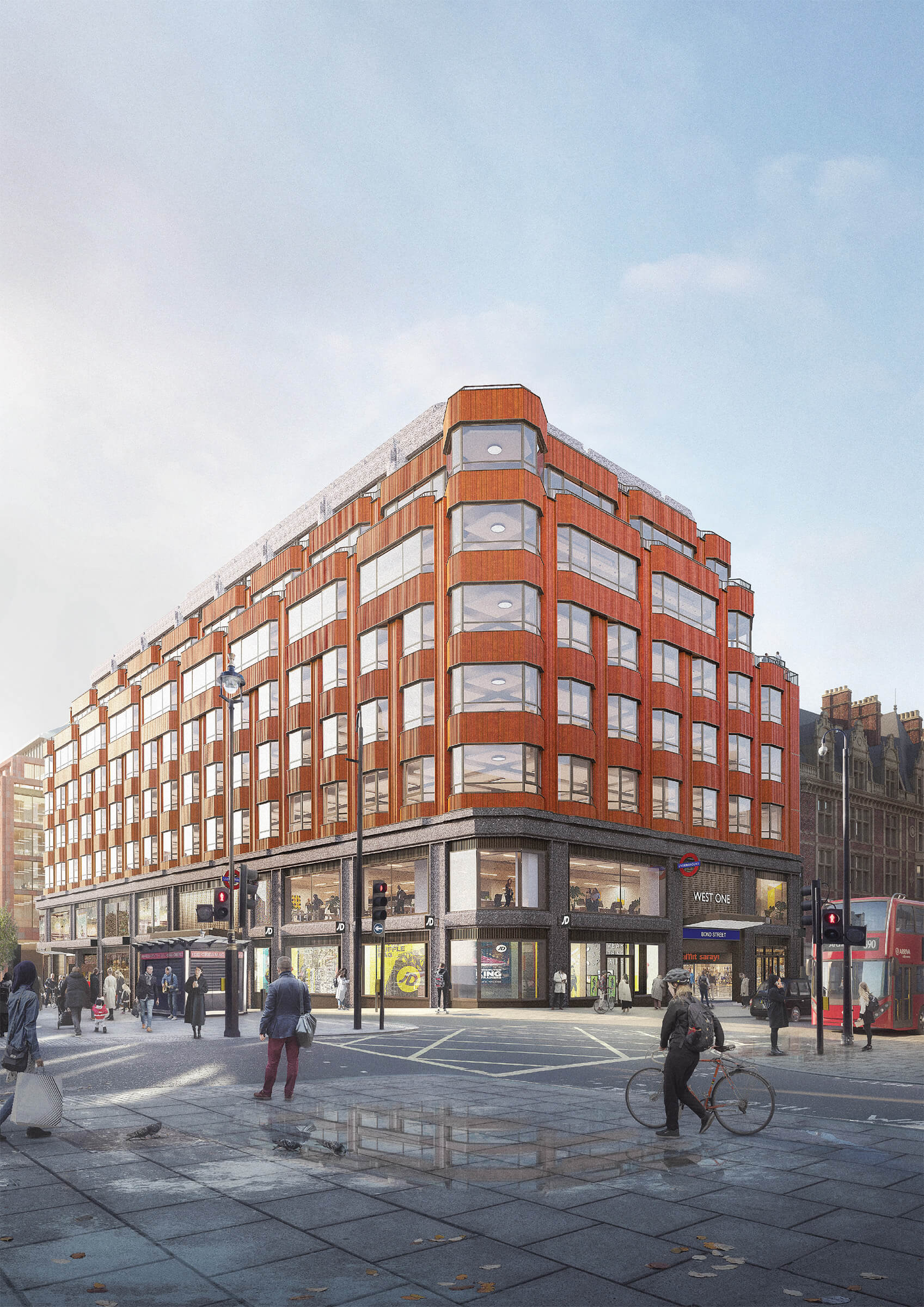
Last Thursday, 17 September, the design, consultant and construction team for Lansdowne House celebrated the topping out of the project with Audley Property, CO-RE, and contractor Mace, marking an important milestone in delivering this landmark regeneration scheme in the heart of Mayfair, London. The event celebrated the building and construction progress showcasing the new building which has been designed to last for generations to come and achieve the highest possible standards for sustainability and wellbeing, targeting BREEAM Outstanding and WELL Platinum.
The redevelopment of Lansdowne House will provide 225,000 square feet of modern office space across 10 storeys to be occupied by Blackstone for their European Headquarters, with 14,000 square feet of ground floor retail and restaurants. A forward extension of two storeys to the façade and a lengthened top canopy, seamlessly integrates a new double-height auditorium which will serve as a dynamic hub for events and collaboration. New amenities include an outdoor rooftop terrace that incorporates greening and biodiversity, balconies on every floor overlooking Berkeley Square and 470 cycle spaces located in the basement with end of journey facilities.
An innovative structural perimeter sway frame allows the building to be stable enough for an independent soft-core containing the building functions to the reconfigured or replaced without requiring wholesale demolition.
Refined through a methodical process of material and geometry testing – samples, mock-ups, benchmarks – 539 precast columns and column heads were fabricated off-site before being transported, lifted, and installed with precision across ten floors to create the frame system. These elements, in concert with an in situ concrete slab of the highest visual quality create an internal architecture of their own. Combined with a highly articulated, meticulously detailed, and expertly crafted façade, the generous plan provides depth and delight, allowing for grand light-filled floorplates.
The building is due to complete at the end of 2027.
Executive Director and Head of Design Studio, Simon Allford, said: "Lansdowne House is a remarkable tale of collaboration to create an architecture fit for a delightful present and generous enough to accommodate the unknown future: a 'Forever Architecture' enabled by the simple idea of a sway frame and a soft core, brought to life by the skill and commitment of the many thousands who have worked on this project both on and off site. These extraordinary efforts will ensure that this building, only the third ever constructed on this site, will stand here not just for decades but for centuries to come. A London landmark."
AHMM’s Head of Sustainability, Dr Craig Robertson, has been appointed an Honorary Professor of Building Performance in Architecture at the UCL Institute for Environmental Design and Engineering (UCL IEDE) at the Bartlett (UCL Faculty of the Built Environment).
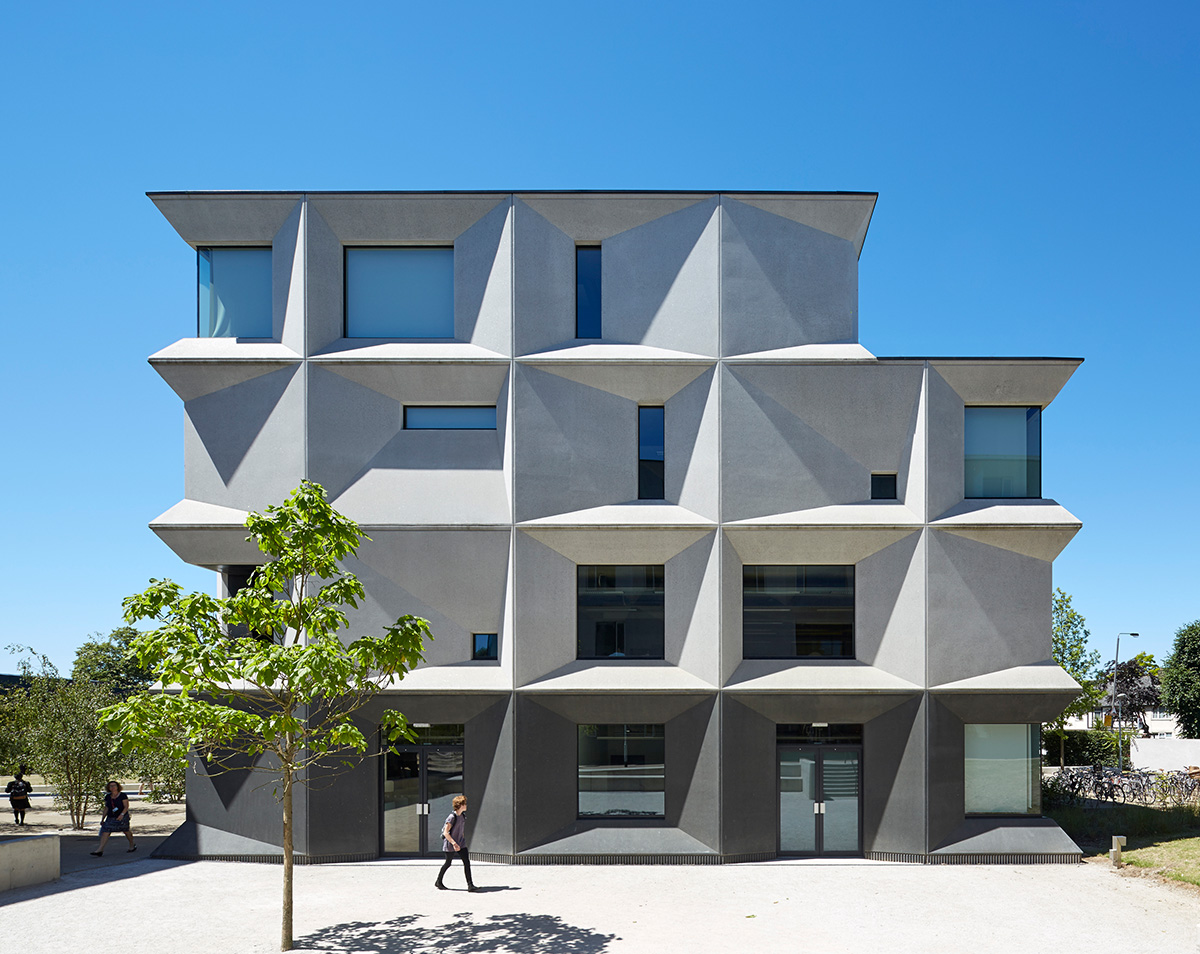
This appointment is in recognition of the research he and AHMM have contributed to the body of knowledge at the Bartlett, including a KTP investigating net-zero carbon buildings, a PhD on the developing architecture of ‘smart’ buildings, and award-winning post-occupancy evaluation of AHMM’s Stirling Prize-winning Burntwood School.
It reflects AHMM’s leading position in building performance and architectural innovation and further celebrates and enhances the practice's long-standing relationship with the Bartlett.
Professor Dejan Mumovic, Immediate Past Director of the UCL Institute for Environmental Design and Engineering (IEDE), The Bartlett (UCL Faculty of the Built Environment) said: "Tried and tested. This appointment celebrates more than a decade of impactful, evidence-based design collaboration between AHMM and the Bartlett. I am thrilled that UCL has recognised Craig’s leadership role in advancing architectural practice to deliver net zero. This strategic appointment aims to further advance joint efforts to develop data-led design processes and reshape our educational programmes."
Craig is keen to use this role to build on the project-led, pragmatic, problem-solving ethos of AHMM’s research to date, and will advance an academic partnership to develop data-led design processes.
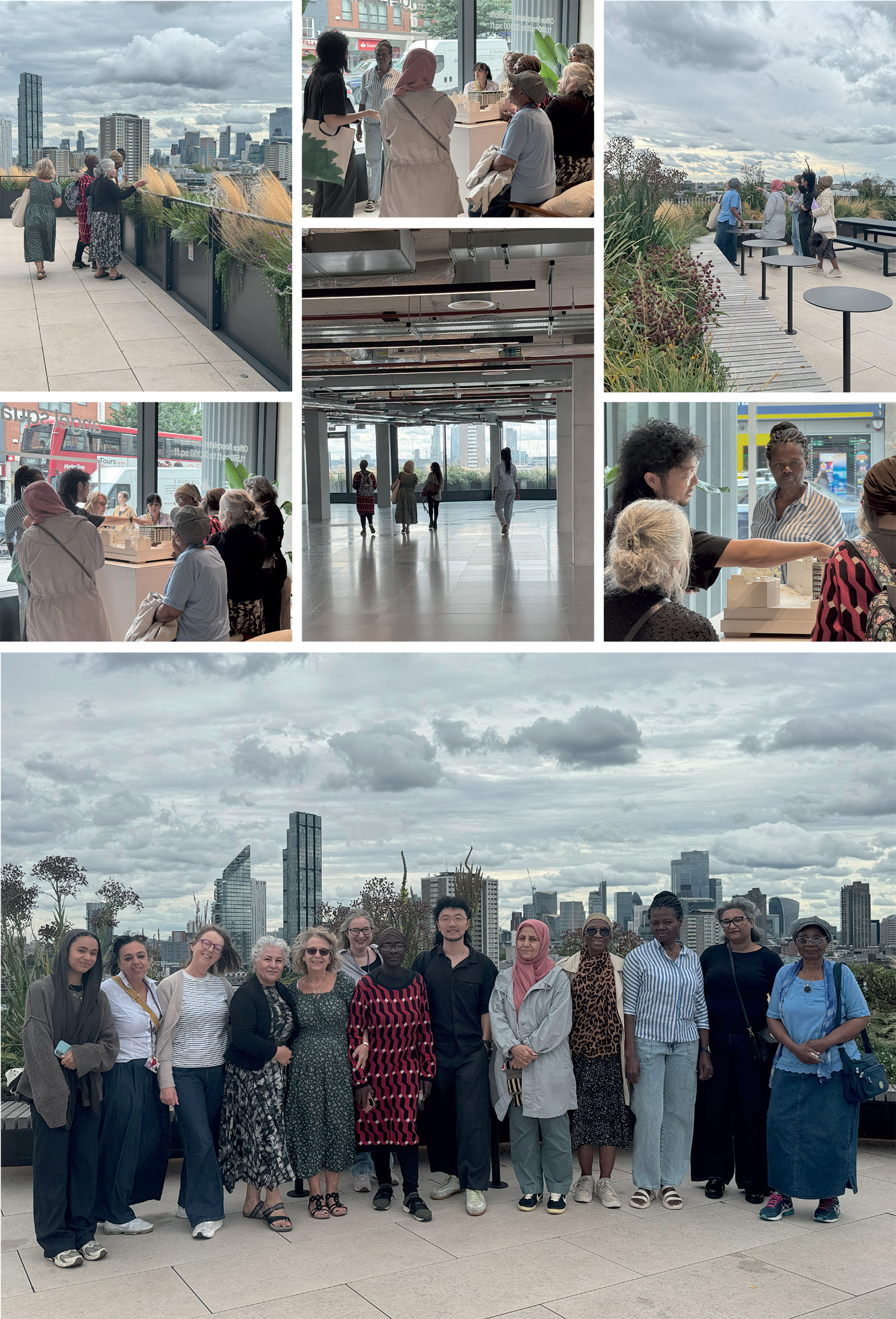
Last Friday, 04 August, members from the St Luke’s Community Centre Multicultural Women’s Group visited AHMM’s Angel Square for a tour of the building, which recently completed in November 2025.
It was a fantastic opportunity to show people living close to our offices one of our landmark office buildings – being created in their neighbourhood.
The Women’s Multicultural club at St Luke’s welcomes women of all ages and backgrounds to come together to de-stress and connect with like-minded women from the area.
AHMM’s Partnerships group has been a corporate supporter of St Luke’s for more than ten years, providing financial support as well as supporting their Job Club programme, providing one-to-one support to people in the local community who are searching for work and pro bono design work for their community café and shop.
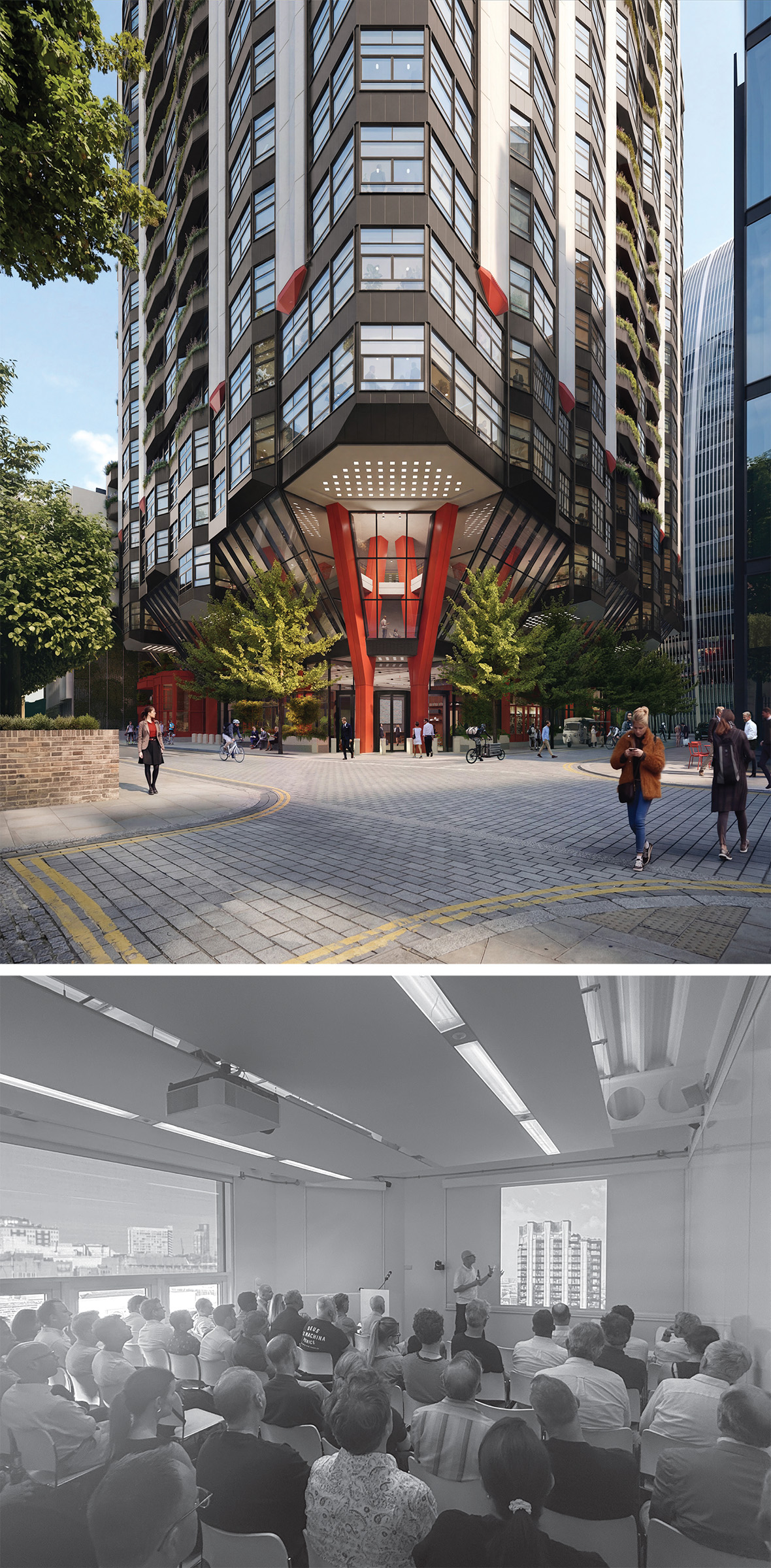
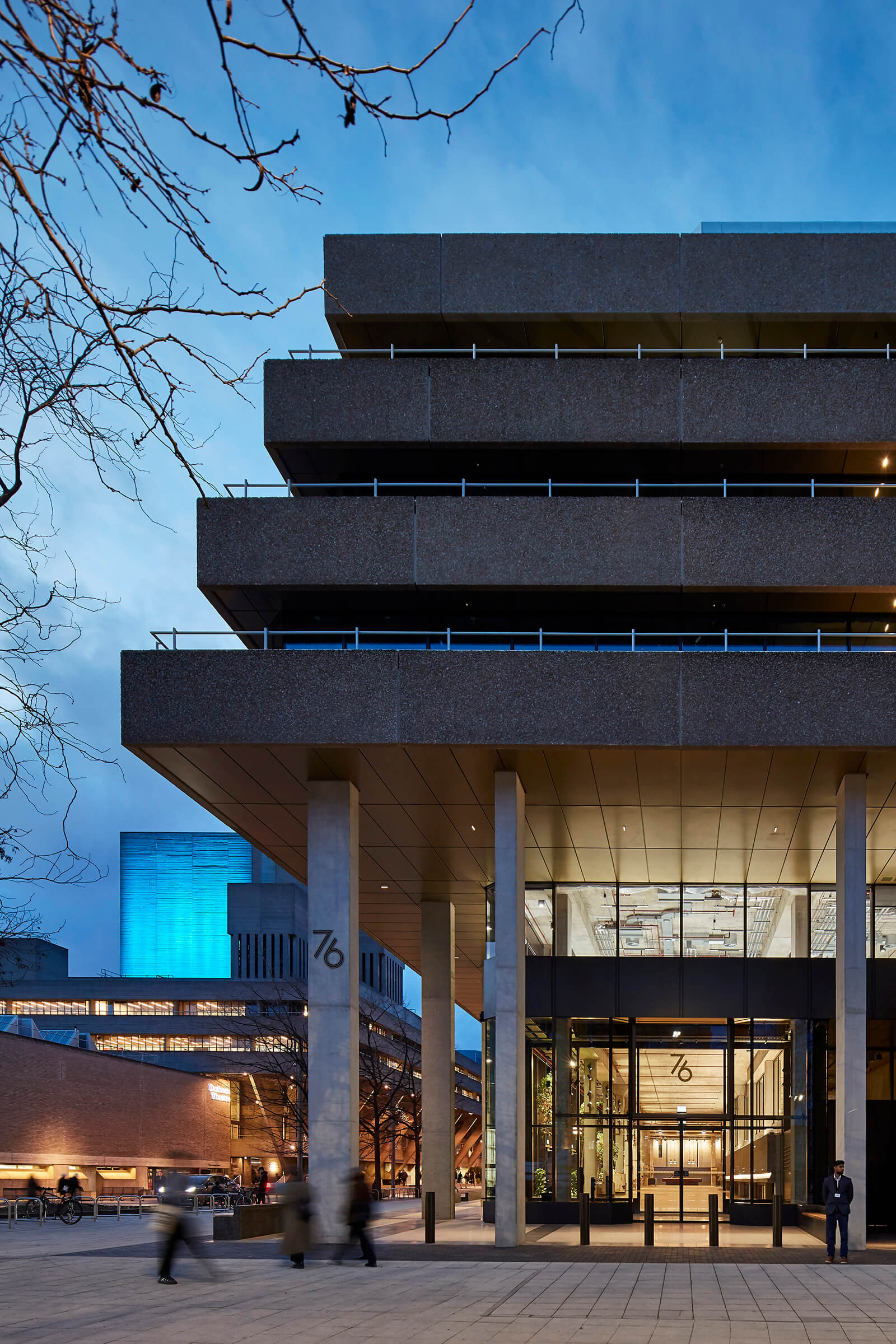
This is part of a talk that AHMM Director Will Lee gave to the practice, discussing AHMM’s transformation of the former IBM Client Marketing Centre on London’s Southbank, originally designed by Sir Denys Lasdun in 1983, into 76 Southbank for LaSalle and the Al Gurg Group.
Rather than dwell on the finished building, which completed in 2025 and will soon be home to Paypal and LEGO, Will focuses on the process of construction, the point at which the designs we work on for so long as architects become a reality, and the skill and hard work that the contractors put into realising a design.
From demolition and salvage, which started in late 2022 revealing the potential of the floor plates, to the structural remodelling required to extend the building creating an additional 100,000sqft of flexible and highly sustainable office space, Will talks through the various techniques and processes involved throughout the construction process which have preserved this important building, celebrating its original character and heritage while adapting it to meet 21st century standards.
To celebrate the RIBA Stirling Prize, the UK’s most prestigious architecture award, turning 30 this year, the RIBA are launching a public vote to find the favourite Stirling Prize-winning project.
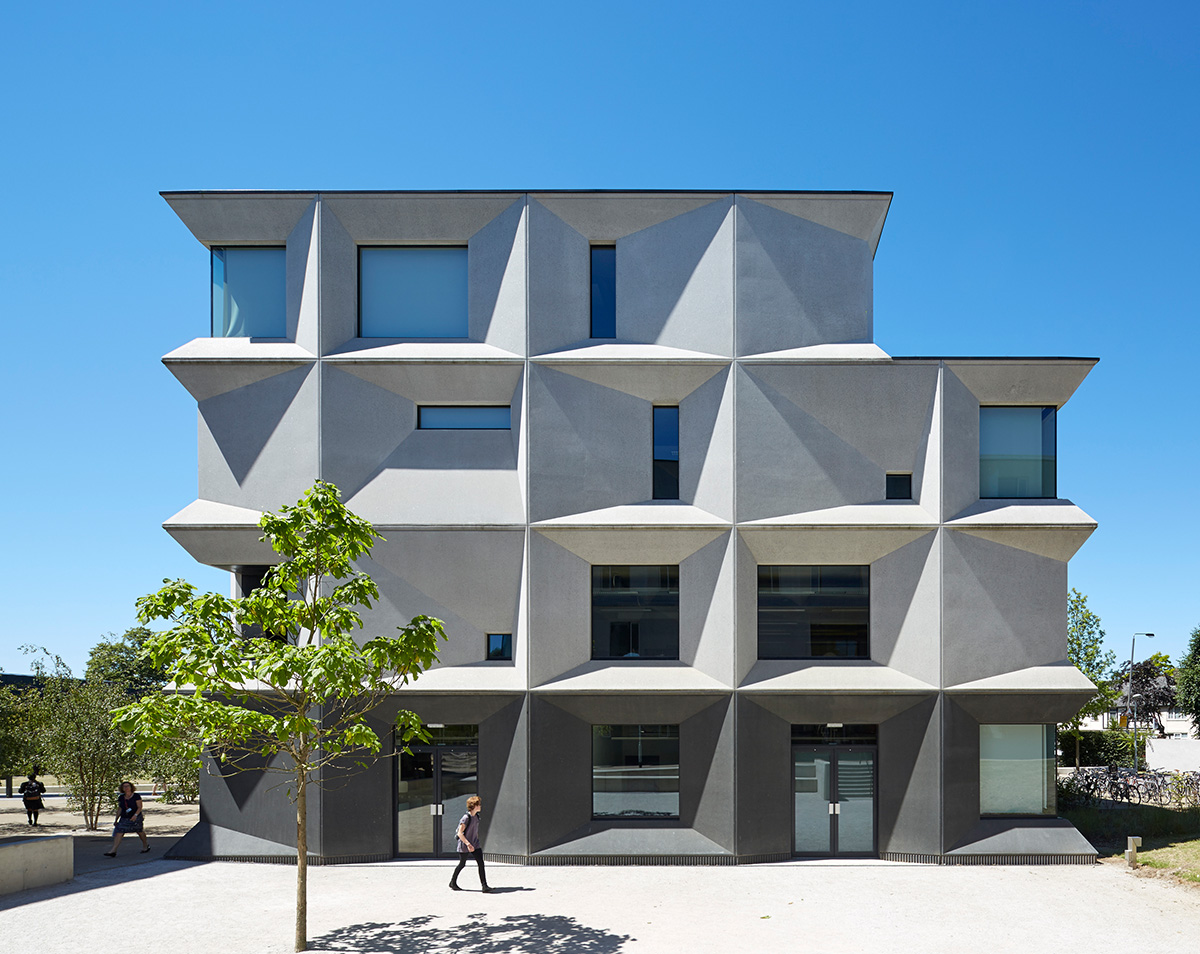
Winning the Stirling Prize in 2015, the redevelopment of Burntwood School pieces together a 1950s modernist education campus for 2,000 students and 200 staff in south-west London. Six new educational buildings – four teaching pavilions, a sports hall and a performing arts building – are placed amongst the old, including the original swimming pool and gymnasium building and main assembly hall, designed by Sir Leslie Martin, which were retained and refurbished, to form a complete and coherent campus, with lawns, squares and a central pedestrian spine.
The judges called the project “a culmination of many years of creative toil by AHMM in designing schools up and down the country. This is their masterpiece.”
On receiving the accolade, Executive Director and Head of Design Studio, Paul Monaghan added: “Schools can and should be more than just practical, functional buildings – they need to elevate the aspirations of children, teachers and the wider community.
Explore Burntwood and 30 years of award-winning architecture through the RIBA Awards Map and vote for your favourite by 30th September. Winners will be announced at the 2026 Stirling Prize ceremony on 15th
October.
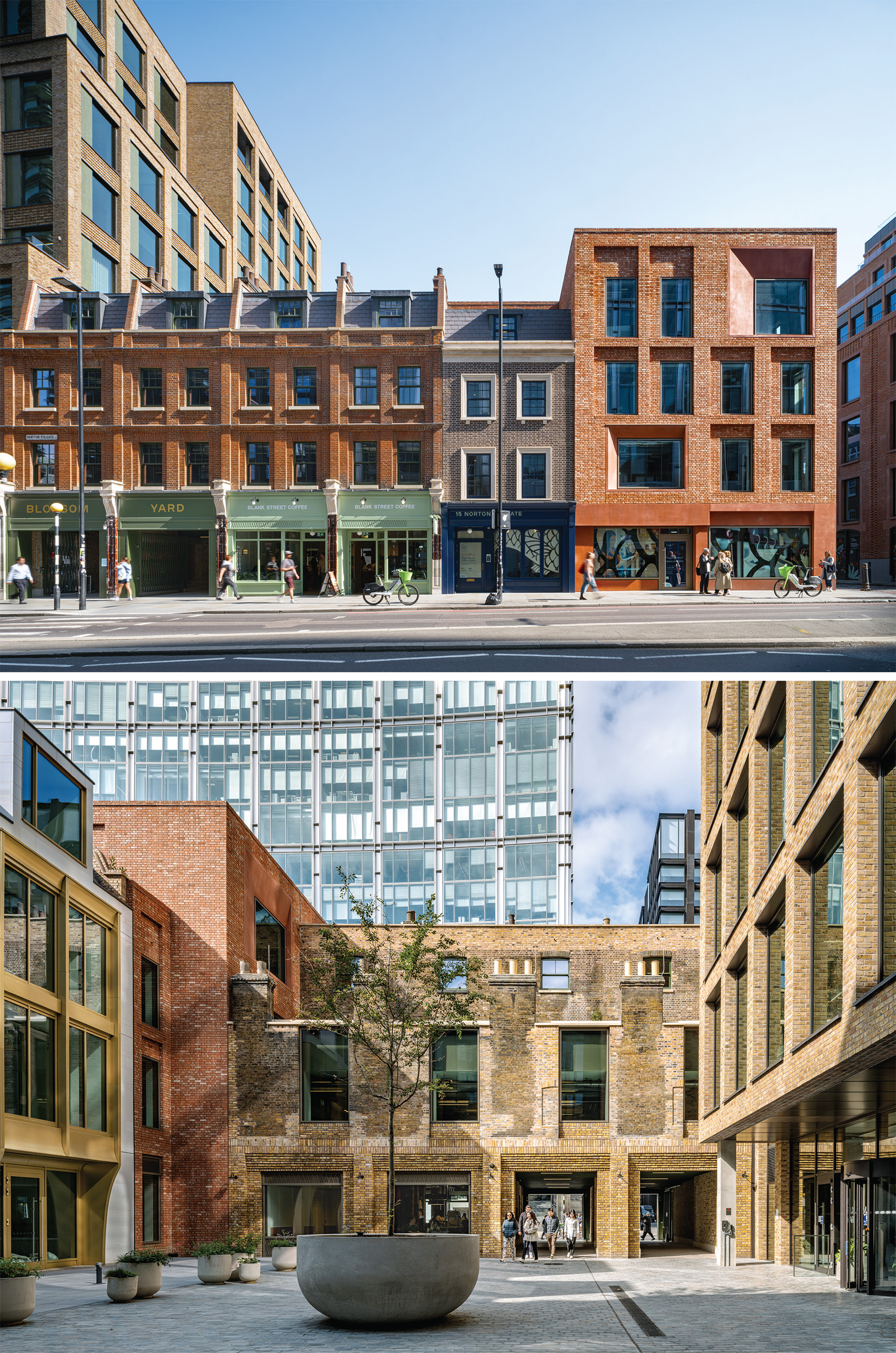
On the 14th of August AHMM Associate Director, Paul Jones, joined Morris + Company to lead a case study tour around Norton Folgate as part of Don’t Waste Buildings.
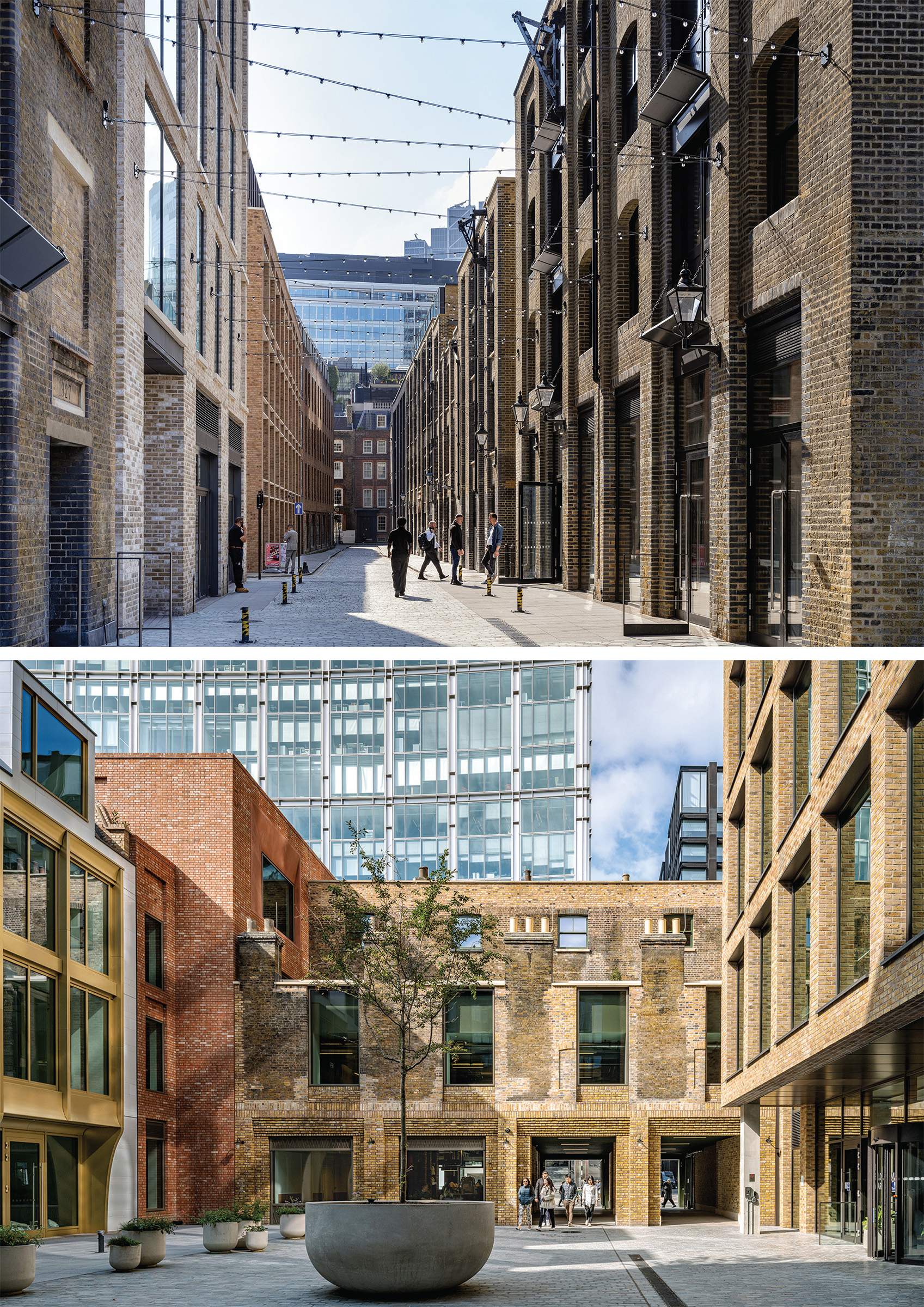
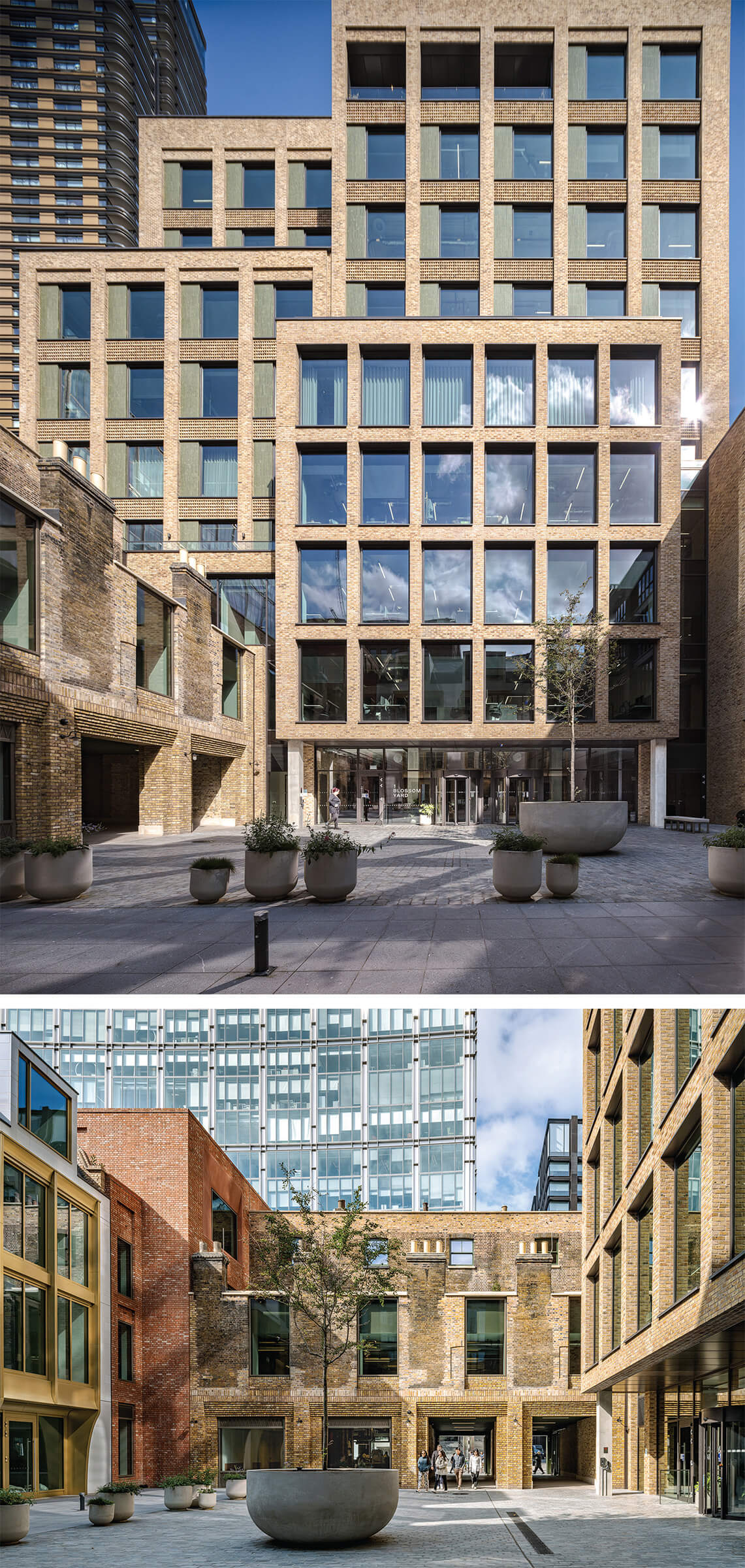
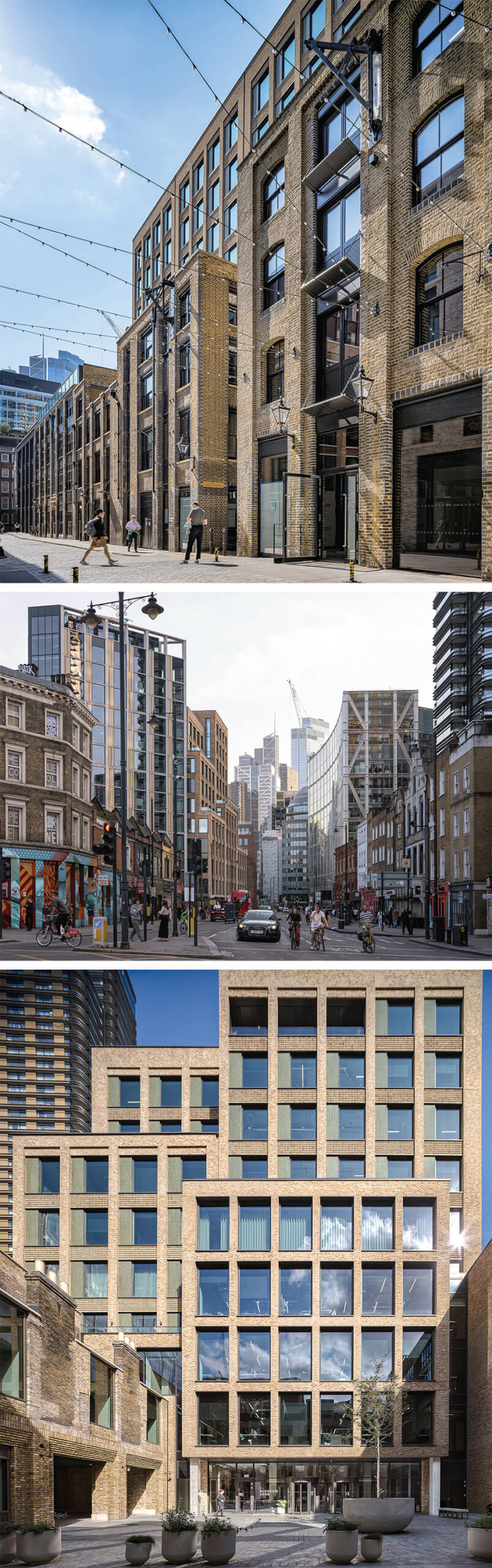
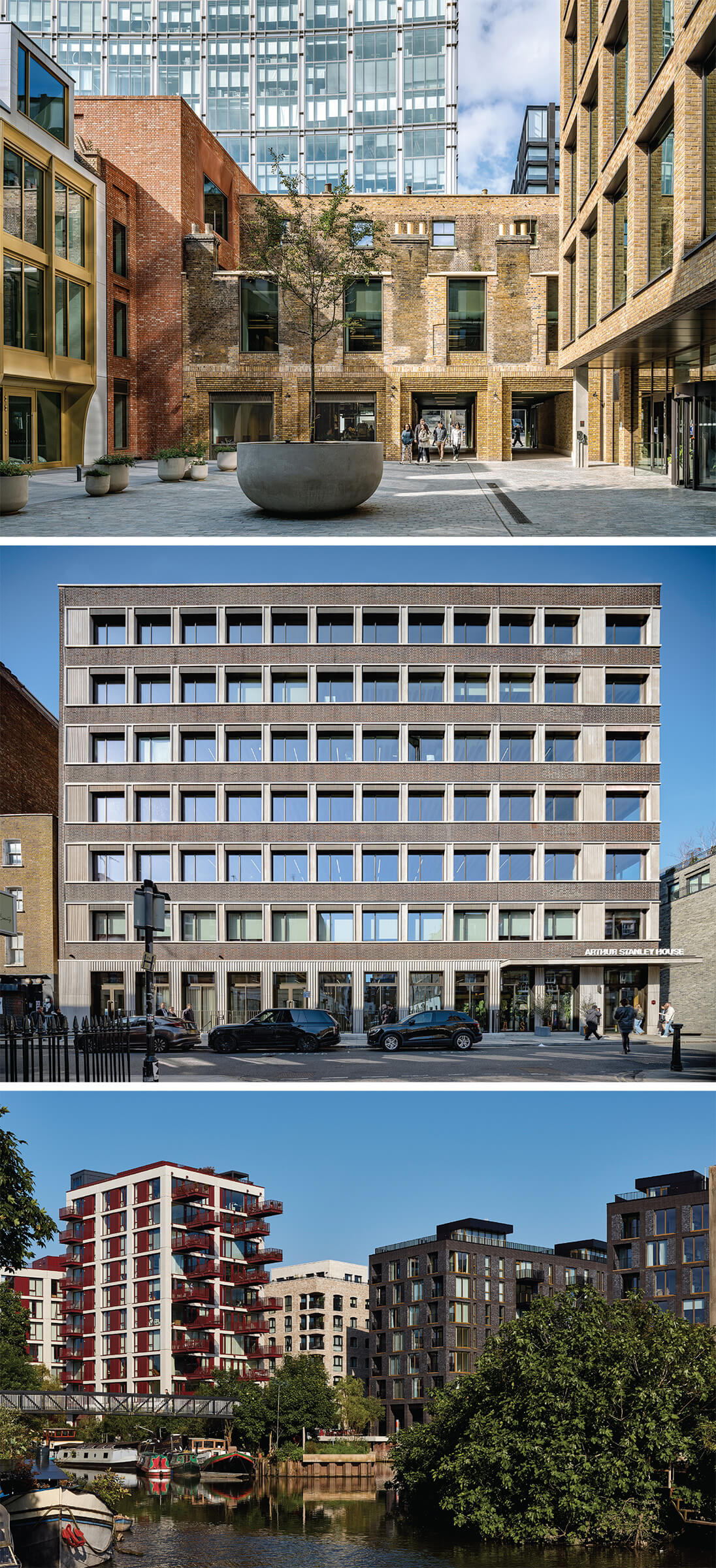
Occupying a prominent position on the City Fringe, Norton Folgate regenerates a derelict, unsafe group of sites which had laid empty for a decade, improving the streetscape and setting of the Elder Street Conservation Area. Delivered by British Land, the project comprises three urban blocks with the retention of a significant number of historic buildings, creation of six new buildings and new public realm.
Rather than applying a blanket strategy the masterplan employs a building-by-building approach to the retained existing buildings using restoration, refurbishment, extension, remodelling and facade retention to breathe new life into the architecture with sensitively designed new buildings. It sets new standards for retrofit, refurbishment, and redevelopment in central London, and acts as a blueprint for reusing building fabric, which is a necessity in the built environment industry’s approach to tackling the climate crisis.
Given the variegated character of Norton Folgate four different architecture practices were brought together to diversify the architectural approach and style Allford Hall Monaghan Morris (AHMM) was appointed as masterplanner and designed three buildings, with Stanton Williams, Morris + Company, DSDHA all designing buildings with East leading the public realm strategy.
The project goes beyond delivering commercial office space and creates a network of spaces which give amenity and allow spatial choices for people to walk, meet, sit and experience this amazing, layered and rich part of London
Don’t Waste Buildings is the voluntary effort to put a spotlight on up-front, or embodied carbon and make the case for the productive use of empty and underperforming buildings. Founded in 2022, this non-party political group is run by a collection of individuals made up of leading property developers, financiers, architects, engineers, heritage expert, and others.
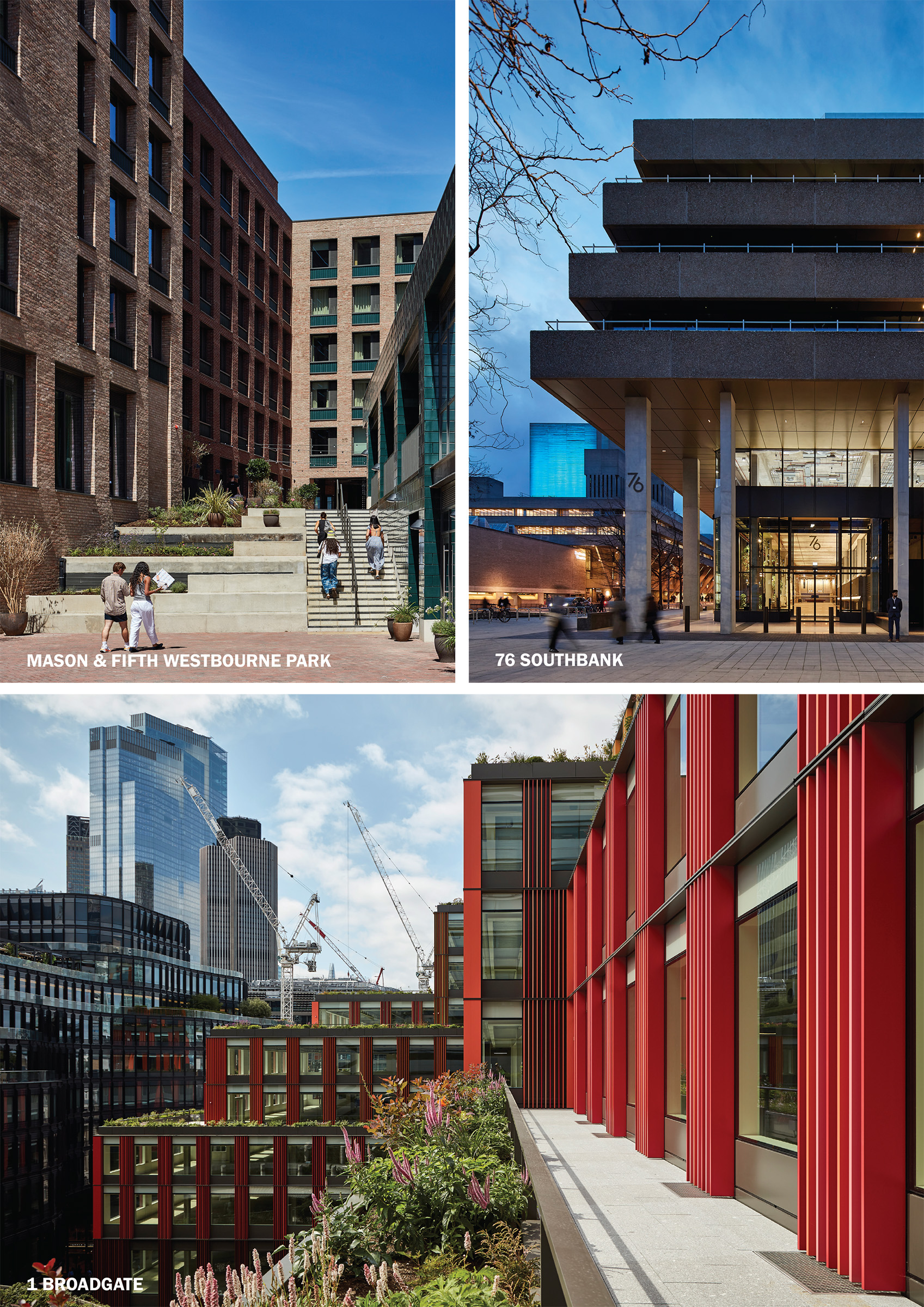
1 Broadgate, Mason & Fifth Westbourne Park, and 76 Southbank have been shortlisted for a 2026 AJ Architecture Award. Run by the Architects’ Journal these awards celebrate and reward design excellence in UK architecture.
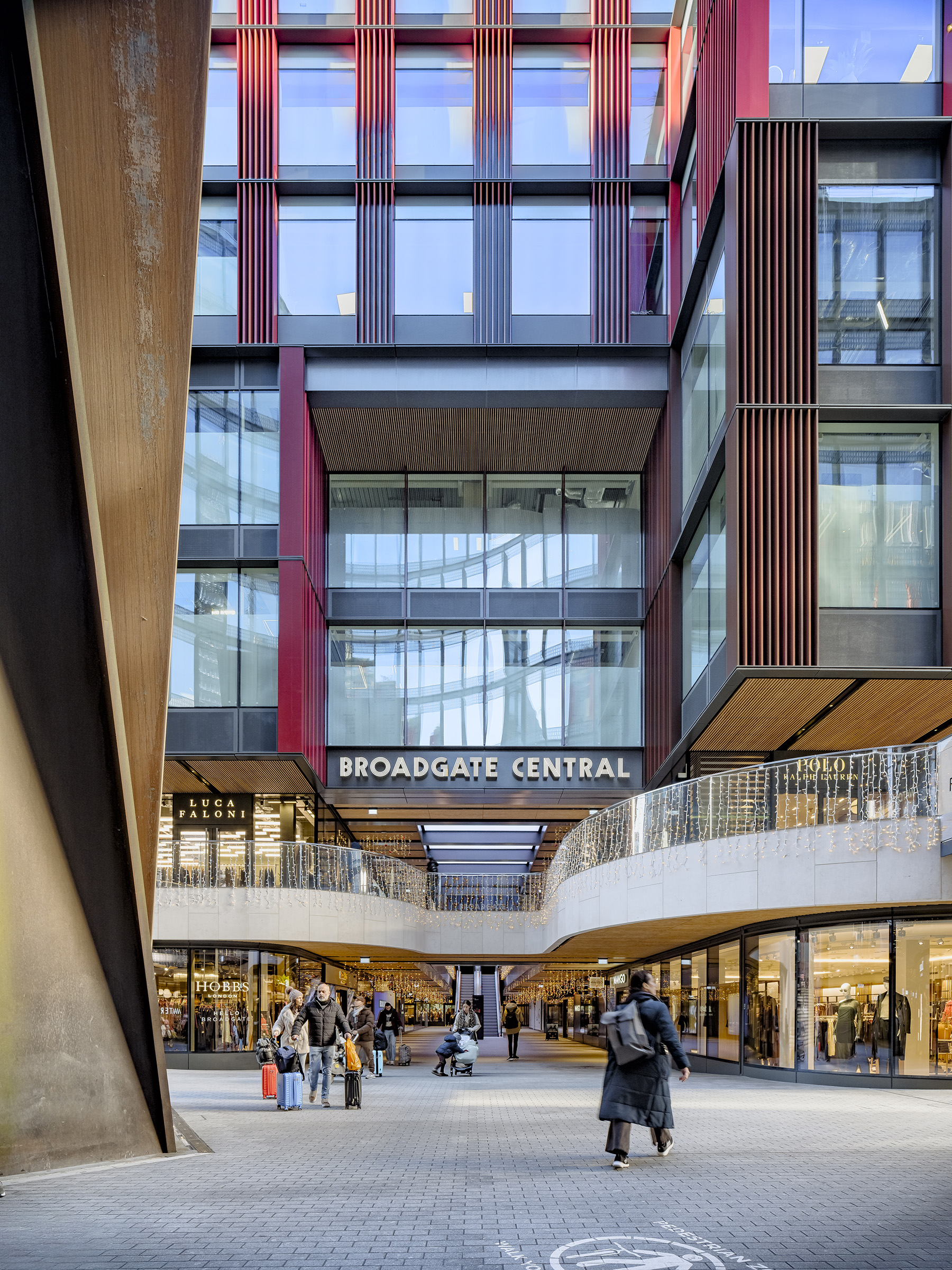
1 Broadgate, shortlisted in the Mixed Use category, provides flexible accommodation for a mix of uses, including two levels of retail space with twelve storeys of office space above, in the southern part of the Broadgate campus in the City of London. The massing and articulation help to break down the perceived scale of the building; at upper levels massing is sculpted to maintain sunlight to Broadgate’s key public spaces, while lower-level volumes pull apart to create entrances and retail arcades through the building. Generous terraces and balconies provide a total of 45,000 square feet of amenity and green space for building users.
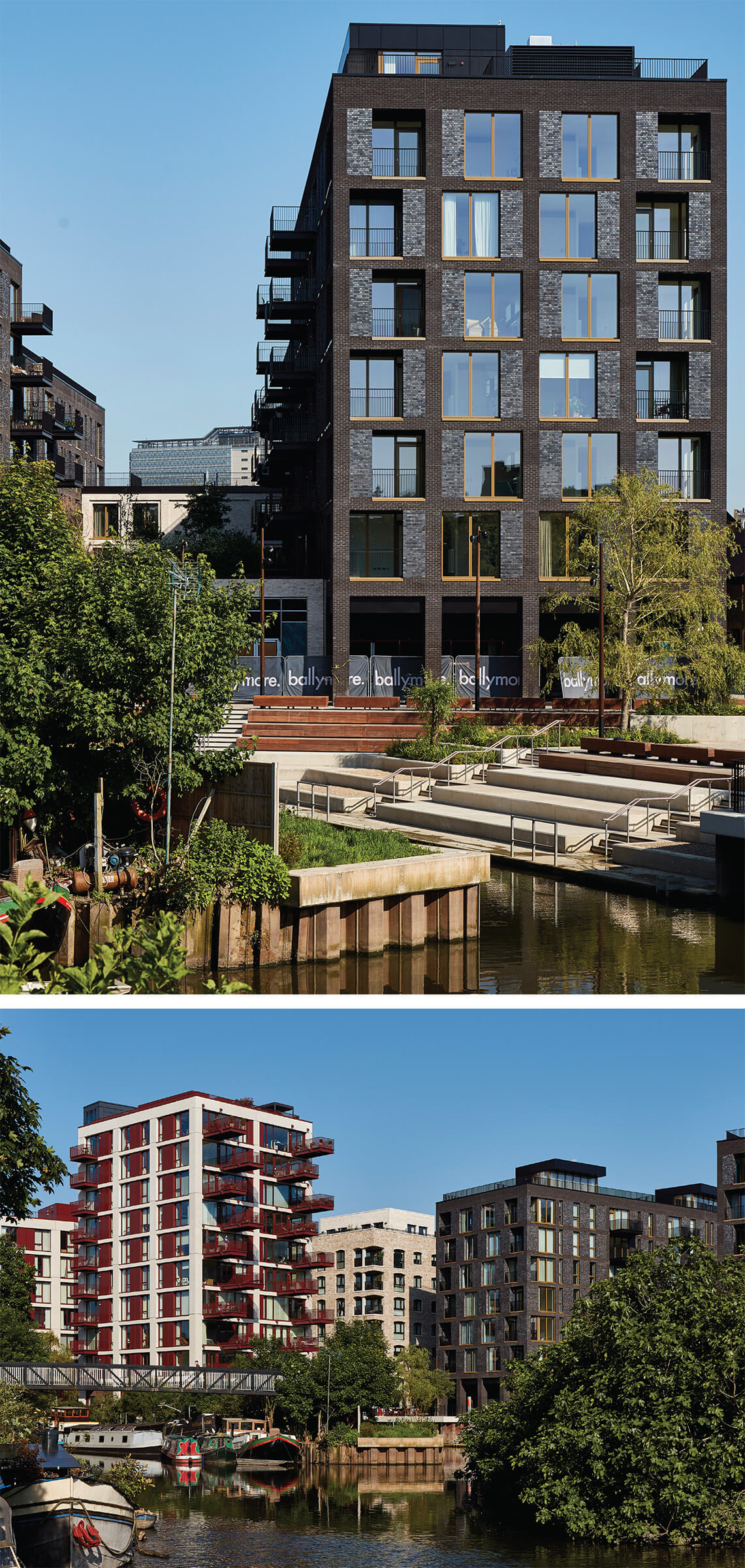
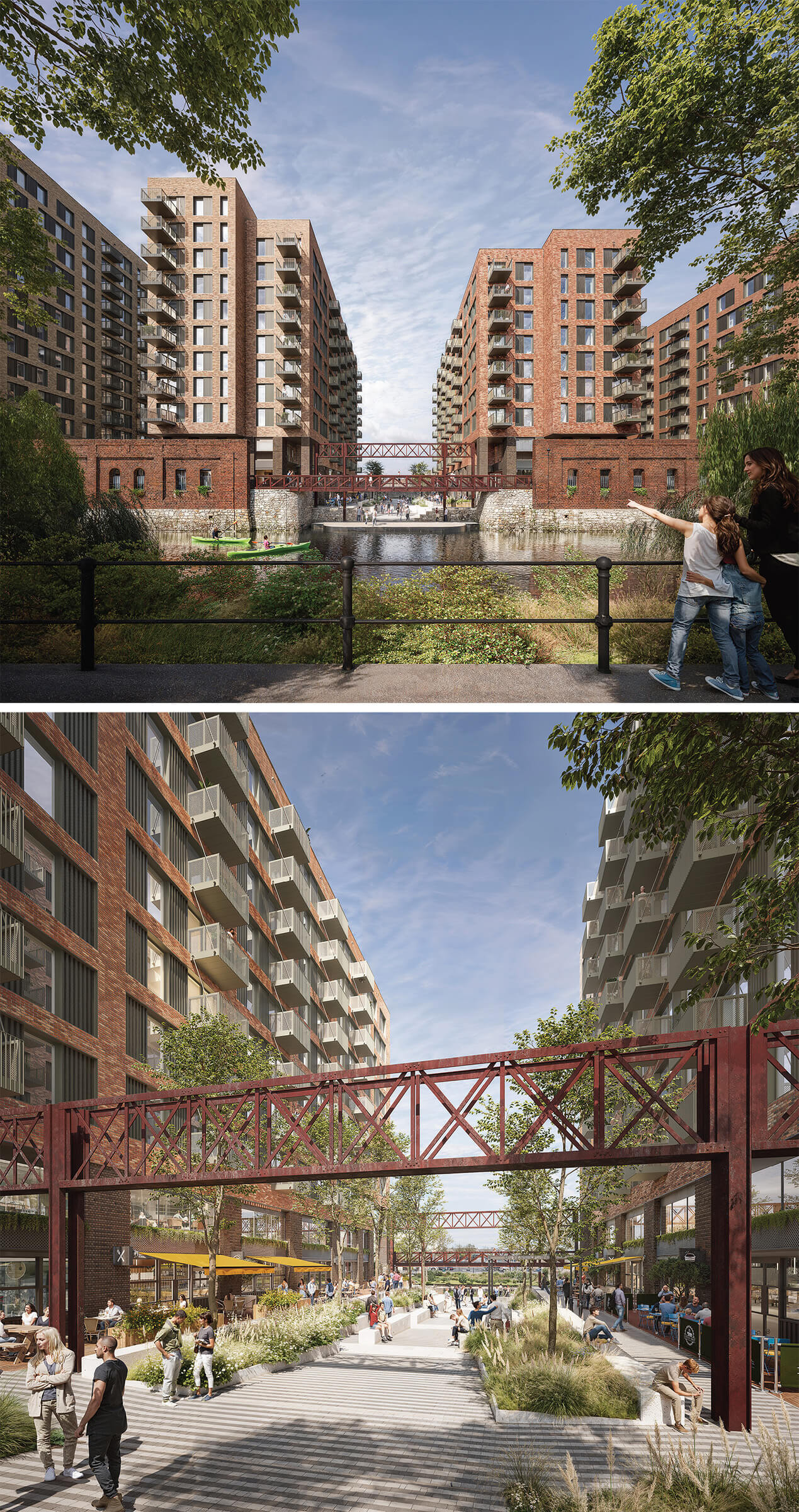
Mason & Fifth Westbourne Park, shortlisted in the Mixed Use category, sees the redevelopment of a brownfield site, once occupied by the Licenced Taxi Drivers’ Association, to establish a new urban quarter designed to draw young creative, entrepreneurs and professionals to West London. Designed by AHMM with interiors by TiggColl, the scheme is a family of buildings around an urban courtyard, designed for residents and the wider community, opening to the canal. A 332-key flexible living building anchors the development, with social and work lounges, communal dining, listening lounge, screening room and wellness suite (pool, gym and movement studio). The scheme also provides amenities for the wider community, including co-working, affordable workspaces and a waterfront restaurant.
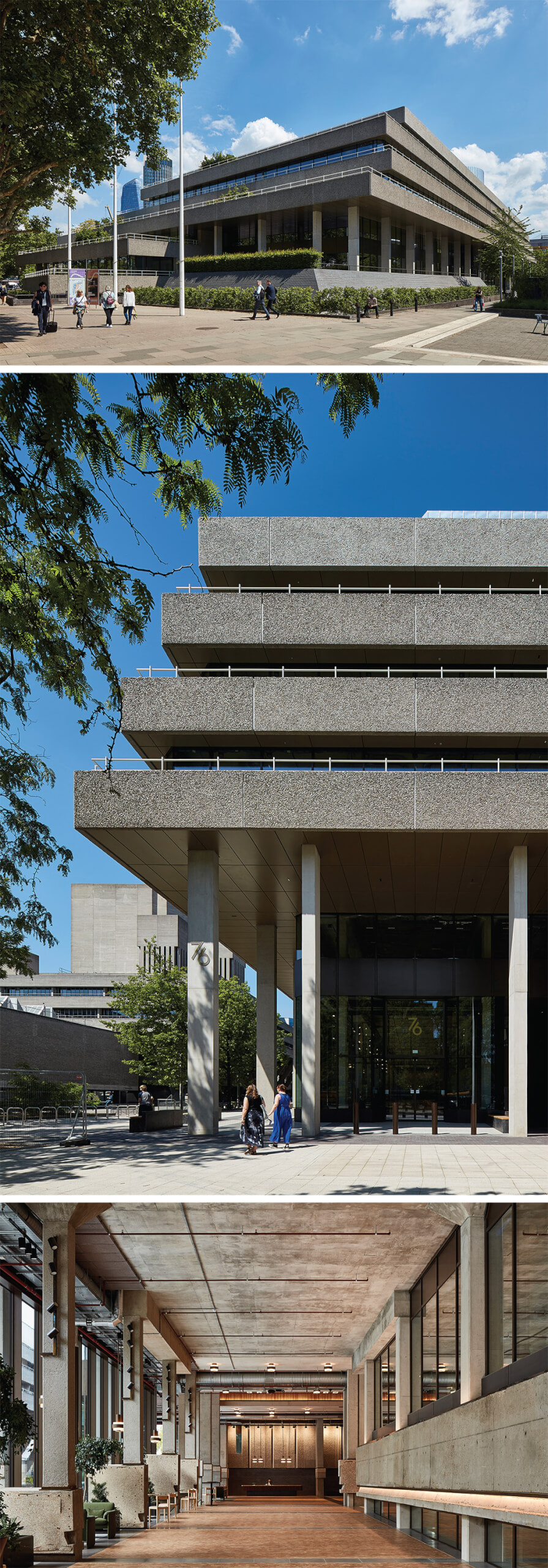
76 Southbank, shortlisted in the Refurbishment category, celebrates the transformation of a once-deteriorating Grade-II listed building designed by Sir Denys Lasdun into a bespoke, renewed contemporary workplace which celebrates its heritage and thoughtfully enhances it to meet the needs of modern use. The building was stripped back to its frame and remodelled to make it fit for 21st century office occupiers with a new open circulation core, fully accessible landscaped terraces and 100,000 square feet of additional office space. The existing floorplates have been decluttered to make the most of the inherent volumes and the domineering car ramps were carefully cut out of the building and replaced by a new street level colonnaded entrance, pedestrianising its car-orientated relationship with the public realm.
Winners will be announced at the annual awards ceremony in November.
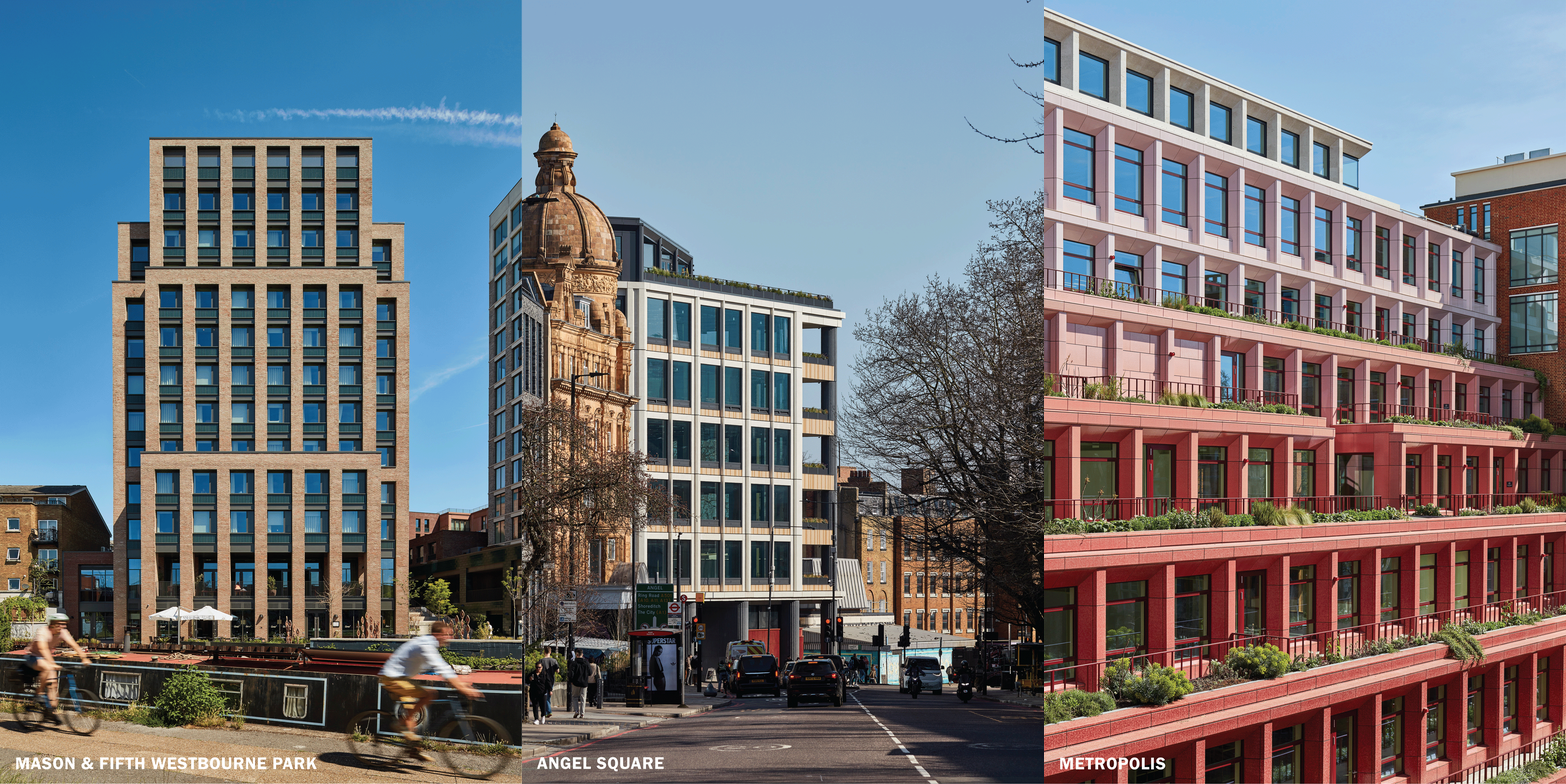
Mason & Fifth Westbourne Park, Angel Square and Metropolis have been shortlisted for a New London Architecture (NLA) Award. Supported by the Mayor of London, the NLA Awards celebrate schemes that shape a better London and contribute to a city of Equity, Sustainability and Prosperity.
Mason & Fifth Westbourne Park, shortlisted in the Retail & Hospital Built category, is a mixed-use development that transforms a former brownfield site into a waterfront destination on the Grand Union Canal, designed to draw young creative, entrepreneurs and professionals to West London. Designed by AHMM with interiors by TiggColl, the scheme is a family of buildings around an urban courtyard opening to the canal. A 332-key flexible living building anchors the development, with social and work lounges, communal dining, a listening lounge, screening room and wellness suite (pool, gym and movement studio). Community-facing uses include co-working, affordable workspaces, a waterfront restaurant and public-realm upgrades.
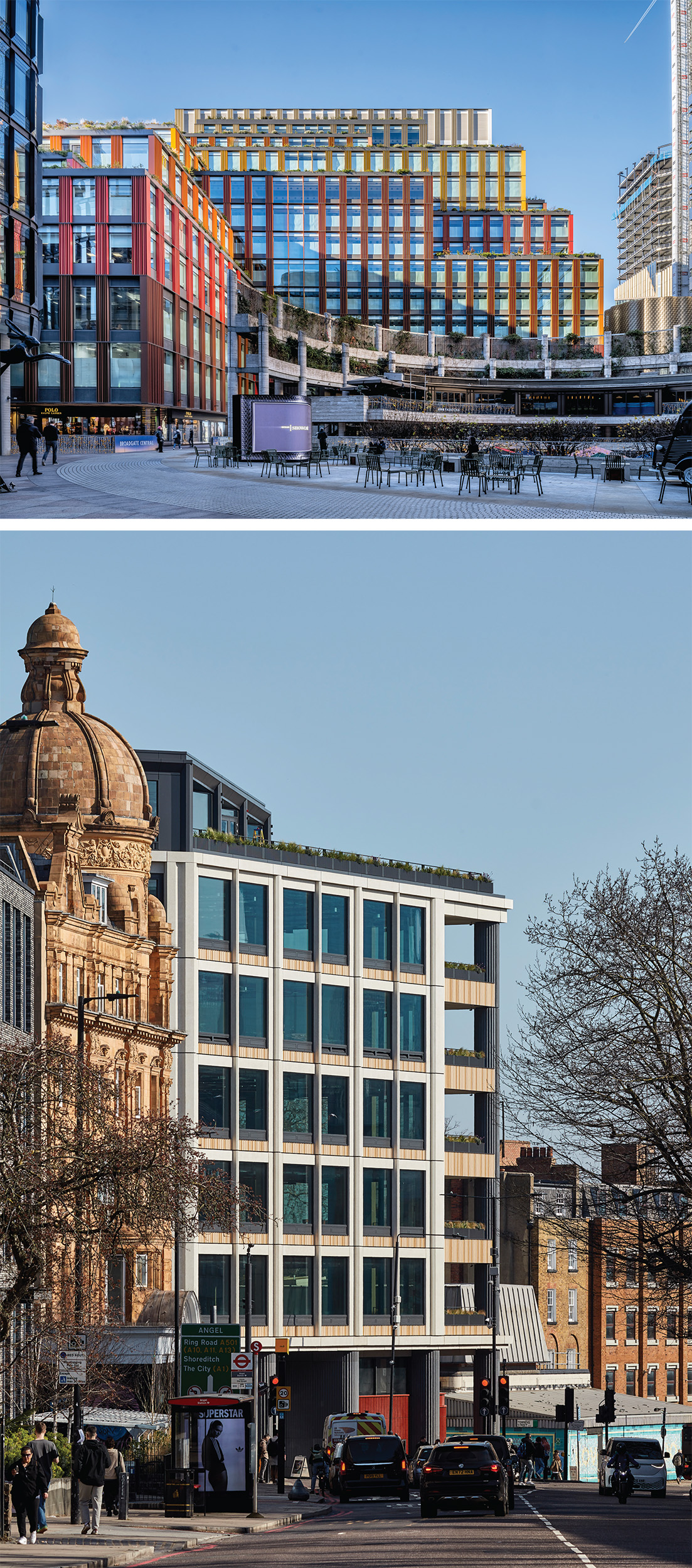
Angel Square, shortlisted in the Office Built category, is a mixed-use, office-led redevelopment at the gateway to Angel, Islington, reimagining a constrained 1980s building through a strategy of structural reuse, environmental upgrade and public realm repair. Built directly over Angel Underground Station, the scheme retains c.80% of the original concrete frame, basement and foundations to transform a previously inward-looking site into a permeable and engaged piece of city. The new landmark building provides c.188,800 square feet of modern office space above a permeable ground floor featuring a grand lobby and café, public house and new public throughfare linking Islington High Street to Torrens Street.
Metropolis, shortlisted in the Retrofit Built category, reimagines a landmark building within the historic grain of Marylebone, London exemplifying best practice in high-performance, adaptive reuse and wellbeing-led workplace development. Originally commissioned by Woolworths in 1955, and designed by renowned architect Richard Seifert & Partners, the scheme transforms the mid-century landmark into a 175,000 square foot, low carbon commercial hub, bringing the existing structure in line with the needs of contemporary office occupiers. The existing building has been extended with a seven-storey stepped extension to the rear, built using cross-laminated timber (CLT). Clad in glazed terracotta, the extension increases the building’s internal floor area by 40% and creates opportunities for staggered landscape terraces, providing generous green space for tenants.
Winners will be announced in November at the annual NLA Awards Lunch at Guildhall.
Earlier this summer AHMM hosted a City Architecture Forum event at our Morelands studio, exploring the future of offices, focusing on the Dovetail Building in Houndsditch, a major redevelopment of 115-123 Houndsditch in the heart of the City of London, designed by AHMM for developer Brockton Everlast.
The evening brought together three distinct perspectives on the future of office buildings: the planner, the architect and the developer, who all came to the shared view that these should not only meet ever-growing occupier demand, but should embody people, place and adaptability.
Joanna Parker, Principle Officer (Design and Heritage) at the City of London, opened the discussion with numbers, detailing the ambition of the future City, which forecasts that a minimum of 1.2 million square metres more office space is required by 2040.
Simon Allford, Executive Director and Head of Design Studio at AHMM, followed, unfolding the conversation from how much office space London requires, towards what kind of office space will actually matter. He described the long-term role of city architecture, with a strong emphasis on retrofit, circularity and adaptability, and how buildings are not merely objects but backdrops for the countless activities that unfold around them. Drawing back to The Dovetail Building, he talked about how the project addresses this with a design imagined as a “delightful container for unknown uses”.
Closing the evening, David Marks, CEO of Brockton Everlast, shared a developer’s perspective through The Dovetail Building, likening it to a cocktail, a carefully mixed combination of ingredients centred on culture and community, each chosen to create a particular experience. The project is driven by a belief that future offices must embrace what technology cannot replace: human interaction.
Read the event write up on CAF’s website here.
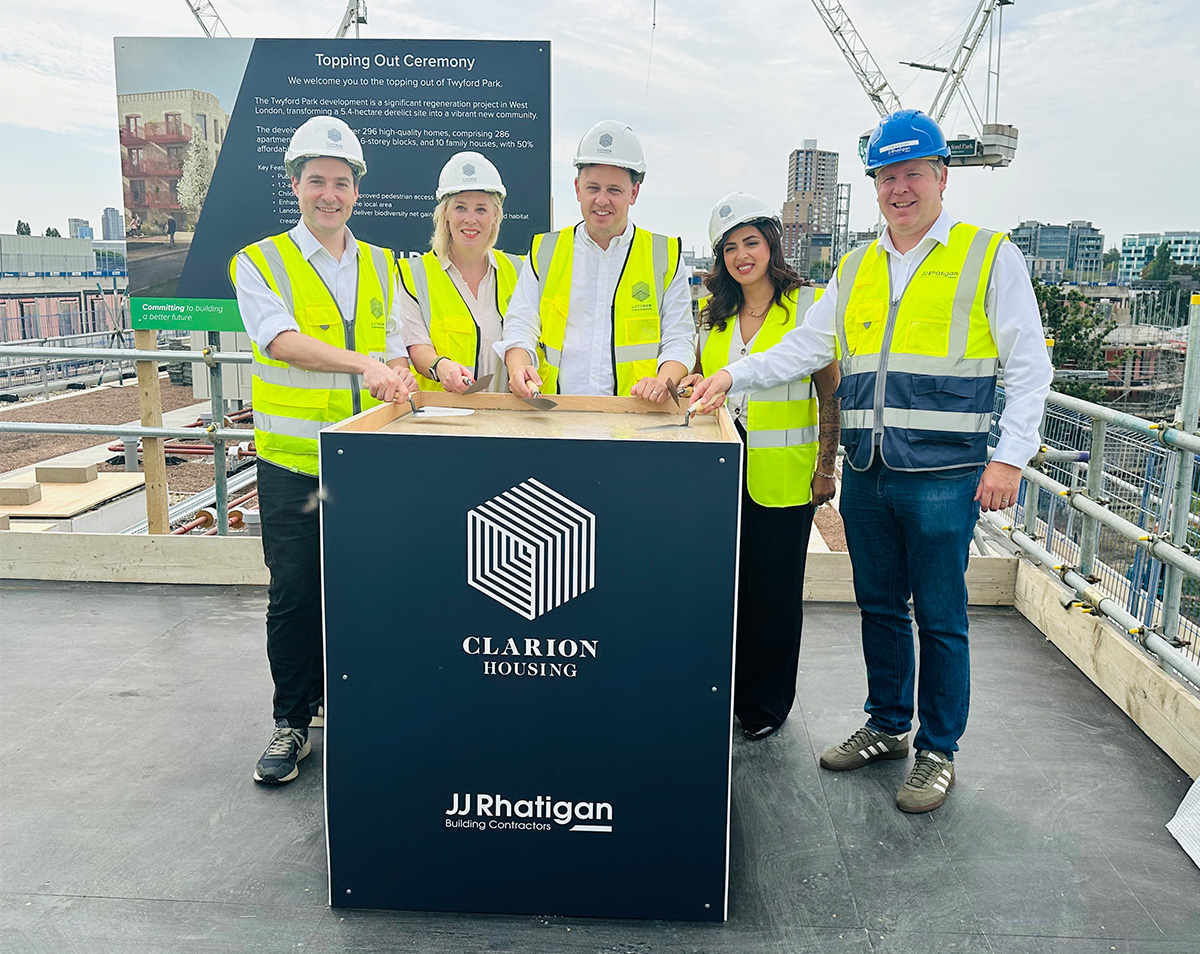
On Tuesday, 04 August, the project team for Twyford Park marked the topping out of the project with Cllr Peter Mason, Leader of Ealing Council and our clients Latimer (Clarion Housing Group’s development arm) and main contractor, JJ Rhatigan marking an important milestone in delivering this landmark regeneration scheme. The event celebrated the construction progress showcasing the future homes and work to the walled garden and landscape.
The Twyford Park development saves and sympathetically restores a derelict Grade-II listed manor house and original walled garden on Historic England’s Heritage at Risk Register in Ealing, west London. A total of 326 new homes will be built across the whole site; 30 homes in the restored Abbey and 269 carefully designed new homes across seven new residential buildings, 50% of which will be affordable housing for local people.
The scheme, designed by AHMM adopts a landscape-led approach to the masterplan with the new residential buildings carefully placed within the grounds to respect the most significant trees and the setting of listed buildings, with the architectural approach inspired by the Gothic character of Twyford Abbey. The abbey’s historic grounds will be opened up to the public for the first time since the Alexian Brotherhood vacated the Twyford Abbey in 1987, improving connectivity with the canal and wider area along with a new 1.2-acre public park complete with children’s play facilities. New community grow gardens and an orchard will be provided within the historic site’s restored walled garden for residents and visitors.
Laura Stephenson, Director at AHMM said “This marks an important milestone in delivering much needed high-quality affordable homes for Ealing. We look forward to welcoming families to these new homes next year and seeing the historic South Lawn opened to the local community for the first time in thirty years.”
At the end of July The Architecture Club invited members to a summer celebration held at 76 Southbank, with opening words delivered by Simon Allford and tours of regenerated building run by Director Will Lee.
76 Southbank celebrates the transformation of a once-deteriorating Grade II listed building, designed by Sir Denys Lasdun into a bespoke, renewed contemporary workplace which celebrates its heritage and thoughtfully enhances it to meet the needs of modern use. The building was carefully stripped back to its frame and remodelled to make it fit for 21st century office occupiers with a new open circulation core, fully accessible landscaped terraces and 100,000 square feet of additional office space. The domineering car ramps were carefully cut out of the building and replaced by a new street level colonnaded entrance, pedestrianising its car-orientated relationship with the public realm.
The scheme has preserved this important building for the long-term future and with tenant fit-puts underway, 76 Southbank will soon be home to Paypal and the LEGO Group, breathing new life into the Grade-II listed former IBM building.
Established in 1922, The Architecture Club’s original purpose was to enlarge the public appreciation of good architecture and the allied arts. Today, the club promotes architecture in its broadest sense through events designed to educate and inform.
The Beckett has been shortlisted for a 2026 British Homes Award in the Later Living/Supported Living Design of the Year category. For over a decade these awards have been solely dedicated to the UK’s housing sector, honouring a wide range of project types from bespoke residencies to transformative large-scale developments.
The Beckett, developed for Elysian Residencies, provides 89 extra care apartments on the site of a former bus depot in Royal Tunbridge Wells. The scheme embraces the later living ethos that life should be fulfilling, engaging and uplifting, enabling residents to live life on their own terms, in their own home.
The design reinstates the domestic character of Royal Tunbridge Wells, responding sensitively to the varying scales of St John’s Road, Woodbury Park Road and surrounding residential streets. It comprises three new buildings ranging from three to five storeys, arranged around a landscaped courtyard garden. External finishes reflect the local context with the façade employing brick and painted render for a clean, elegant aesthetic.
All apartments include full-height windows and private balconies, strengthening the connection between indoor and outdoor spaces. Generous circulation areas are designed to encourage social interaction amongst residents.
Winners will be announced at the annual Awards Ceremony in September.
Norton Folgate has received two Royal Institution of Chartered Surveyors (RICS) London Region Awards – Commercial Development Project (London) and Project of the Year (London). These awards showcase the most inspirational initiatives and developments in land, real estate, construction and infrastructure, recognising outstanding achievement, teamwork, and companies.
Occupying a prominent position on the City Fringe, this office led development regenerates a derelict, unsafe group of sites which had lain empty for a decade, improving the streetscape and setting of the Elder Street Conservation Area. Delivered by British Land, the project comprises three urban blocks with the retention of a significant number of historic buildings, creation of six new buildings and new public realm.
Rather than applying a blanket strategy the masterplan employs a building-by-building approach to the retained existing buildings using restoration, refurbishment, extension, remodelling and facade retention to breathe new life into the architecture with sensitively designed new buildings. It sets new standards for retrofit, refurbishment, and redevelopment in central London, and acts as a blueprint for reusing building fabric, which is a necessity in the built environment industry’s approach to tackling the climate crisis.
Given the variegated character of Norton Folgate four different architecture practices were brought together to diversify the architectural approach and style Allford Hall Monaghan Morris (AHMM) was appointed as masterplanner and designed three buildings, with Stanton Williams, Morris + Company, DSDHA all designing buildings with East leading the public realm strategy.
The project goes beyond delivering commercial office space and creates a network of spaces which give amenity and allow spatial choices for people to walk, meet, sit and experience this amazing, layered and rich part of London
Westminster Academy, Hawley Wharf and White Collar Factory have been named finalists in this year’s Architecture Today Test of Time Awards.
These awards represent a cultural shift away from celebrating newness and towards a focus on longevity with a greater emphasis on building performance evaluation and shared learning, helping the industry understand how building adapt, endure and continue to serve their users over time.
Hawley Wharf, a finalist for the Mixed Use & Retail Award, transforms a constrained, underused Camden Town site into a mixed-use quarter that strengthens the area’s identity and reconnects it with its wider context. The masterplan included eight new buildings, three new public spaces, refurbishment of existing railway viaducts and two existing buildings, including the Grade II Listed 1 Hawley Road. Uses include affordable and private homes, a primary school, workspace, retail, workshops, Everyman cinema and commercial market buildings. The ambition of the project was to extend Camden Market’s character without overwhelming it and provide a space that will continue to evolve to the changing needs of the users. The restoration of five fire-damaged houses on Chalk Farm reinstated a high street frontage, while flexible market buildings, retail arches, homes and workspace, education and public spaces support a diverse, adaptable place rooted in Camden’s existing identity.
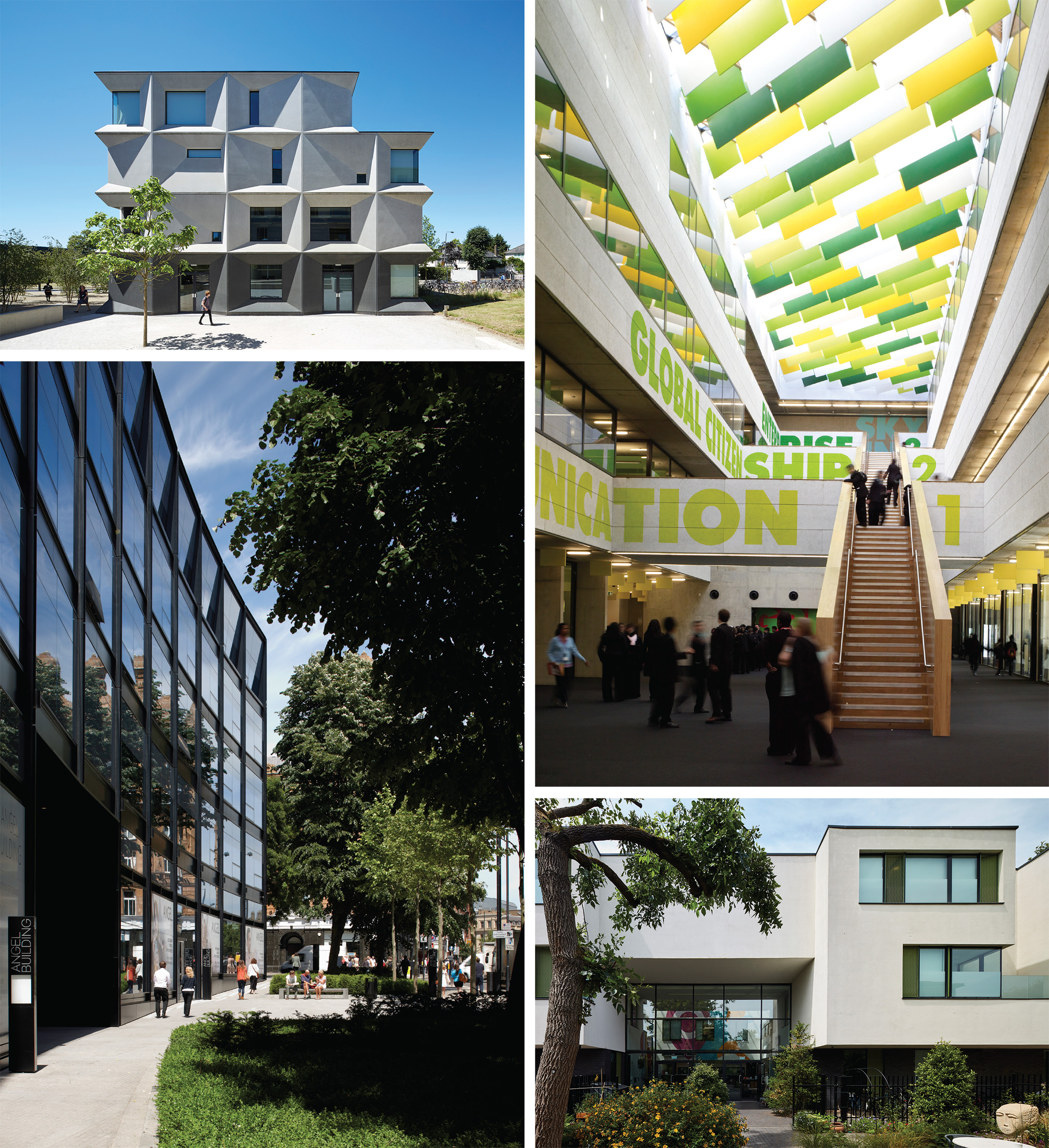
Westminster Academy, a finalist for the Education Award, is a secondary school in West London, housing 1,175 pupils and 128 staff members. Located on Harrow Road, the simple form of the building, responding to the need for a fully sealed building, has a bold, expressive façade stratified into large panels of glazing, vibrantly coloured terracotta tiles, creating a new civic landmark. The central atrium acts as the hub of the school with supergraphics and openness which has fostered a culture of collaboration among staff and students. The Sports Hall is housed in a separate building to allow for year-round community use. Since completion in 2007, the Westminster Academy building has proved to be more than an architectural landmark, it has been a catalyst for sustained academic improvement, community engagement and civic contribution. Its design has consistently supported the Academy’s mission to deliver high aspirations within an inclusive, outward facing environment.
White Collar Factory, a finalist for the Workplace Award, completed in 2017 and comprises of a 16-storey tower with retail space, residential units and a public square along with a 150m rooftop running track for building users. The development was the result of an eight-year research collaboration between AHMM, Derwent London, AKT II and Arup with the objective to create a highly efficient, low operational energy building, establishing five key principles that shaped WCF: high ceilings, deep floorplates, simple passive facades, concrete structure and smart servicing. WCF continues to demonstrate the long-term value of high-quality, innovative design with best-in-class space and amenities ensuring the building remains a highly relevant and competitive office product more than ten years after completion.
All finalists will present their projects to the jury at the Live Finals on 09 September, with winners announced at the winner’s party in November.
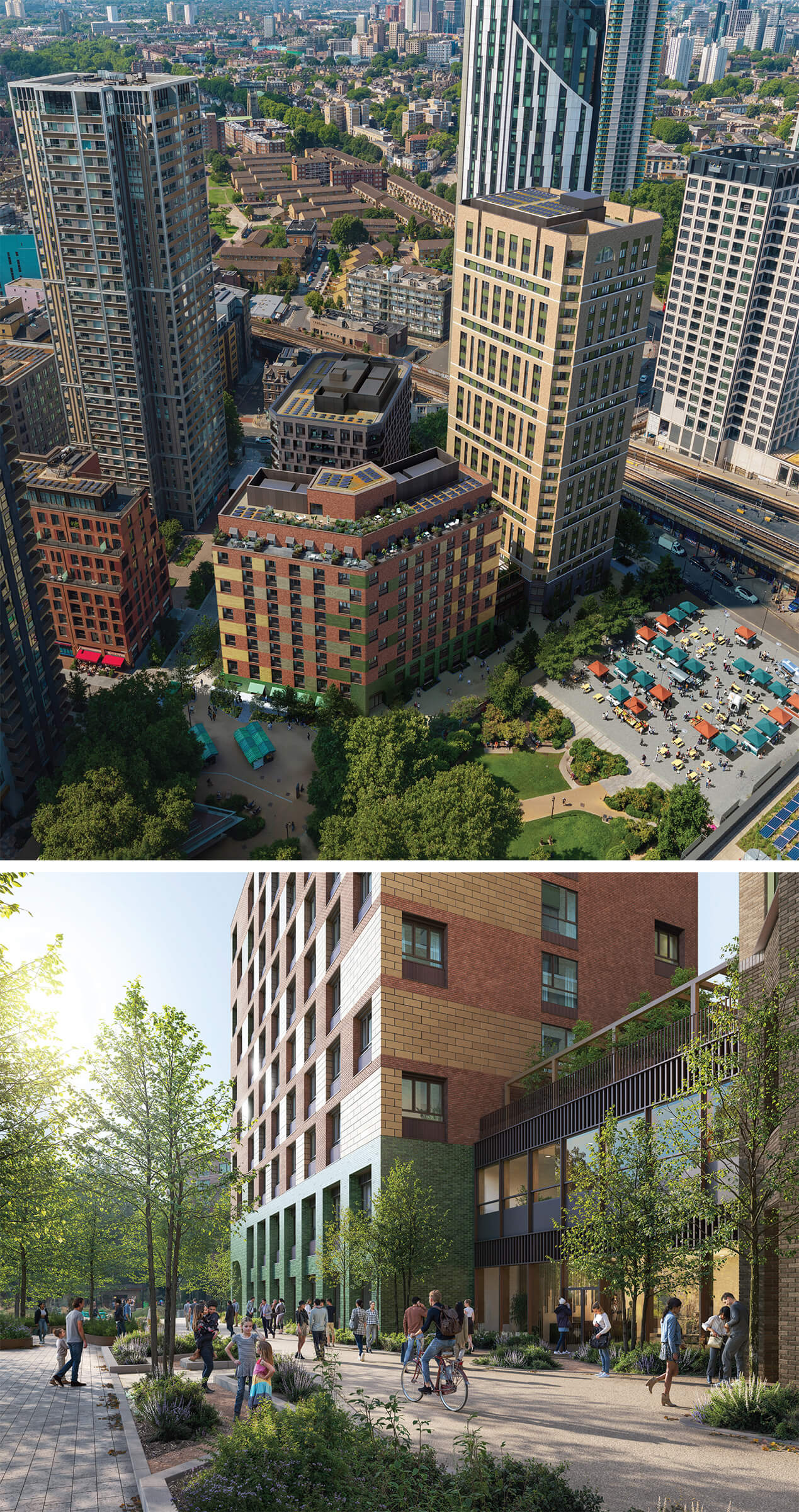
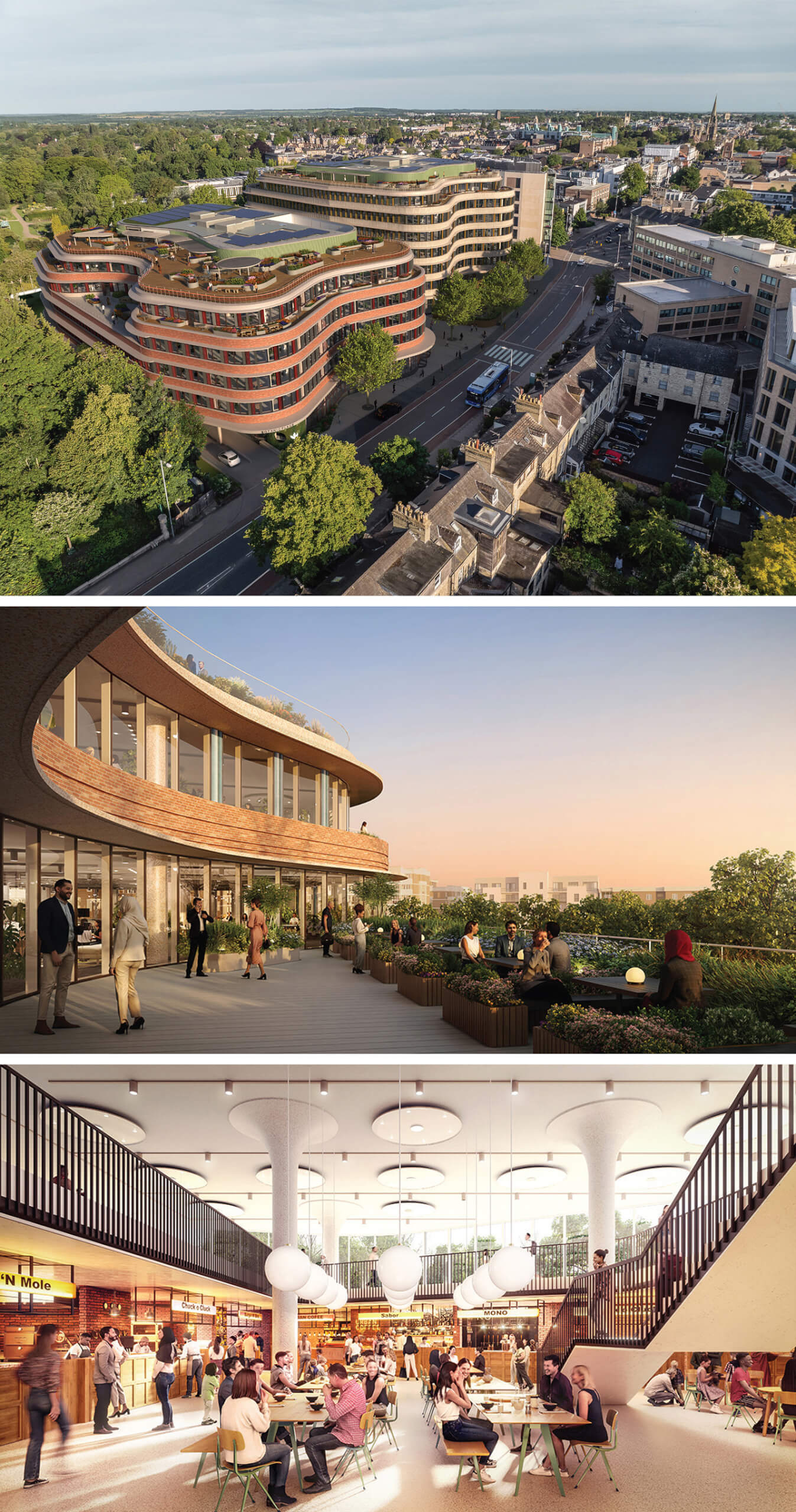
Located adjacent to the Cambridge University Botanic Garden, Botanic Place, designed by AHMM for Railpen, is set to be one of the UK's most sustainable new developments.
The design proposes a campus comprising two new office buildings, the retained landmark Botanic House and the refurbished Flying Pig public house. All are set within public spaces and extensive landscaped gardens, including extensively planted roof terraces.
An innovative, responsive façade – designed and tested by our architects and AHMM’s Building Performance Team, in collaboration with engineers Hoare Lea – is central to the project's environmental performance and visual identity. Sophisticated in its construction, the façade incorporates projecting horizontal solar shading, vertical aluminium fins, unitised glazing, and polished precast panels featuring buff and red facing bricks in an orientation-based approach to fenestration and shading.
Working in close collaboration with façade consultant AKT Envelopes, contractor Skanska, and precast subcontractor Techrete, we have been documenting the intricate production of these façade elements. At their Dublin facility, Techrete is manufacturing 966 panels, totalling approximately 10,400 square metres of façade, which will be installed on site over the coming months.
The manufacturing process is a blend of skilled craftsmanship and advanced technology. Each panel begins with a bespoke reinforcement cage. Brick slips are hand-laid onto the concrete backing, and the reconstituted stone surface is hand-polished. Brickwork is carefully pointed to ensure a consistent finish, before the panels are transported to Cambridge where they are installed, acting as permanent formwork for the concrete slab edges.
Botanic Place sits within the world-leading life sciences 'Golden Triangle' cluster. The two building 325,000 sqft campus is scheduled for completion in 2028
Dr Craig Robertson, Associate Director and Head of Sustainability, was invited to speak on BBC Politics North (Yorkshire and Lincolnshire) about the challenges and opportunities associated with heatproofing new and existing buildings, in particular schools, to cope with increasing global temperatures.
Joining Naz Shah, MP for Bradford West, and Ryan Taylor, Leeds councillor, Craig explained the importance of analysing future weather projections when designing climate resilient buildings, in order to understand how they will behave now and into the future as temperatures continue to rise. Retrofit strategies and the design of new projects alike require consideration of measures including the reduction of solar gains and the introduction of good ventilation pathways, to ensure that our built environment is fit for the future.
In 2022 Craig won the CIBSE Barker Silver Medal for a paper on an integrated building performance evaluation of Burntwood School. Titled ‘Balancing energy and indoor environmental quality in a UK School’, the paper reported on a holistic building performance evaluation of Burntwood as a recently built school campus in London, assessing the performance issues and interrelationships between energy and Indoor Environment Quality (IEQ). Analysing metering and monitoring data along with feedback from stakeholders show that an integrated design approach to energy and environmental performance is required. The paper was authored by a multi-disciplinary team of researchers in energy, thermal comfort, indoor air quality, lighting and acoustics at UCL’s Institute for Environmental Design and Engineering.
The episode is available to watch for a limited time on BBC Iplayer here.
1 Broadgate, Metropolis and Urbanest Battersea have been shortlisted for the Building Awards, which recognise and celebrate the very best of UK Construction.
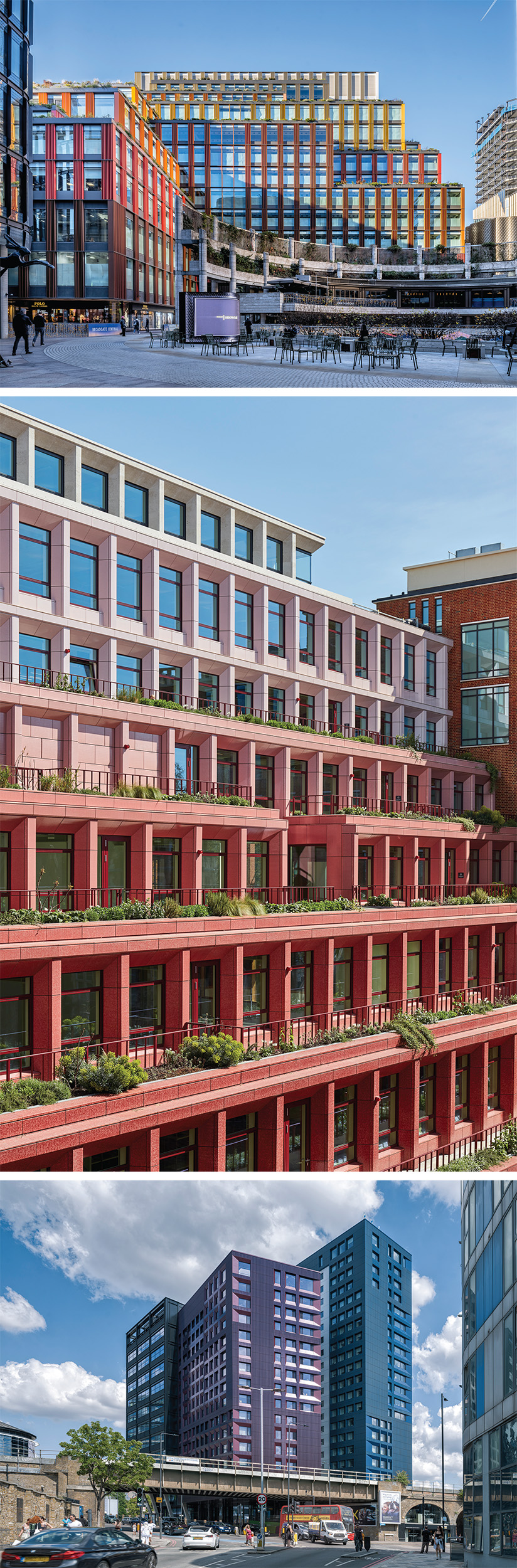
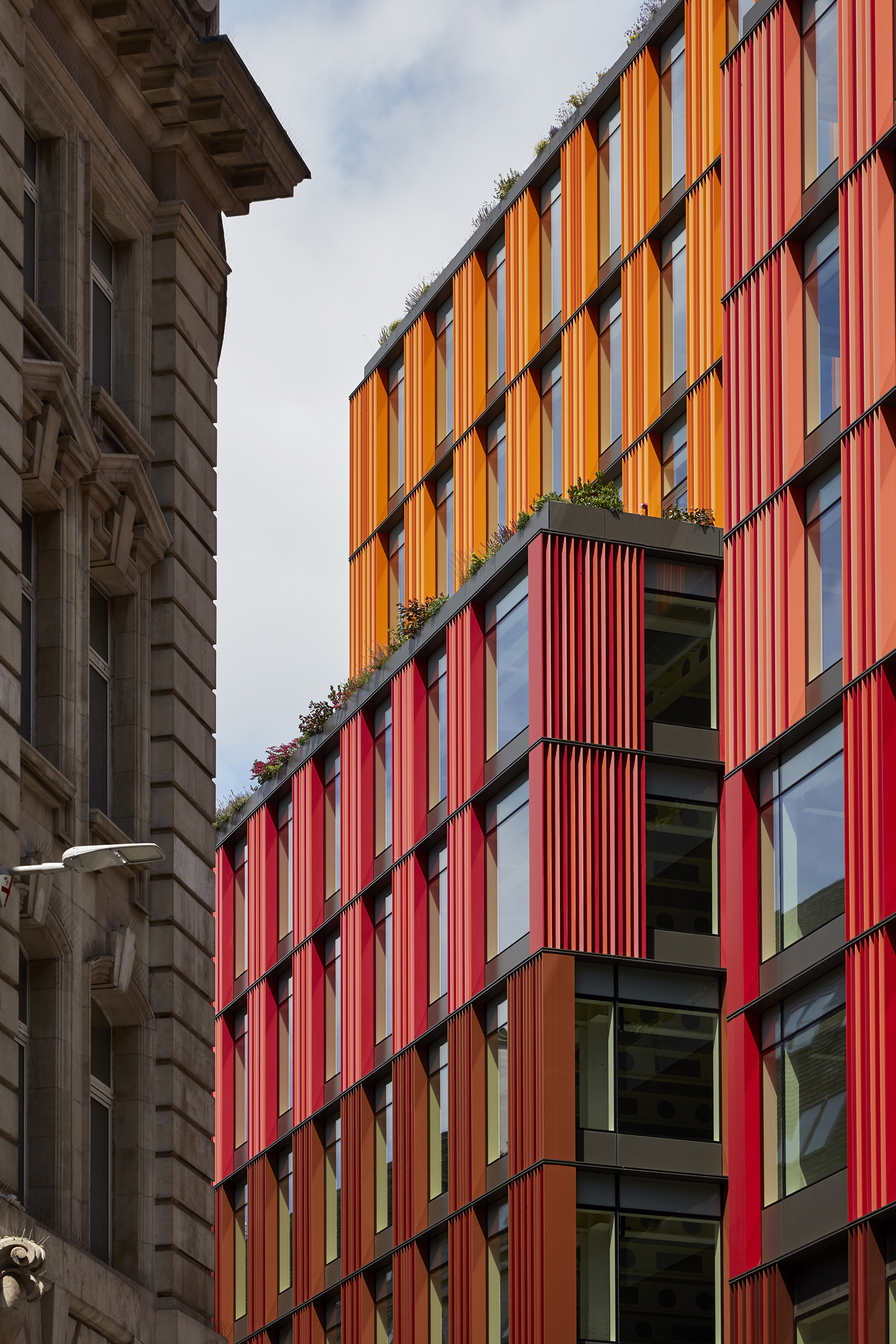
1 Broadgate, shortlisted for Building Magazine Project of the Year, provides flexible accommodation for a mix of uses, including two levels of retail space and 12 storeys of office space above, in the southern part of the Broadgate campus in the City of London. The building footprint frames the public space around Broadgate Circle, formally addressing the southern edge of Finsbury Avenue Square, and clearly defining the north-south pedestrian axis along Finsbury Avenue. The building’s sculpted massing reduces its apparent scale while simultaneously creating a distinctive architectural identity. At upper levels massing is sculpted to maintain sunlight to Broadgate’s key public spaces, while lower-level volumes pull apart to create entrances and retail arcades through the building. The elevations' metal fins are coloured to express the building’s stacked volumes, gradually darkening from base to top in earthy and autumnal colours.
Metropolis, shortlisted for Retrofit of the Year, extends and refurbishes the nine-storey Woolworth House, originally designed by Richard Seifert in 1955 as the UK headquarters of the US retailer F.W. Woolworth, and located in the Dorset Square Conservation Area in the City of Westminster. 93% of the original fabric has been reused, and the addition of a low carbon CLT extension to the rear, clad in flamboyant glazed terracotta and invisible to passersby, has created a 175,000 square foot office hub for a diverse mix of occupiers. Metropolis has been ambitiously designed to set new workplace standards, with wellbeing and experience at its core with the integration of 20,00 square feet of amenity spaces, 12,000 square feet of terraces enriched with planting and greenery, and high specification cycle store and associated facilities. Focusing on the reuse of a strong existing fabric, upgrades revitalise the building to exceed the needs of office workers in this prime central London location.
Urbanest Battersea, shortlisted for a Net Zero Award, is a new highly sustainable development comprising three student buildings, a dedicated commercial building, public house, café and Enterprise Business Unit (EBU), located opposite the Battersea Power station development. It is the first Passivhaus student housing development in London and the largest Passivhaus certified building in the UK providing 852 student rooms. The four blocks step in height and twist to open to key views with a unifying base around courtyard gardens, creating a varied silhouette. Their glazed terracotta façades in a vibrant colour palette of red, green and blue draw on the industrial heritage of the site. At ground and roof level, the landscape makes a wider community contribution through a series of interconnected spaces designed for both quiet use and social interaction.
Winners will be announced at the annual awards ceremony in November.
76 Southbank and New Scotland Yard have both been shortlisted for an AJ Retrofit & Reuse Award in the Conservation and Historic (over £20m) category and the Retrofit Revisited category. Run by the Architects’ Journal these awards celebrate architectural expertise and ingenuity in the physical and environmental adaptation of buildings, as well as the reuse of materials and structures in response to the climate emergency.
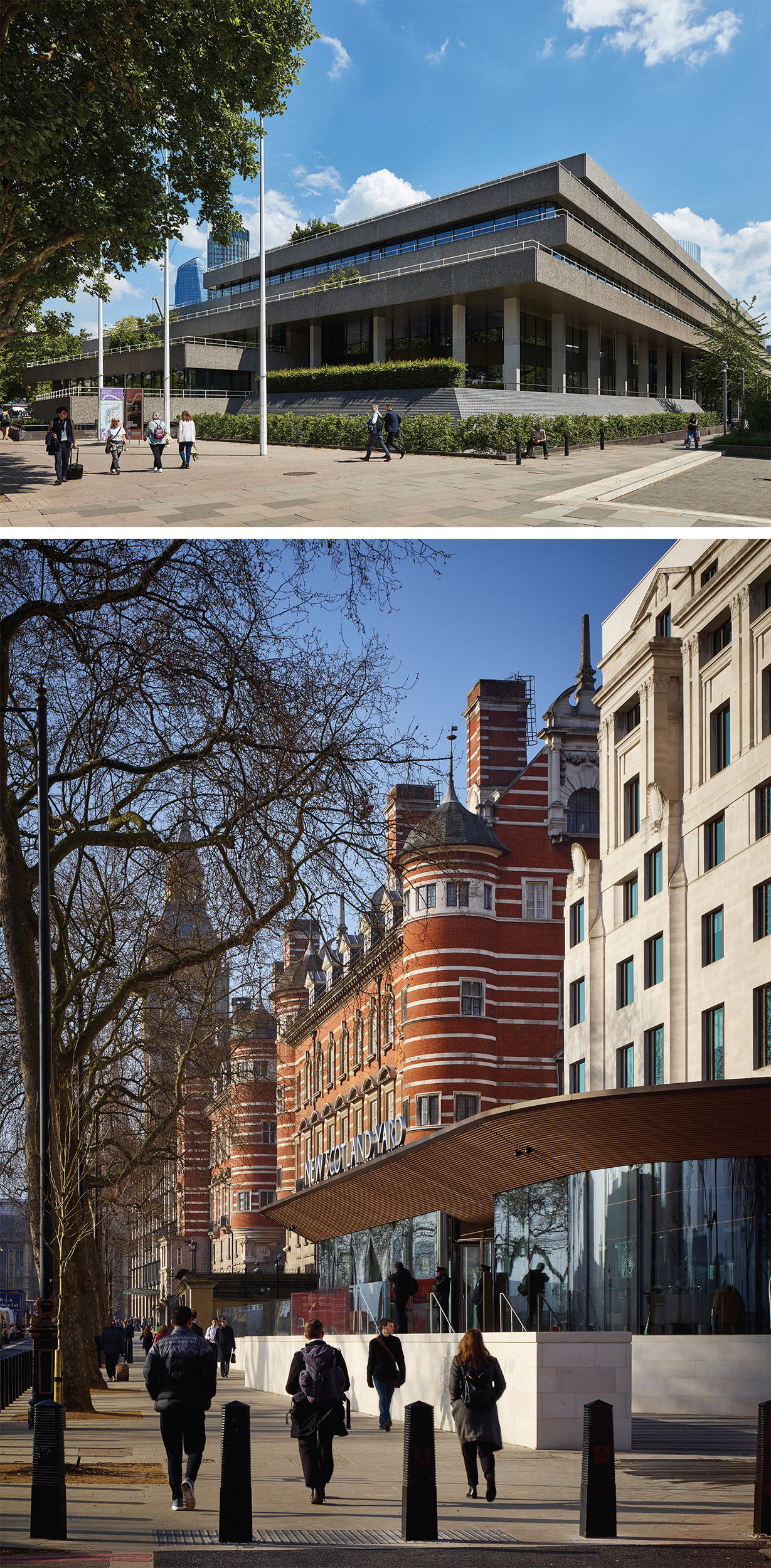
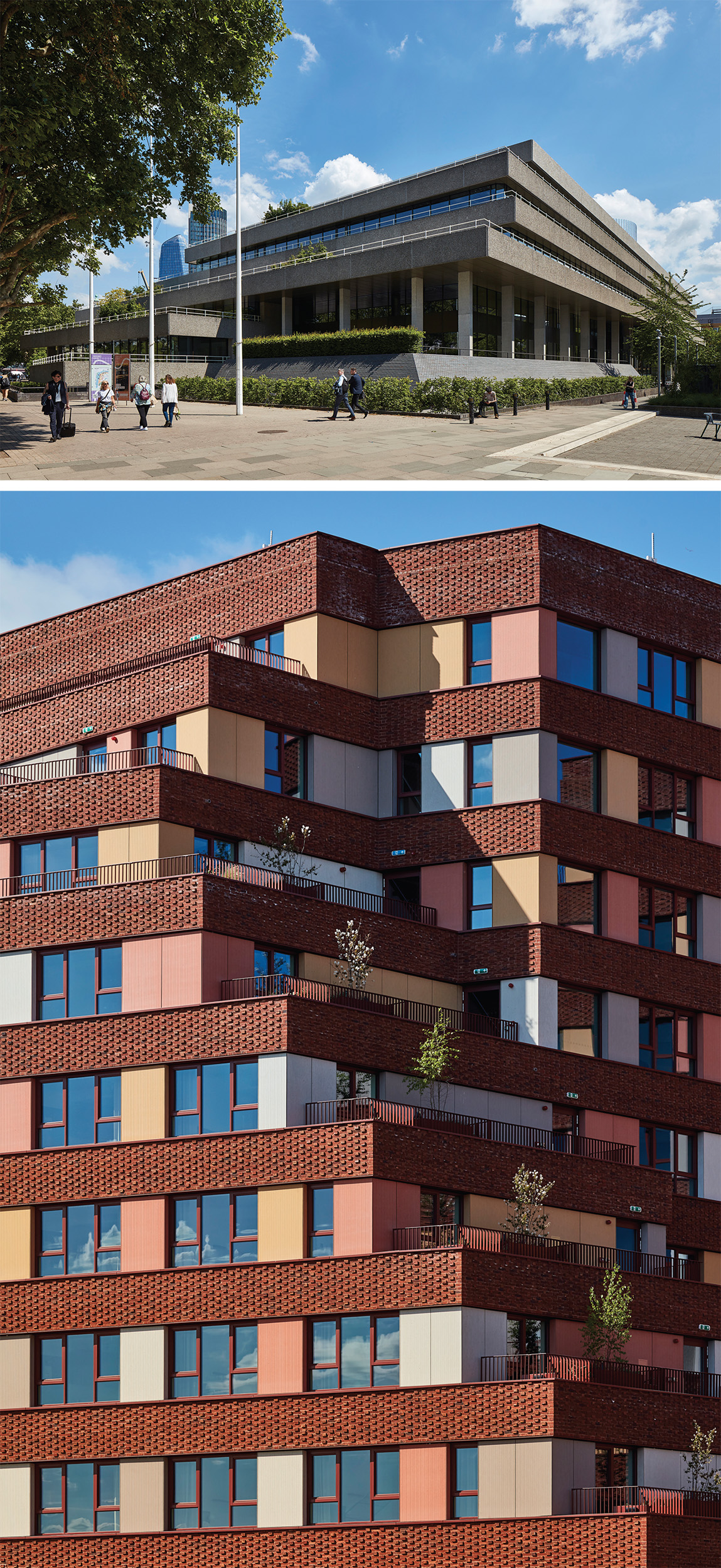
76 Southbank celebrates the transformation of a once-deteriorating Grade II listed building designed by Sir Denys Lasdun into a bespoke, renewed contemporary workplace which celebrates its heritage and thoughtfully enhances it to meet the needs of modern use. The building was carefully stripped back to its frame and remodelled to make it fit for 21st century office occupiers with a new open circulation core, fully accessible landscaped terraces and 100,000 square feet of additional office space. The domineering car ramps were carefully cut out of the building and replaced by a new street level colonnaded entrance, pedestrianising its car-orientated relationship with the public realm. The project is designed to be a highly efficient building, achieving BREEAM Outstanding and 5-star certification under the NABERS Design for Performance standard through the building’s upgraded thermal envelope and sustainable energy strategy. Over 80% of the existing structure has been retained saving 10,171tCO2e of carbon, with the project achieving a real site measured embodied carbon figure of 365kgCO2/m².
New Scotland Yard remodels and extends the historic stone-clad Curtis Green Building to create the Metropolitan Police Service’s new headquarters, completed in 2017 after a fast-paced and highly complex programme. The project prioritises the reuse of the existing building, bringing a long-vacant structure back into use to provide flexible, efficient office space, securing the future of a valued heritage asset into a civic landmark. The design expands the building in all directions – with a curved glass entrance pavilion, a contemporary rooftop storey and a multi-storey rear extension which sit respectfully alongside the original architecture and neighbouring Whitehall buildings. The overarching sustainability strategy focuses on maximising structural reuse, improving façade performance and integrating nature‑positive elements. Measures such as high‑efficiency glazing, green roofs, external shading, daylight‑enhancing design and intelligent lighting controls contribute to achieving BREEAM Excellent, with post‑occupancy reviews supporting ongoing optimisation.
Winners will be announced at the annual awards ceremony on the 24th of September.
1 Broadgate has received the City of London Building of the Year award. The award is recognition from The Architects Company, one of the City's historic Livery Companies, of the innovative design opportunities and solutions created in response to the heritage of the City of London, conservation area constraints and emerging context of new architecture. It celebrates placemaking in the City, the quality of the architectural endeavour, and the environmental standards achieved.
1 Broadgate, located on the southern edge of the Broadgate campus in the City of London, is a significant mixed-use development for British Land which plays a pivotal role in transforming Broadgate from a closed, office-dominated space into a vibrant, permeable and characterful city destination. The building provides flexible accommodation for a mix of uses including 12 storeys of flexible office space above two levels of retail.
The building footprint maintains the principles and geometry of the original masterplan by framing the public space around Broadgate Circle, formally addressing the southern edge of Finsbury Avenue Square, and clearly defining the north-south pedestrian axis along Finsbury Avenue. At ground level, new retail and office frontages are introduced around the entire perimeter to activate the ground plane.
The massing and articulation help to break down the perceived scale of the building, particularly when viewed from street level. At upper levels massing is sculpted to maintain sunlight to Broadgate’s key public spaces, while lower-level volumes pull apart to create entrances and retail arcades through the building. Generous terraces and balconies provide a total of 45,000 square feet of amenity and green space for building users.
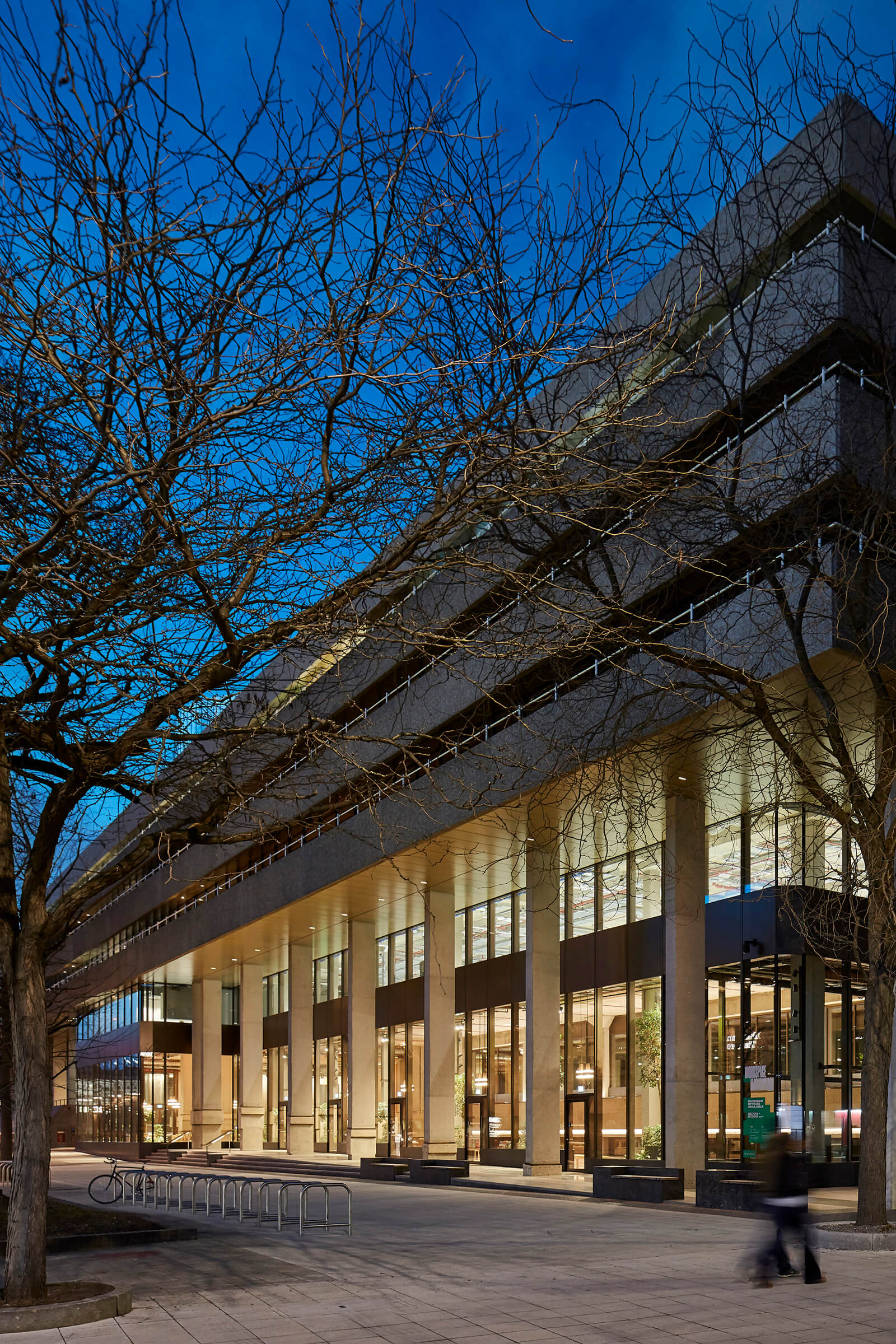
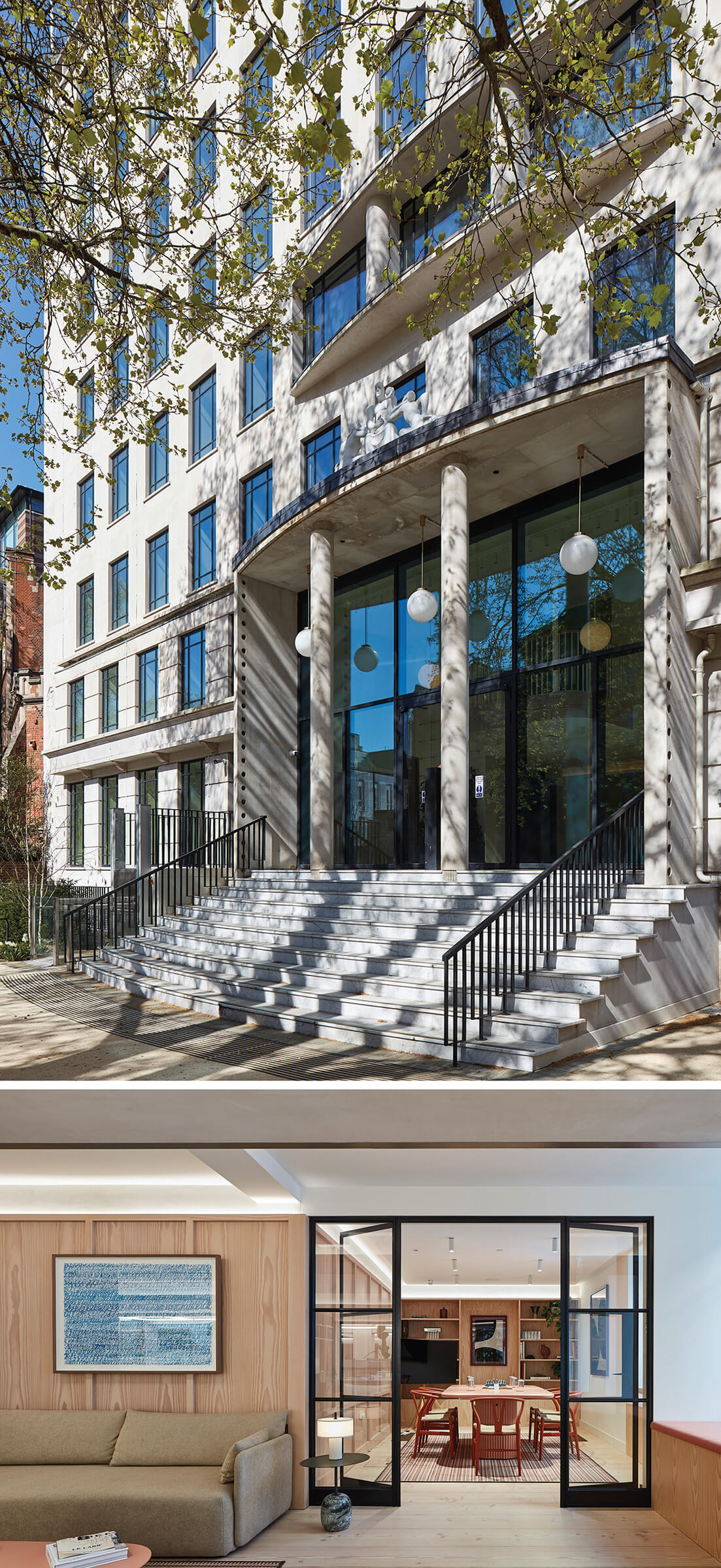
Belgrove House, the new-build specialised research and office building located on Euston Road opposite King’s Cross and St Pancras stations for Precis Advisory, has achieved practical completion.
Designed to be innovative, highly sustainable and an example of carbon emissions reduction in construction, operation, and future refurbishment, the 25,000 square meter London stock brick building offers an excellent opportunity to dramatically enhance the surrounding area. The scheme brings together specialist workspace, public facing amenities and major transport improvements in a single integrated development, giving both a strong civic presence which repairs the street edge and strengthens the Euston Road frontage and a strategic role within one of London’s most connected locations.
The project has been on site since March 2023, with additional works to integrate a new step-free entrance to the Underground due to complete later this year. The removal of a former entry box allows for the creation of a more generous pavement in this busy location, whilst linking the building into King’s Cross and St Pancras stations via a subterranean pedestrian tunnel beneath Euston Road
Extensive planting will continue to emerge on the building's 2,000 sqm of outdoor space and within the biophilic double skin facade. Landscaping works on all four sides of the building include the creation of a new public space on St Chad's Street, the planting of new trees and the introduction of a Sustainable Urban Drainage System. These interventions transform the previously uninviting streetscape to enhance the public realm.
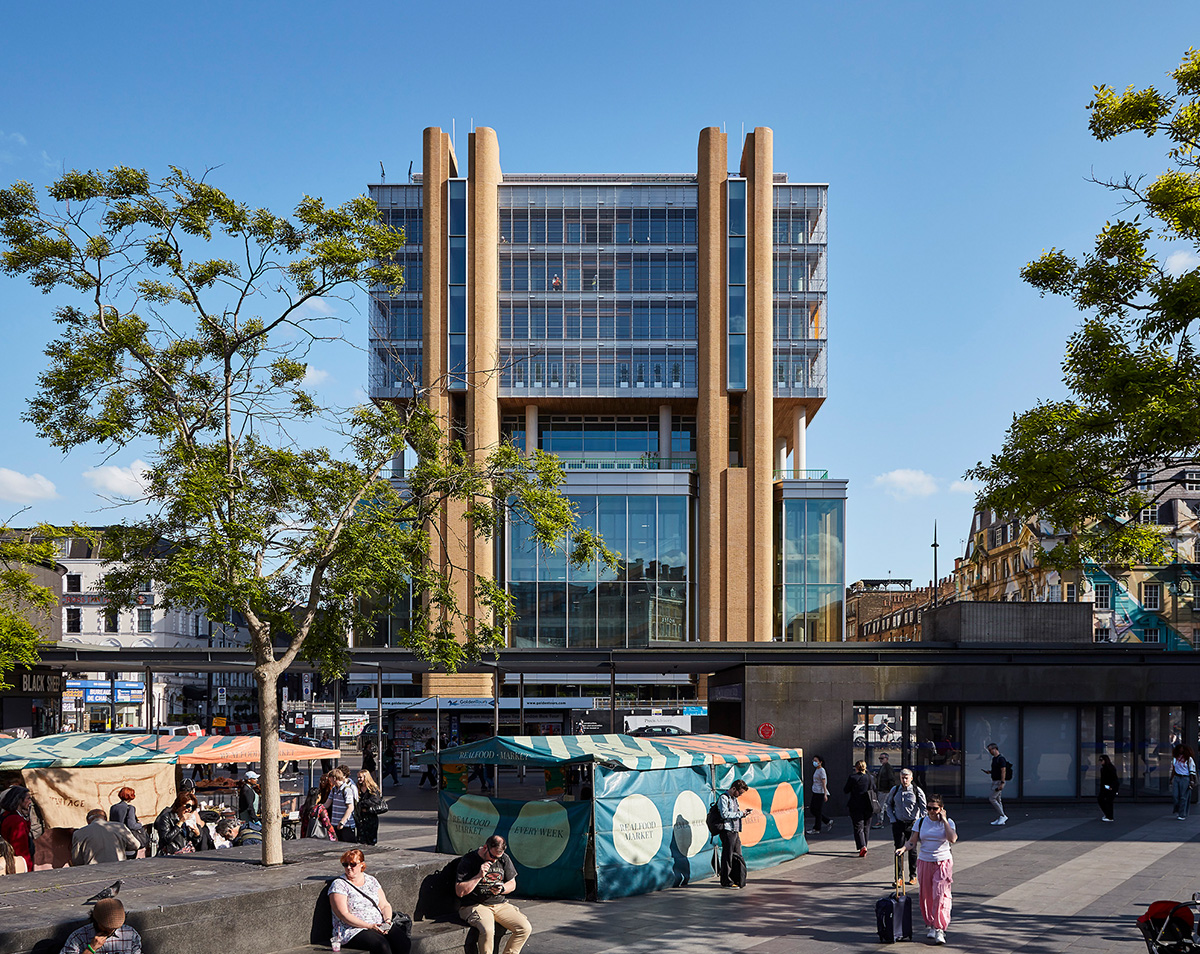
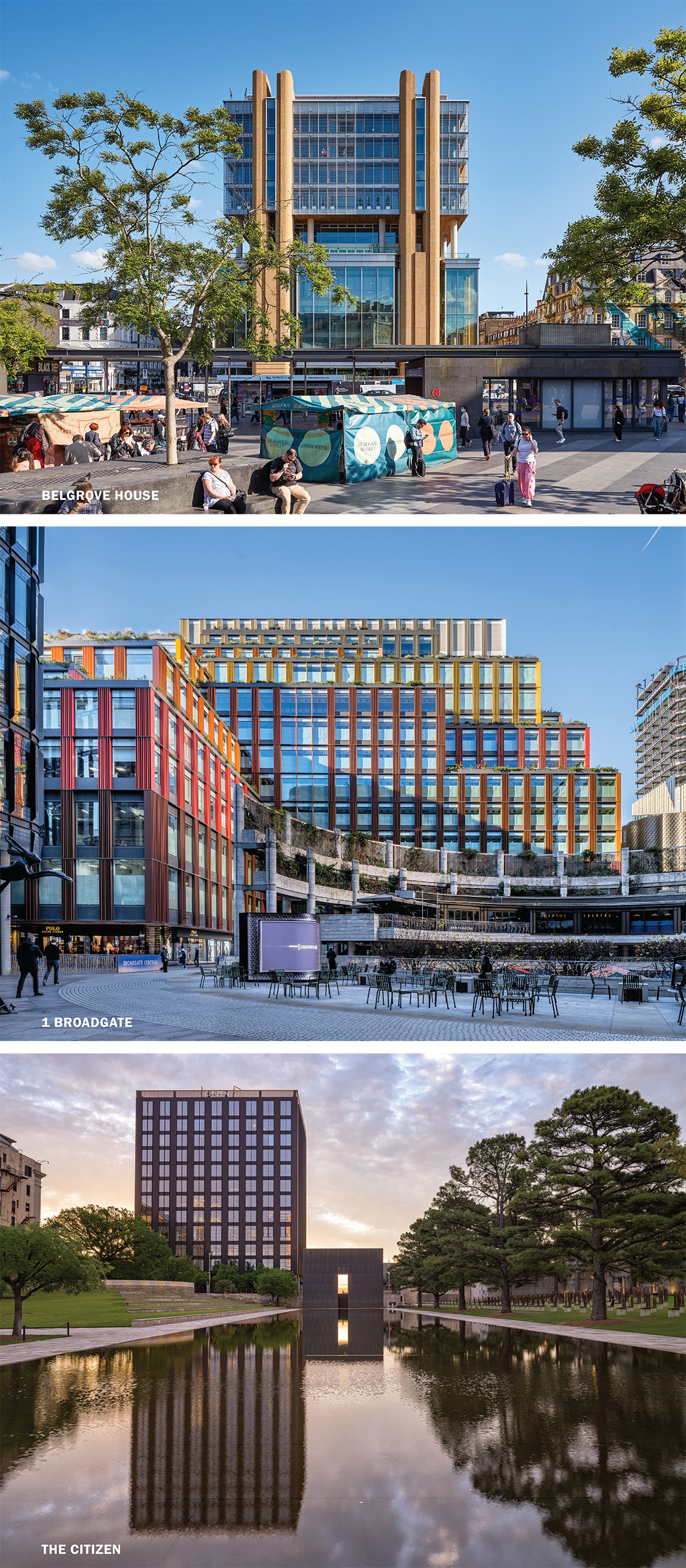
Belgrove House, 1 Broadgate and The Citizen have been shortlisted for a World Architecture Festival (WAF) Award. These unique awards sit at the heart of the World Architecture Festival which brings together the global architectural community for three days of global networking and learning.
Belgrove House, a Finalist in the WAF Completed Building - HE and Research category, is a new specialised commercial building located on Euston Road opposite King’s Cross and St Pancras stations. The scheme brings together specialist workspace, public facing amenities and major transport improvements in a single integrated development, giving it both a strong civic presence which repairs the street edge and strengthens the Euston Road frontage and a strategic role within one of London’s most connected locations. The building is organised through a clear arrangement of uses, an approach that gives the architecture both clarity and flexibility. The façade is intentionally more expressive and open on levels 1 to 3, offering glimpses of activity within the largest floorplates while the ground and lower-ground levels are designed to welcome both occupants and the wider public with an education and event space alongside a public café to animate the square.
1 Broadgate, a Finalist in the WAF Completed Building - Mixed use category, provides flexible accommodation for a mix of uses, including two levels of retail space and 12 storeys of office space above, in the southern part of the Broadgate campus in the City of London. The building footprint frames the public space around Broadgate Circle, formally addressing the southern edge of Finsbury Avenue Square, and clearly defining the north-south pedestrian axis along Finsbury Avenue. The building’s sculpted massing reduces its apparent scale while simultaneously creating a distinctive architectural identity. At upper levels massing is sculpted to maintain sunlight to Broadgate’s key public spaces, while lower-level volumes pull apart to create entrances and retail arcades through the building. The elevations' metal fins are coloured to express the building’s stacked volumes, gradually darkening from base to top in earthy and autumnal colours.
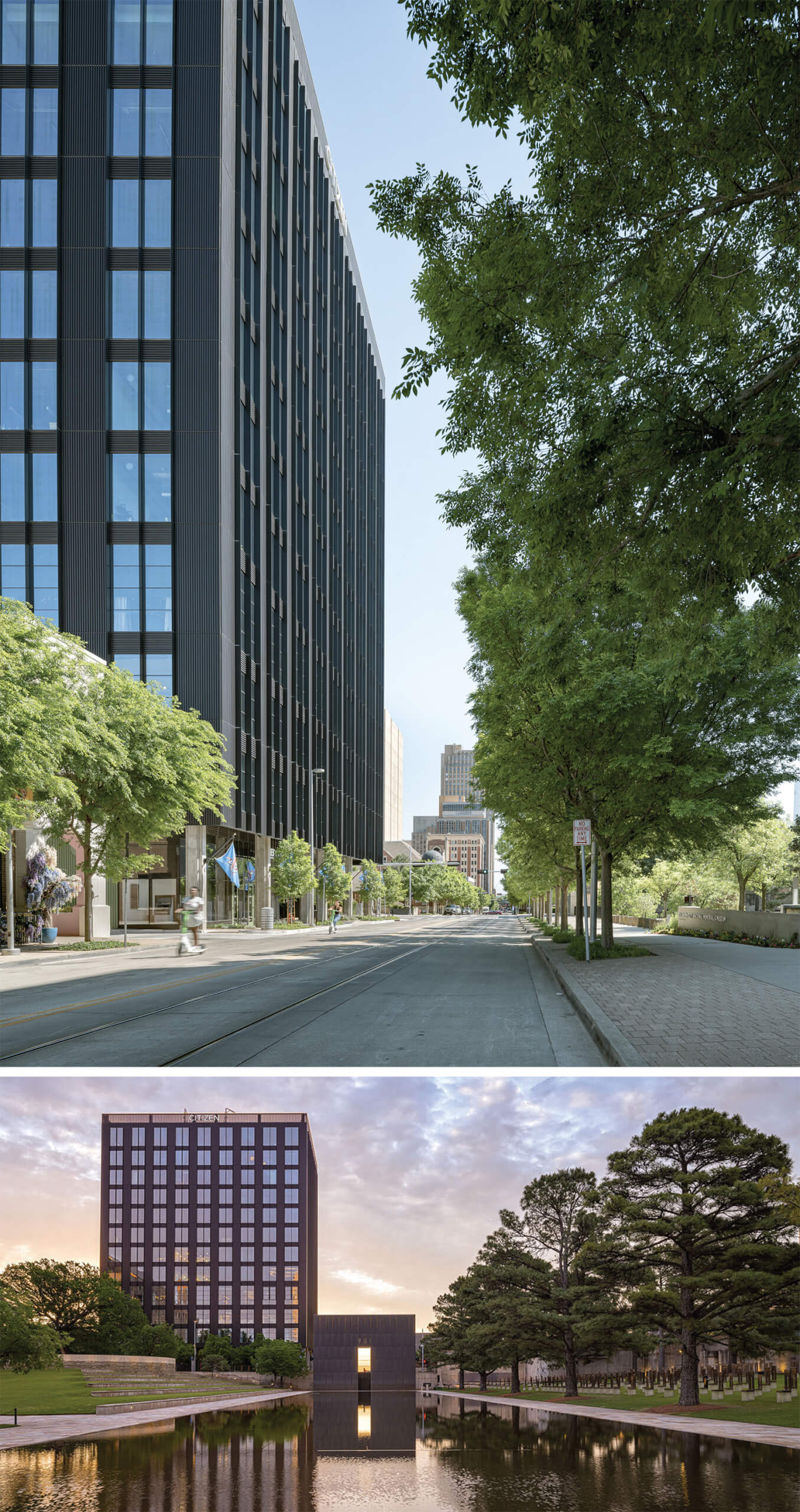
The Citizen, a Finalist in the WAF Completed Building - Mixed use category, is a robust and adaptable office-led building which accommodates a diverse mix of uses, fostering civic life and community exchange. Located opposite the Oklahoma City National Memorial, the generous ground floor is deliberately porous, blurring the distinction between inside and out, with a banking hall and restaurant activating and enlivening the entrance. Above, a diverse blend of functions supports and stimulates meeting and engagement, with co-working space, a members’ club, a hotel and a tech start-up incubator, culminating in offices at the upper levels. The exterior draws inspiration from neighbouring 1930s art deco towers, reinterpreting their verticality and window rhythms through a contemporary unitised aluminium and glass cladding system, used for the first time in Oklahoma City.
Finalists will present their projects live at the World Architecture Festival in November in front of a panel of expert judges and their peers, with award winners announced at the annual Gala Dinner.
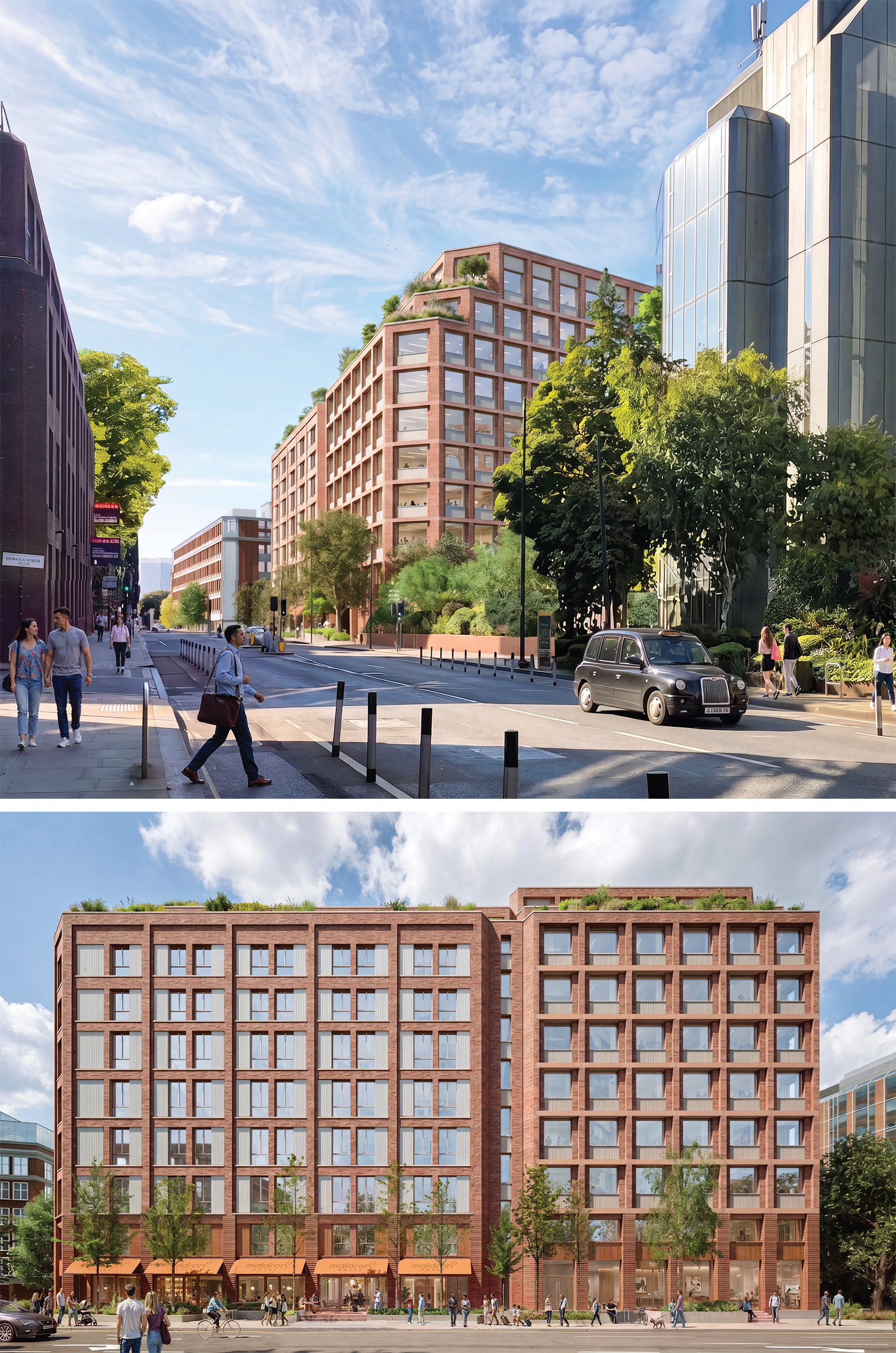
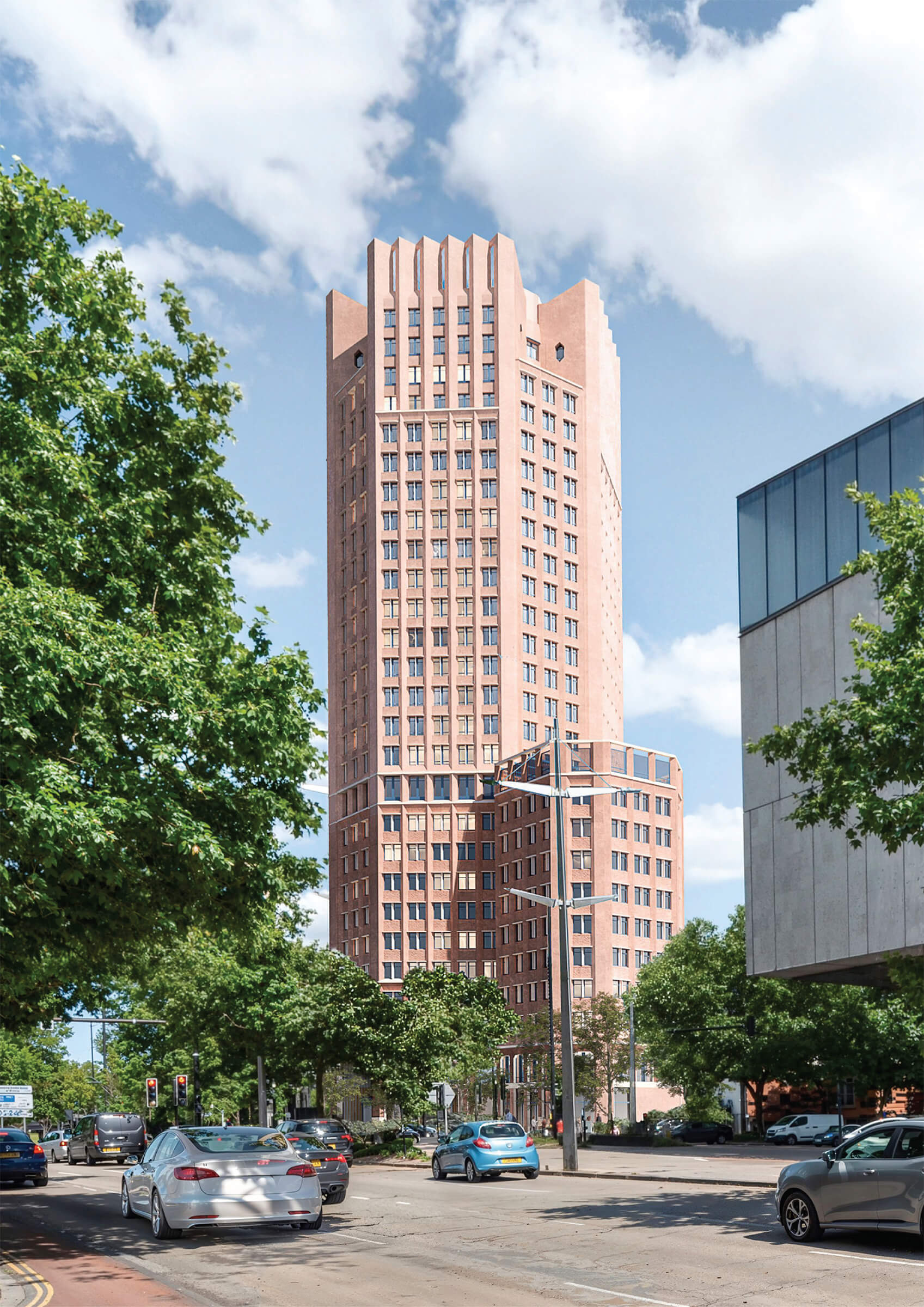
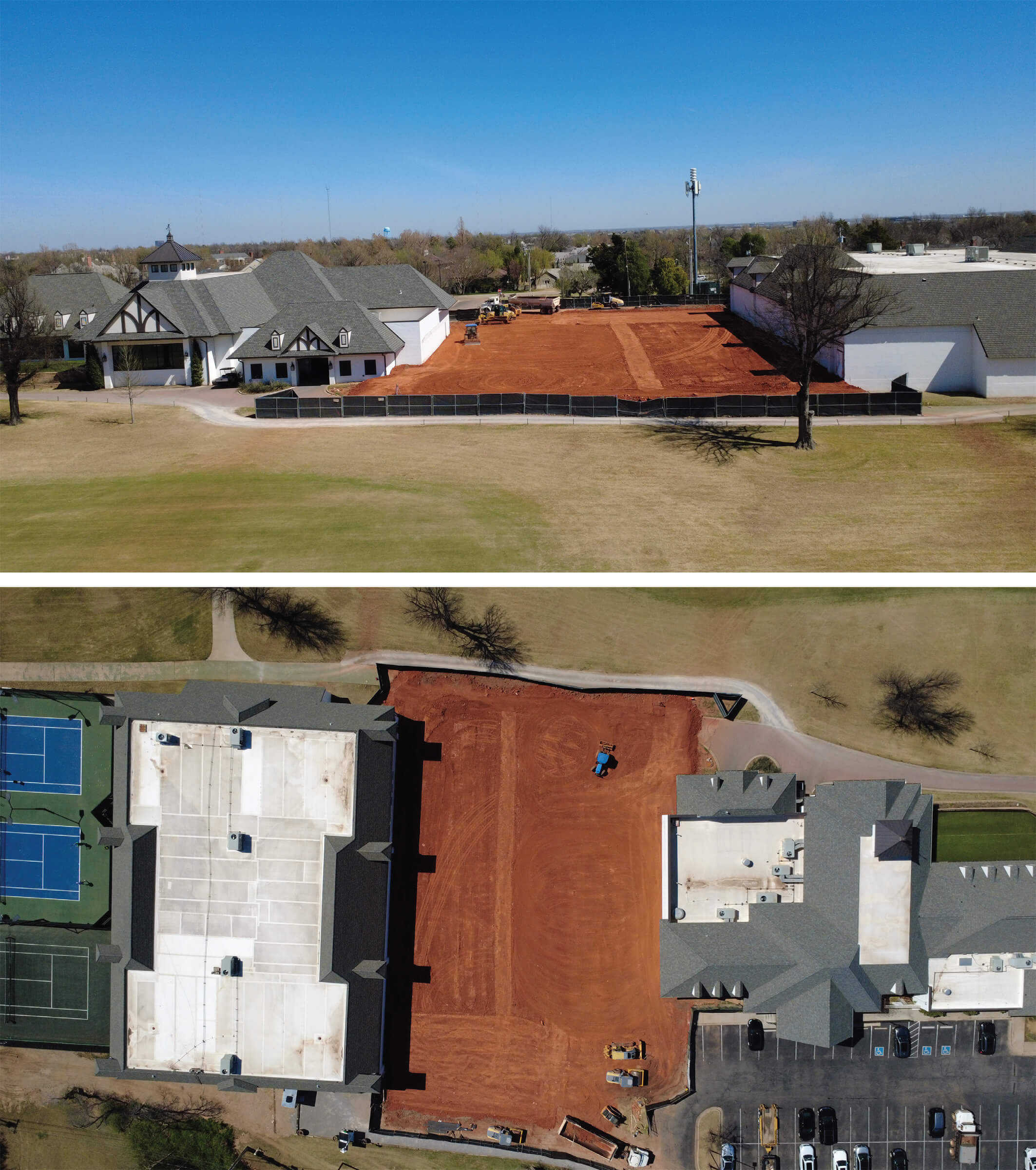
The redevelopment of Liberty House into a 9-storey, large-scale hotel, pre-let by Dalata Hotel Group, and purpose-built office has received Resolution to Grant Planning Permission from Hammersmith and Fulham Council.
The proposals, developed for MRP, will transform the existing six-storey U-shaped building, known as Liberty House, into a mixed-use space, integrating a four star, 371-room hotel (Maldron Hotel) with publicly accessible ground floor cafes, restaurants and bars with a newly built office building providing 13,800 square metres of flexible modern office space. Much of the existing basement is being retained and will house a business centre, a gym for hotel guests, staff support spaces, plant rooms, cycle storage and end-of-trip facilities.
Externally, a consistent shoulder datum along Hammersmith Road and a primary red/orange brickwork tone help tie the proposals in with the adjoining buildings and overall street character. An ordered façade design of primary, secondary and tertiary elements with a contrasting feature panel creates depth and visual uniformity between the two buildings. The two-storey rooftop extension has a more varied articulation, with several rich, landscaped terraces created as the building steps back to respond to the varying heights of the neighbouring buildings.
The proposed development has been designed to meet the highest standards of sustainable design targeting a BREEAM Excellent rating with an energy strategy that prioritises sustainable technologies. The design was also driven by a low carbon approach with the proposals retaining as much of the existing building as possible, resulting in a part-retention strategy with the majority of the basement and west-wing of the existing building’s concrete structure retained and integrated into the new hotel design.
The enhanced public realm and landscape design, led by East, retains several of the existing trees and includes new landscaping to the public realm on Hammersmith Road and Brook Green, alongside a lushly planted central courtyard at the heart of the scheme which will provide users with a visual amenity as well as a rich green space to sit and enjoy.
The proposals will create a new address within the area, improving the architectural context with buildings that compliment and respect the heritage context and support the arising demand from the adjacent Kensington Olympia development alongside providing high spec, sustainable office space.
Main contractor McAleer and Rushe are due to start construction early 2027 with completion expected in 2029.
Susie Le Good, Executive Director at AHMM, commented: “We’re delighted to have secured approval from Hammersmith & Fulham for the redevelopment of the existing Liberty House. Developed in collaboration with the wider project team, the design seeks to retain as much of the building as possible, integrating the basement and west-wing of the existing structure into the new hotel and office offering. Neighbouring the £1.3bn Olympia culture and entertainment venue, the building will enhance and activate this part of Hammersmith Road.”
Angus Monteith, Development Director at MRP, said: “We are delighted to receive unanimous approval for the redevelopment of Liberty House. MRP is proud to have been commended by the Planning Committee for engaging and responding to feedback following meaningful consultation with the local community. MRP is demonstrating how existing buildings can be adapted for the future through careful commercial management, sustainable thinking and high-quality design.”
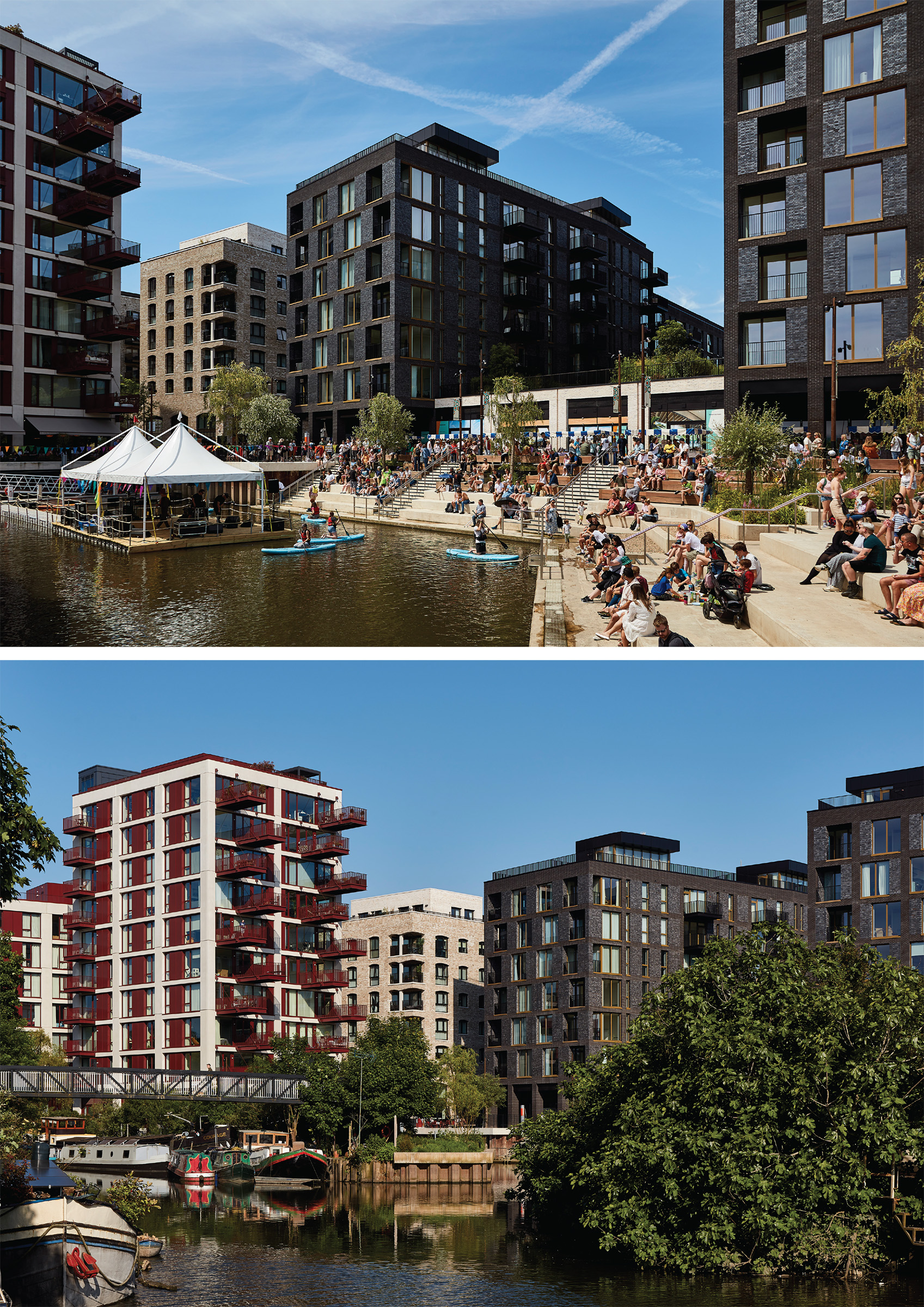
Phase 1 of the Brentford Masterplan, a collaboration between AHMM, Howells, Maccreanor Lavington, HAL Architects, Formation Architects (Delivery Architect) and Grant Associates (landscape and public realm) for Ballymore, has been awarded an RIBA National Award.
The Brentford Masterplan is a major mixed-use regeneration of a 12-acre site into a vibrant destination comprising homes, retail, restaurants, cafes and leisure opportunities. Aiming to rejuvenate the High Street by linking the town centre to the waterfront and reinstating lost connections to the River Brent, the masterplan has restored the site’s heritage, retaining buildings of historical value and reintroducing wharf and shed style buildings with steel frame buildings, simple grids, and an industrial brick aesthetic.
Completed in 2024, Phase 1 includes Calville House, Lewis House, Hollandbury House, the refurbishment of the existing buildings on Bradbury Mews, and landscape design by Grant Associates. Phase 2 is due to complete in 2028 with additional buildings from Coffey Architects and HAL Architects, creating an architectural richness across the masterplan.
Calville House, designed by Maccreanor Lavington, sees the refurbishment and conversion of two historic buildings fronting onto Brentford High Street, and the creation of a new mixed-use building housing a food store, high street retail and 107 new homes.
Lewis House, designed by AHMM, creates of a group of buildings accommodating 144 apartments over a plinth of high street retailers, a cinema, small independent businesses, and restaurants.
Hollandbury House, designed by Howells, is a contemporary interpretation of the warehouse architecture with two buildings stepped in height and cranked in plan to respond directly to the bend in the river, and to address Workhouse Dock to the east as a key piece of public realm.
The refurbishment of the existing warehouses on Bradbury Mews, adjacent to Lewis House, are designed by HAL Architects, and house a café.
Julia Roberts, London Jury Chair, commented: "The completed Phase 1 of the Brentford Project demonstrates how housing-led regeneration can be delivered with architectural clarity, urban generosity, and civic ambition."
British Land’s development of Norton Folgate has been awarded an RIBA National Award.
Comprising three urban blocks, Norton Folgate sits within the Elder Street Conservation Area and occupies a prominent position within the city fringe between the City of London and Shoreditch.
While the conservation area is small there are dramatic changes in character from one street to the next from the city fringe to Victorian Blossom Street to Georgian Elder Street. The masterplan has been developed to respond to this mixed character bringing derelict and under used buildings back into use and reconnecting and enhancing the public realm. Rather than applying a blanket strategy the masterplan employs a building-by-building approach to the retained existing buildings using restoration, refurbishment, extension, remodelling and façade retention to breathe new life into the architecture.
Four different award-winning architecture practices were brought together to diversify the architectural approach and style. AHMM was appointed as masterplanner and designed three buildings, and Stanton Williams, Morris + Company, and DSDHA all designed buildings with East leading the public realm strategy.
Workspaces have been designed to have both historic character and impressive sustainability credentials – 99% of waste was recycled on site as part of the circular economy strategy, all electricity comes from renewable sources and nearly 4000 people have been trained and upskilled as part of the project’s social value plan.
Norton Folgate is a unique destination with its mix of new, Georgian and Victorian buildings set around historic yards and cobbled streets, whose character the team has worked hard to preserve: a sense of history within a modern sustainable workspace for businesses of all sectors and sizes.
Matthew Lloyd, London Jury Chair, commented: Norton Folgate is an example of excellently contextual and viable urban regeneration and renewal. It offers an approach and ambition that is surely applicable to similarly run-down and abandoned historic places."
RIBA National Awards are given to buildings across the UK in recognition of their significant contributions to architecture. All National winners will be considered for the RIBA Stirling Prize, with the shortlist announced later this month.
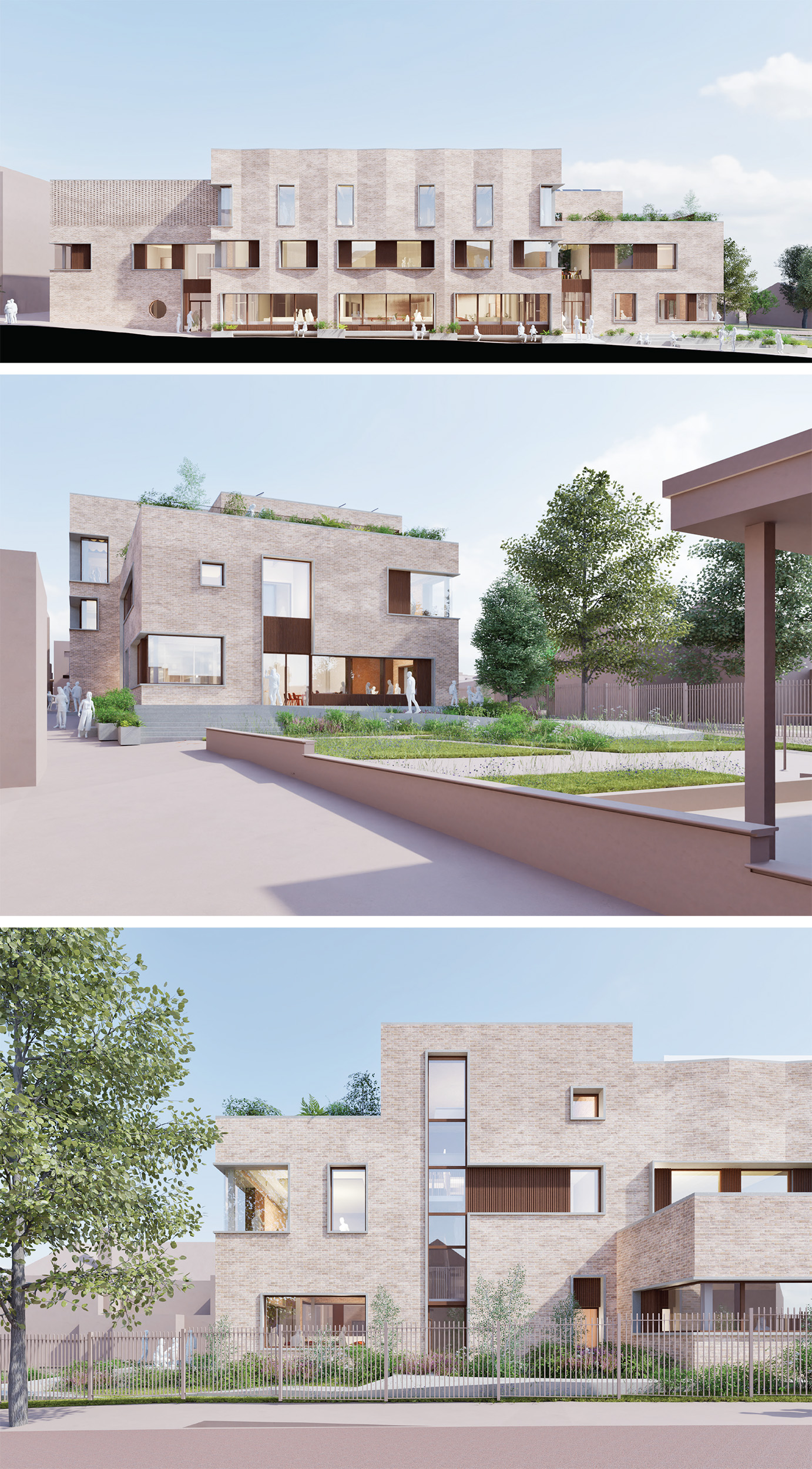
Southwark Council has unanimously given Resolution to Grant planning permission to proposals for a new multi-functional building for Alleyn’s School, a long-established and nationally recognised independent day school located on Townley road in Dulwich. The new three-storey building, named the Crucible building, will replace the School’s existing Dining Hall, to provide a central dining hall which will serve Middle and Upper School pupils, a dedicated staff dining and community space, six modern teaching spaces on the first floor, an assembly hall on the second floor for the creative arts departments and a new energy and data centre designed to contribute to Alleyn’s long-term ambition for a near net-zero campus in years to come
Forming an integral part of the local community for over 400 years, nearly 150 of which have been on its current site on Townley Road, Alleyn’s School is recognised for its outstanding academic achievement, a wide-ranging and successful co-curricular programme, and a strong commitment to pastoral care and student wellbeing. Located in a predominantly residential neighbourhood characterised by low to medium density housing, the School occupies a tight constrained site, with buildings of varying age and character built over successive periods. This has established a complex but highly distinctive context which has informed the design of the new building and presented the opportunity for a sensitive, well-considered development.
Feedback from the school and pupils highlighted a desire for a more dispersed and flexible approach to dining, with a variety of spaces envisioned to function as more than just areas for eating but also for socialising, learning and collaboration. The new multi-functional teaching spaces and larger assembly hall support a variety of learning modes allowing pupils to engage in both academic and practical learning, from classroom-based activities to cooking and peer collaboration, creating a lively, continuously used hub. Visual links between the different functions reinforce a sense of community, ensuring that the building is adaptable, vibrant and responsive, supporting holistic development and maximising its use across the school day.
The building adopts a stepped form in plan and mass with a central volume forming the core of the scheme and accommodating the main communal spaces: dining hall, six general classrooms, 6 seminar rooms and assembly hall. This is flanked symmetrically by two modest wings: the west containing the Energy Centre and the east accommodating the staff dining hall both with seminar rooms above. Finally, a single storey block runs along the northern elevation housing the kitchen and back-of-house functions with direct access to the service yard. A roof terrace on the eastern wing provides an outlook towards the city, providing externally amenity for both students and teachers to enjoy.
Externally, the design offers a confident, contemporary expression through thoughtful façade articulation, varied and playful window compositions, and the creative use of brick tones, textures, and bonds. A lighter, paler brick maintains a connection to the wider campus palette while giving the building its own distinct character whilst windows are carefully positioned and sized to reflect the activities within and entrances highlighted with double-height glazing, reinforcing a sense of civic arrival.
AHMM Executive Director Susie Le Good comments: “We are delighted to have achieved this planning milestone. It has been a collaborative process, working closely with Alleyn’s School to develop a scheme which embraces their ambition and ethos. We look forward to commencing construction in the near future."
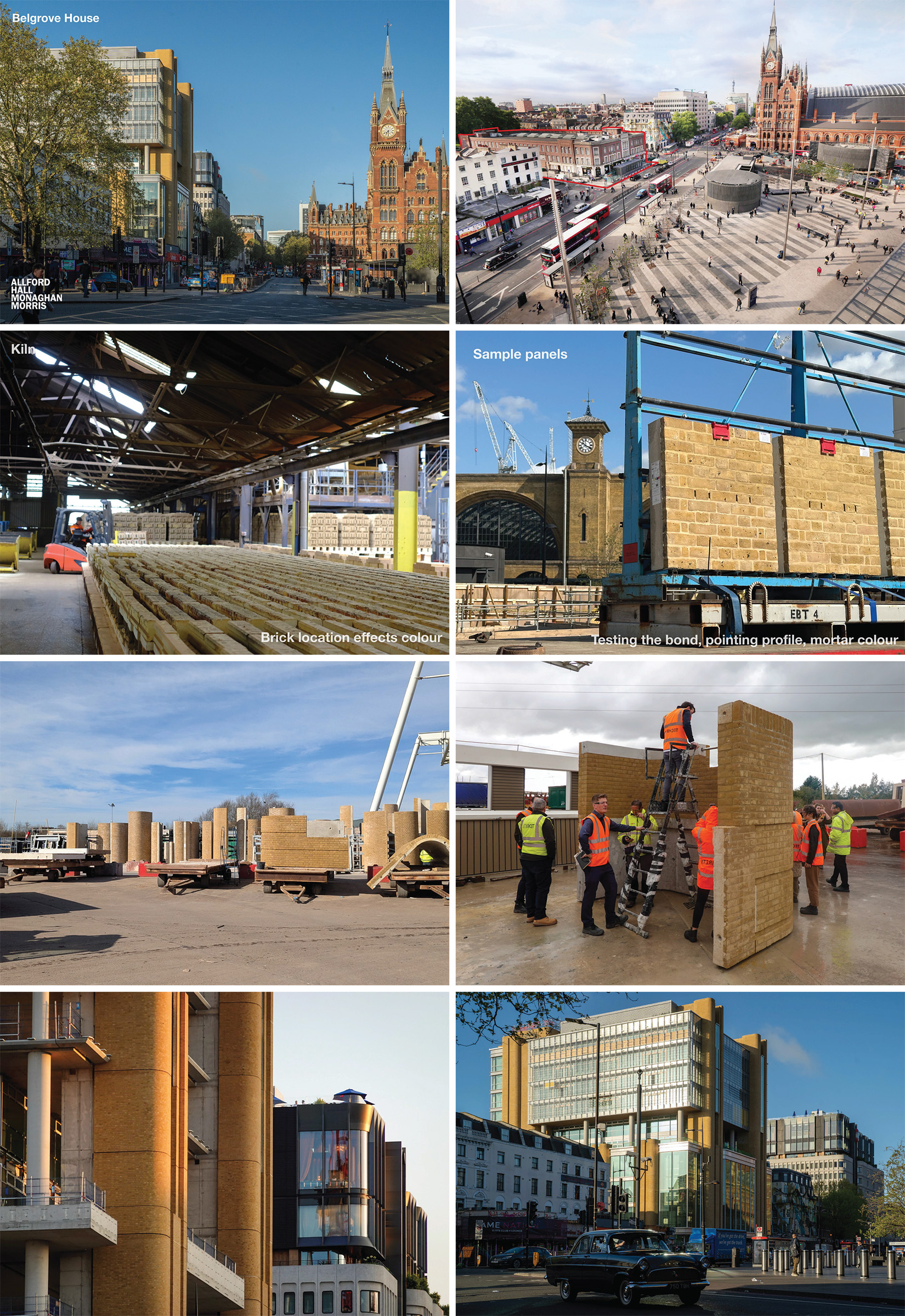
Last Wednesday night, 01 July, AHMM Associate Director Steve Smith presented Belgrove House at Brick Works London, an exclusive evening hosted by the Brick Development Association in partnership with Wienerberger.
The project is characterised by a bespoke blend of London Stock bricks from the historic Smeed Dean brickworks in Kent, laid in gently curved forms that organise the movement of people and services around the building. This brickwork grounds a technologically advanced, forward‑looking building in its historic setting opposite King’s Cross station, reinforcing its relationship to London’s established urban fabric
Due for completion later this year, the project for Precis Advisory is designed to be innovative, highly sustainable and an example of carbon emissions reduction in construction, operation, and future refurbishment. Belgrove House offers an excellent opportunity to dramatically enhance the surrounding area, bringing active facades where there were blank walls, by removing street clutter and bringing greenery to all four sides of the building.
Brick Works are a series of relaxed and highly informative evenings, which offer practitioners and brick enthusiasts the opportunity to explore examples of contemporary brick architecture and network with peers.
This year the Victor Kite Prize for Design Technology has been awarded to Ingrid Nyhus at the Bartlett School of Architecture’s annual summer show opening ceremony. This award for students at the school recognises the best work in Design Technology (year 2).
The award, which is funded by AHMM, was established in 2013 by former AHMM staff member and Bartlett tutor, Scott Batty, in memory of architect Victor Kite. Victor was a mentor to AHMM’s founding members, Simon, Jonathan, Paul, and Peter, as Part III students, and later to many others at AHMM, playing a significant role in the practice and its work.
The Summer Show is the Bartlett’s flagship exhibition, and one of the largest student architecture shows in the world. This year’s exciting show, which has also been sponsored by AHMM, offers a unique opportunity to experience innovative design, critical thinking and experimental work from one of the world’s leading architecture schools. Alongside the exhibition, which spans the six floors of the school’s Bloomsbury home, a public programme of student-led tours, performances, talks and readings will animate the show, offering deeper insight into the ideas and processes behind the work. There is also the opportunity to explore the exhibition digitally in The Bartlett’s virtual exhibition space, featuring an extensive archive of student work from the past five years.
1 Broadgate and Angel Square have both been shortlisted for a British Construction & Infrastructure (BCI) Award. Returning for their 39th year, these awards celebrate and honour the outstanding contributions of the British construction industry, recognising and rewarding excellence in project delivery. These awards celebrate the hard work and dedication of the whole project team – from clients, architects, designers and contractors.
1 Broadgate, shortlisted for the Architectural Design Excellence Award, is the penultimate project in the transformation of Broadgate from a fortress like office campus into a mixed use, seven-day Central London destination. The building provides flexible accommodation for a mix of uses including twelve storeys of flexible office space above two levels of retail space.
A key design principle was to improve the ground plane, connecting pedestrian routes from all directions. The massing and articulation help to minimise the perceived scale of the building, particularly when viewed from street level. At upper levels massing sculpted to maintain sunlight to Broadgate’s key public spaces, while lower-level volumes pull apart to create entrances and retail arcades through the building.
The colours of the elevations are taken from the earthy and autumnal colours of the surrounding buildings; the metal fins are coloured to express the building’s stacked volumes, gradually darkening from the base to the top.
Angel Square, shortlisted for Commercial Property of the Year, is a mixed-use, office-led redevelopment at the gateway to Angel, Islington, reimagining a constrained 1980s building through a strategy of structural reuse, environmental upgrade and public realm repair. Built directly over Angel Underground Station, the scheme retains c.80% of the original concrete frame, basement and foundations to transform a previously inward-looking site into a permeable and engaged piece of city.
The new landmark building provides c.188,800 square feet of modern office space above a permeable ground floor featuring a grand lobby and café, public house and new public throughfare linking Islington High Street to Torrens Street.
The internal structure informed the rhythm of the façade design which is comprised of articulated GRC columns and ledges, profiled metal spandrel panels with tonal variation tied to the surrounding context, a flared ‘butterfly’ roof storey and glazed terracotta elements at ground floor.
Winners will be announced at the annual awards ceremony on the 14th of October.
1 Broadgate has been shortlisted for a BD Architect of the Year Award in the One-off Major Project of the Year Over £100m category.
1 Broadgate, located on the southern edge of the Broadgate campus in the City of London, is a significant mixed-use development which plays a pivotal role in transforming Broadgate from a closed, office-dominated space into a vibrant, permeable and characterful city destination. The building provides flexible accommodation for a mix of uses including twelve storeys of flexible office space above two levels of retail space.
A key design achievement lies in reconciling the constraints of the original masterplan with a more contemporary urban approach. The building carefully maintains established geometries while redefining the public realm framing Broadgate Circle, addressing Finsbury Avenue Square and reinforcing key pedestrian routes. At ground level, fully activated frontages and a new retail arcade dramatically enhance permeability and street life.
The building’s sculpted massing reduces its apparent scale and protects daylight to surrounding spaces, while simultaneously creating a distinctive architectural identity. Generous terraces and integrated green spaces further elevate user experience and contributing to over 45,000 square feet of amenity.
1 Broadgate represents a critical step in British Land’s vision to transform Broadgate into a diverse retail and leisure destination with evening and weekend appeal for a broad range of visitors.
Winners will be announced at the annual awards ceremony on the 7th of October.
AHMM has been named as one of the five practices that have won the most RIBA awards since their creation 60 years ago.
AHMM (55) along with Feilden Clegg Bradley Studios (71), Building Design Partnership (59), Allies and Morrison (46) and Hopkins Architects (44) spoke to the RIBA Journal about what winning has meant to them as a practice, reflecting on the value of recognition, on the joys of winning and the pain of missing out.
Paul Monaghan reflected that “the very early awards we won in the early 1990s were a big deal and very exciting because the awards are all about peer recognition, which is so important.” He feels that “the RIBA Awards and the Stirling are a great way of celebrating great British architecture, and they’re incredibly important as they reach a broader audience through the media – the Stirling is publicised all over the world.”
Simon Allford agrees and comments that “as the Stirling Prize gets architecture out to a really wide audience, it’s important to get a cross-section of what the profession’s doing on the shortlist that shows the role of architecture in making the social infrastructure of the city.” He feels that winning them as a larger practice “is important, but they probably mean the most when you’re young because they might open a door to making connections and getting on shortlists.”
Over the years AHMM has won the 2015 RIBA Stirling Prize with Burntwood School, 55 RIBA Awards and had three Stirling shortlistings, Angel Building, Kentish Town Health Centre and Westminster Academy at the Naim Dangoor Centre.
Please visit here to read the full article.
The Altham at No1 Blackhorse Lane and 76 Southbank have both been shortlisted for a 2026 Brick Award. Celebrating the world’s greatest clay brick architecture and craftmanship, the Brick Awards, now in its 50th year, are one of the UK’s longest-running and most prestigious awards programme.
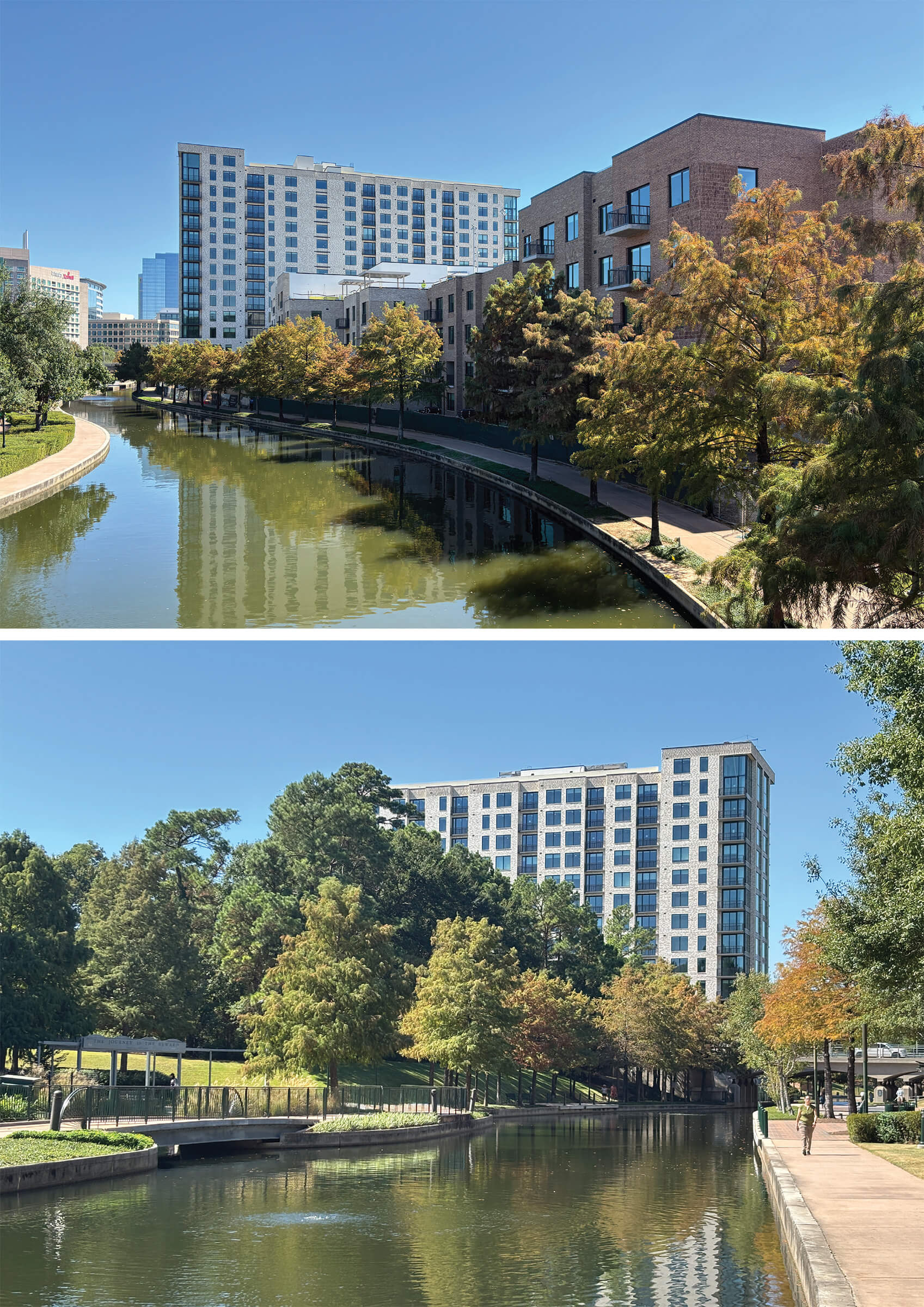
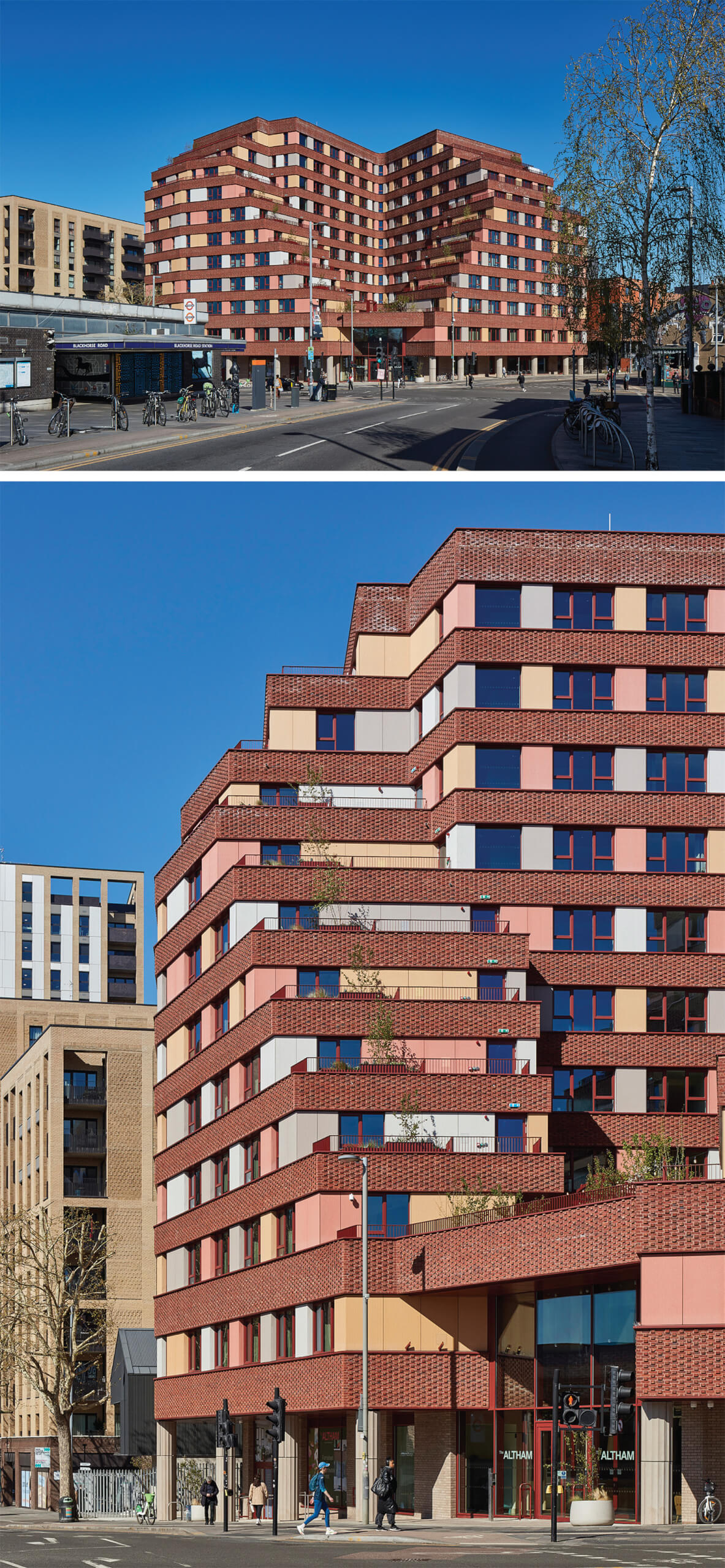
The Altham at No1 Blackhorse Lane, shortlisted in the Large Housing Development category, is an innovative co-living development comprising 321 residential apartments in Walthamstow, north-east London. Located on a prominent corner opposite Blackhorse Road station, the scheme transforms a previously underused site, formerly occupied by a vacant pub and music venue, into a new residential and cultural destination that contributes positively to the wider regeneration of Blackhorse Lane.
Clay brick plays a central role in the success of the project, both architecturally and technically. It was selected to give the building a strong and distinctive identity, whilst also providing the richness, texture and permanence appropriate to this prominent urban corner. The principal brick was chosen for its tonal variation and textured finish, which bring depth and visual warmth to the facades. Projecting header details create subtle shadow lines and rhythm across the elevations, enriching the façade with texture and visual interest while contributing to a crafted, high-quality appearance. These details allow the brickwork to animate the building at different times of the day, giving the elevations depth and changing character in varying light conditions.
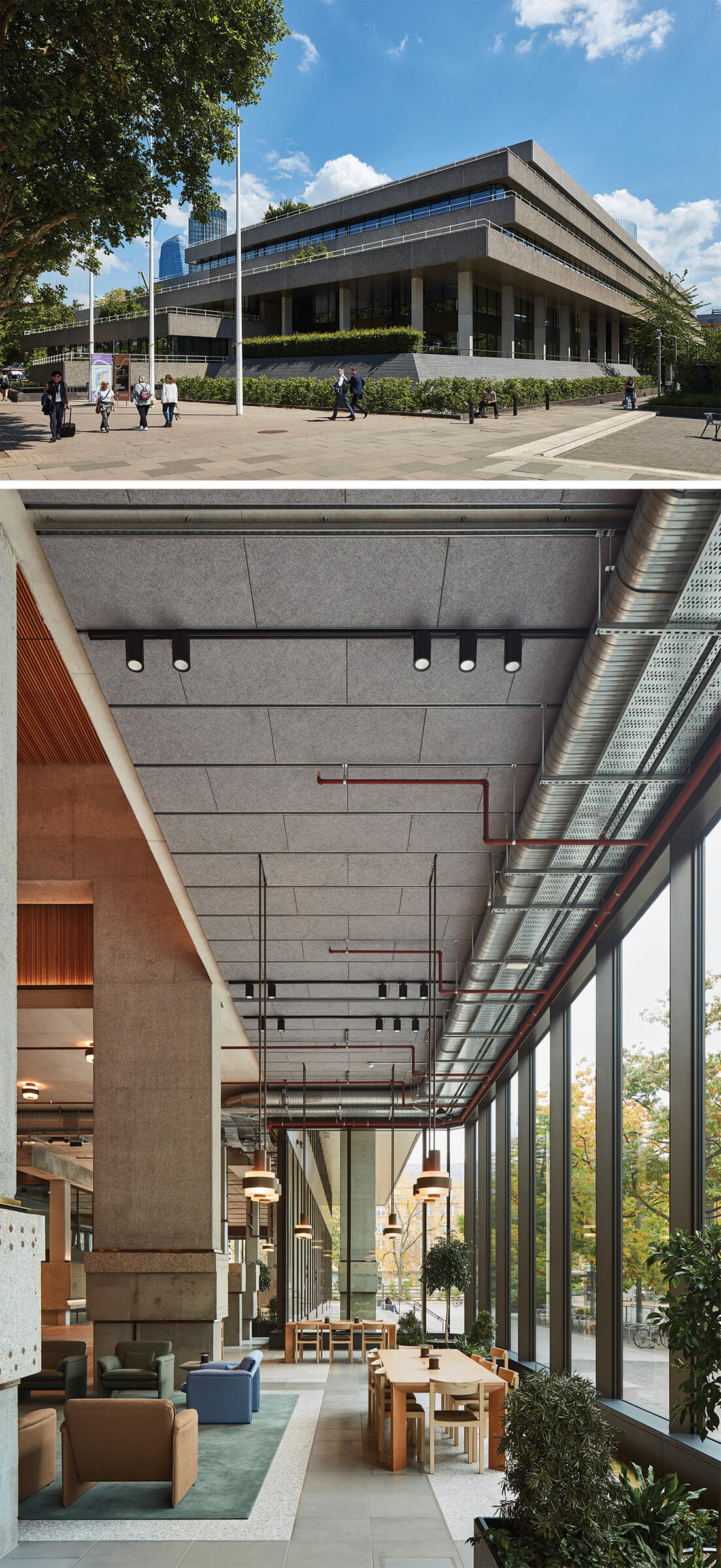
76 Southbank, shortlisted in both the Refurbishment and Sustainability categories, is a Grade II-listed Brutalist landmark designed by Sir Denys Lasdun and completed in 1983 as IBM’s headquarters. AHMM’s refurbishment and extension celebrate the building’s original character and heritage while adapting it to meet 21st century sustainability standards and delivering an additional 100,000 square feet of flexible office space. The building is a leading example of purposeful, low carbon design operating with renewably sourced energy from air and water source heat pumps alongside over 175 photovoltaic panels to create a fully electric building. Achieving both BREEAM Outstanding and 5-star certification under the NABERS Design for Performance standard, the building takes advantage of its upgraded thermal envelope to create a highly energy efficient scheme.
Over 7 tonnes of reclaimed bricks, 27,360 floor tiles, and 95 tonnes of paving blocks were cleaned and reinstated by Lyons and Annoot before new material was introduced. Where new brickwork was required, the design team matched the original discontinued Etruria marl clay bricks, specifying 63,500 Ketley solid Class A Staffordshire Blue multi engineering bricks for the facades and ground levels. Their kiln-controlled tonal variation replicates the weathered appearance of the 40-year old originals, ensuring visual continuity and providing a durable, low-maintenance material with a long service life. Over 35,000 Ketley plinth bricks were used to remodel the base, creating a sloping profile that sheds water away from the masonry and protects the foundations.
Winners will be announced at the annual awards ceremony on the 4th of November.
Paul Monaghan has been appointed co-chair of the Oxford Street Planning Quality Review Panel alongside Simon Henley, co-founder and director of Henley Halebrown, to help support the Oxford Street Development Corporation’s planning function and promote ‘high-quality, sustainable design’.
Oxford Street in central London has faced significant challenges in recent years due to the impact of the pandemic, the rise of online shopping, and other longer-term changes in retail The Planning Quality Review Panel will provide strategic focus and long-term evaluation of proposals to transform Oxford Street into a world-class, global destination for shopping, leisure and events.
Over the past three decades, Paul has led numerous landmark projects including the redevelopment of Television Centre, 334 Oxford Street (the former Debenhams department store), social housing in Barking, New Scotland Yard, and Burntwood School, which won the RIBA Stirling Prize in 2015. He has also served as a Trustee and Ambassador for the Design Council and most recently has been appointed as Town Architect for Croydon by the GLA.
Paul says “Good design has the power to transform how people experience and connect with their city. This panel will provide constructive, expert guidance to help ensure that new development in the West End meets the highest standards delivering long-term value for communities while responding to the challenges of growth, sustainability and change.”
Earlier this month Simon Allford joined education expert Mary Curnock Cook and journalist Stephen Armstrong as a panellist for “Beyond AI: the Secret of Staying Relevant”, and event organised by Fora and SXSW London.
In the presence of an engaged and engaging audience, the three explored why lifelong learning is not just the price of survival – it’s a superpower, and how, in a technology dominated era, human imagination is boundless and a perspective based only on technology is a mistake.
Simon’s take away is that “a positive attitude to lifetime learning is vital for anyone looking forward to working in the new world of artificial intelligence. Be positive by maintaining naivety (so as to not be afraid to ask the obvious questions that everyone wants to ask but won’t); nurture your natural curiosity (learning by another name). After all, the brain is a muscle that needs exercise... to strengthen our skills of judgement. Judgement enables the development of new knowledge.”
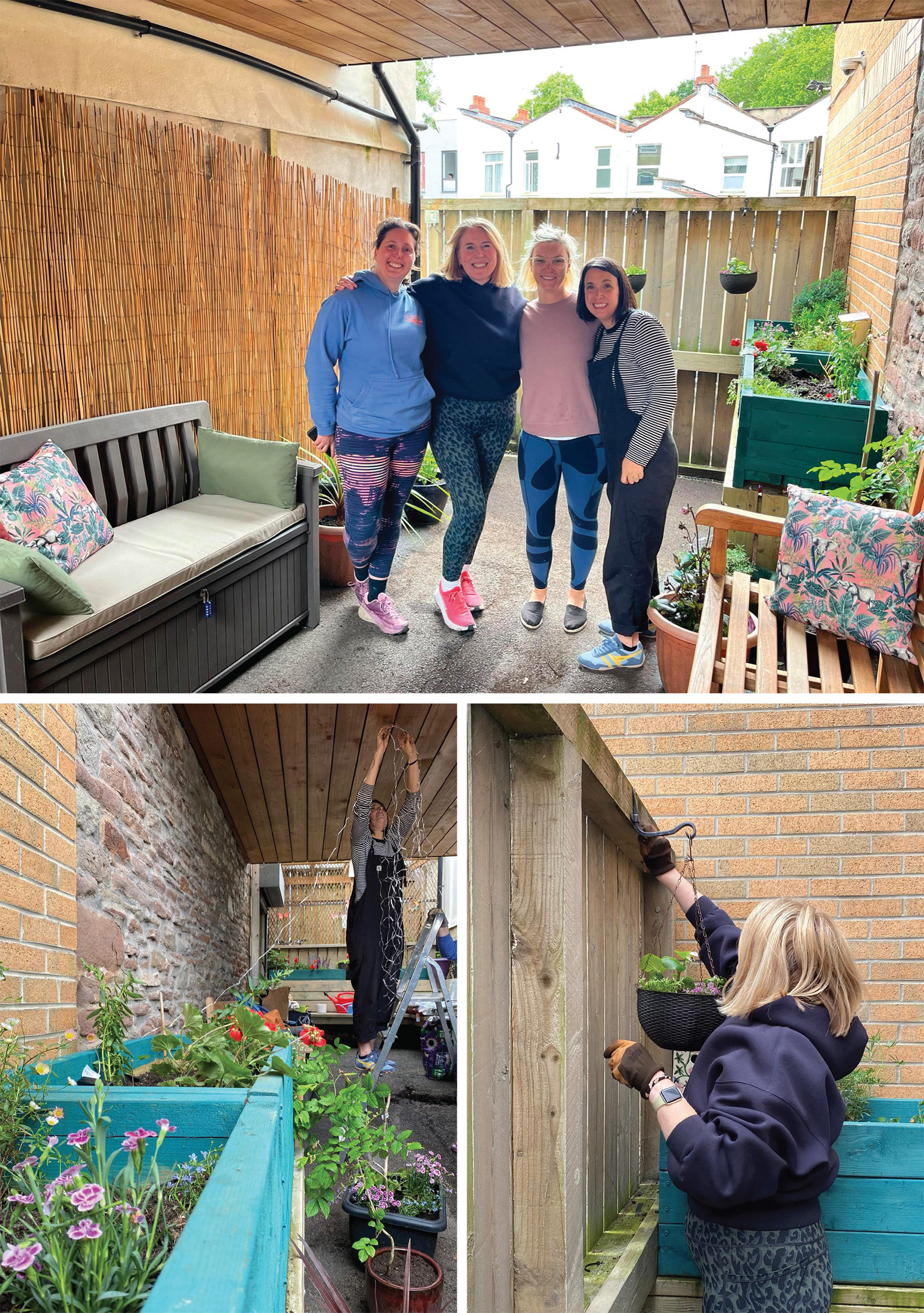
Last week four colleagues from the AHMM Bristol office took part in a green space volunteering session with One25, AHMM Bristol’s charity of the year.
Dusting off their green fingers the group gave One25’s hub garden a spruce, planning the whole endeavour, including bringing brand new plants, flowers, cushions and lights, and even some seeds to scatter ready to bloom in the summer.
One25 is a charity who support women who are street sex-working in Bristol, helping them move from crisis and trauma towards independence in the community. For many of the women who visit the One25 Hub life can feel chaotic, exhausting and unsafe, and having access to a peaceful outdoors space where they can breathe, gather their thoughts, and have meaningful conversations with their caseworkers makes a real difference.
Earlier this month AHMM Associate Rosa Moreno Acedo participated in a round table held by Mix Interiors Magazine exploring how local narratives can shape design that speaks to audiences everywhere.
As design becomes increasingly international, designers themselves face a key question: how to create work that feels globally relevant without losing its connection to place. Joining fellow designers from Allies and Morrison, AtkinsRealis, BGY, Orms and Thirdway, Rosa shared insights into her experience of designing internationally across various scales for over twenty years and creating connection to a place.
Rosa’s takeaway is that “When designing ‘locally’, designers must undertake deep research. We always try to strip things back to their essence. Architecture is storytelling that explains the purpose and principles of what we are trying to achieve and who we are designing for, allowing us to develop a concept that promotes flexibility and that can adapt depending on who is using the space.”
To watch the full discussion please visit here.
AHMM Executive Directors Paul Monaghan, Susie Le Good and Associate Director Jack Ayre will be heading to the British Council for Offices (BCO) Annual Conference in the Scottish capital later this month.
This year’s conference aims to inspire, challenge and connect delegates across Edinburgh and Glasgow over the 17th and 18th June, with plenaries, tours and workshops designed to showcase expertise, knowledge and industry insights.
The BCO, founded in 1990 to streamline the office sector, is a membership organisation devoted to research and discussion on all aspects of best practice, from workplace creation and delivery to occupation and evolution.
This year AHMM’s 1 New Park Square, winner of the 2024 BCO National Award for Best Commercial Workplace, will be featured as part of the exploration of the West Edinburgh and business park evolution.
As part of the Dixon Jones masterplan to redevelop Edinburgh Business Park, 1 New Park Square forms an important landmark which signals the end of the existing park and Loch Ross, and creates a backdrop to a new civic square designed by Gross Max. The building houses a 200-seat conference centre with four floors of flexible office space above and a café and a restaurant / music venue at ground floor which opens out onto the new public square. The office floors are designed to allow for multiple configurations with generous floor to ceiling heights improving daylighting, thermal comfort and reducing energy in use over time.
For more information about the BCO Conference please visit here.
Construction works at 1 Victoria Street are progressing. With demolition completed at the end of 2025 revealing the large existing basement ‘bath tub’, new concrete cores are now being formed using an innovative Mtech Jump rig, with the West Core recently topping out. Structural slabs have been poured up to ground level with the first floor Post Tensioned slab pour now commencing and the first precast, stone clad architectural columns have been installed.
The redevelopment of 1 Victoria Street, the former headquarters of the Department for Business and Trade, will transform a significant 1960s office building into a sustainable, commercial building offering carefully designed office accommodation, with active retail on the ground floor along Victoria Street.
The new building will be constructed above the retained, unpropped 3 storey basement, which was made possible during demolition through researching and recreating the conditions of its construction 65 years ago. With over 50% of the existing structure retained, embodied carbon emissions have been minimised while allowing the project to address the existing buildings shortfalls. The project has also successfully reclaimed many elements from the existing building during deconstruction including glass for closed-loop recycling and teak windows.
The project is due to complete in 2028.
McLaren Construction have been appointed by developer British Land for the redevelopment above West One Shopping Centre and Bond Street Underground Station in Central London.
Designed by AHMM the scheme will retain approximately 60% of the existing building’s concrete structure with the top four floors being replaced with six new floors in lightweight steel construction providing almost double the office provision.
The existing retail located on the lower floors will be retained with new retail shop fronts and Underground entrance replacing the existing cluttered facades. On the upper floors a new architectural language of vertical bays derived from the existing structural grid and a robust material palette of glazed orange terracotta provide a strong identity to the site clearly referencing the 19th century buildings of Mayfair.
The redevelopment of West One provides an opportunity to create a new identity for a key gateway location, replacing an existing building which failed to reflect the importance and prominence of Mayfair with a carefully designed revamped building which complements the on-going initiatives to renew the broader area, stimulated by the opening of the Elizabeth Line.
The scheme is due to complete the first quarter of 2029.
During the month of June AHMM is celebrating two pro bono projects with Migrateful Kitchen, a charity that supports and celebrates refugees and migrants on their journey to employment and integration through the power of food.
AHMM has been supporting and working with Migrateful since 2017, including hosting cookery classes for staff at our London office as well as contributing towards first aid training, chef training and cooking equipment.
On Friday 19 June in Bristol, as part of Refugee Week we will be celebrating the recently completed Migrateful Kitchen at Windmill Hill City Farm which was designed by AHMM with Hoare Lea, Arup and Savills.
On Wednesday 24 June in London, we will be exploring the London Festival of Architecture's 2026 theme ‘Belonging’ through food and space at Migrateful’s Kitchen at the Three Corners Centre in Islington, which was designed by AHMM and generously supported with materials, funding and expertise from 21Construction, XCO2, VitrA, Domus, Zumtobel, Caro Communications and Derwent.
During both events attendees will have the opportunity to sample delicious tasters while hearing personal stories from Migrateful chefs, discovering how the space was designed to foster connection, learning and creativity. You’ll also learn more about the pro bono projects and the collaboration between the design team and the charity to create two kitchens which help to bring the community together and aid Migrateful's mission to support refugees and migrants on their journey as they build a new life in the UK.
Both events are free to attend with time tickets in Bristol and no booking required for London.
Last night, 28 May, 76 Southbank received an American Institute of Architects (AIA) UK Design Excellence Award at their annual awards ceremony.
The project transforms a deteriorating Grade II listed building into a renewed contemporary workplace that respects and enhances its heritage while adapting it for modern use.
Designed by Sir Denys Lasdun and completed in 1983, 76 Southbank started life as the office and client marketing building for IBM. Although the building was listed at Grade II in 2020, 18 months into AHMM’s appointment, it did not meet modern standards and presented an opportunity for sensitive qualitative and quantitative improvements both to the building itself and by pedestrianising its car-orientated relationship with the public realm.
AHMM carefully refurbished and extended the building to deliver an additional 100,000 square feet of flexible and highly sustainable office space. The scheme has preserved this important building for the long-term future while greatly improving and enhancing its setting within the South Bank conservation area.
Last week two AHMM cyclists, Will Lee and Paul Jones, completed SLR Cycle to UKREiiF to help raise money for Cyclists Fighting Cancer.
Setting off from Kendal on the edge of The Lakes, the route to Leeds, home of UKREiiF, the UK’s Real Estate Investment & Infrastructure Forum, took two days of beautiful cycling across Forest Bowland and the southern section of the Yorkshire Dales National Park.
Organised by Club Peloton, the event raises money and awareness of a vital charity, Cyclists Fighting Cancer, who help children and young people living with cancer regain physical fitness, strength, mental wellness and confidence through sport.
A big thank you to Dolphin Solutions, Stanhope PLC and EH Smith Charitable Trust for generously supporting the AHMM team this year.
Image courtesy of Club Peloton
Last weekend, AHMM’s space-inspired dog kennel was exhibited and auctioned at Goodwoof as part of ‘Barkitecture’, Britain’s leading kennel design competition and exhibition at the heart of the two-day festival.
In the competition’s fifth year, architects, artists and designers from around the world responded to this year’s brief, Dog in Space, challenging designers to create kennels with a playful connection to the cosmos and pushing their creativity into a new orbit.
Realised by our talented model shop team, Simon Allford’s design, 2051: A Space Odyssey – for dogs, was inspired by Stanley Kubrick’s iconic imagery for 2001: A Space Odyssey.
Reflecting on the brief, Simon commented: “Kubick’s theme is ever more relevant today as the film’s computer, HAL, both predates and predicts our current obsessions with, and fear of AI. Today, as we lose interest in space except as a site of luxury tourism or mass destruction, the kennel brings memories of forgotten futures and space travel back into the home.”
A preview night at Bonhams auction house took place ahead of the festival, before dogs were able to test the designs across the weekend. Sales of the auctioned kennels raised over £20,000 for Battersea Dogs & Cats Home, Goodwoof’s 2026 charity partner.
Last Tuesday evening,19 May, five runners from AHMM joined people from across the architecture and the built environment to take part in the HD5K in Hyde Park.
HD5K is a 5km run organised by the Alan Davidson Foundation and Hayes Davidson to raise funds for the Motor Neurone Disease Association in memory of Alan Davidson, founder of Hayes Davidson, who was diagnosed with MND in 2012 and died in 2018. Since the event started in 2018 they have raised around £400,000 to support the work of the MND Association, helping to improve outcomes for people affected by neurological illnesses.
The practice funded the entry donation on behalf of each runner as part of our Partnerships work which builds upon the practice’s thirty years of charitable giving and philanthropic support.
Images courtesy of Hayes Davidson / Alan Davidson Foundation
Last week the Hospital Rooms team visited our Morelands office in London to run a workshop to coincide with Mental Health Awareness Week.
Introducing some of the co-production approaches used in their mission to bring creativity, colour and kindness to mental health hospitals, the workshop was inspired by the work of artist José Parlá giving participants the opportunity to experience the positive effects of creativity on wellbeing.
Selected as one of our 2026 Charities of the Year, as part of our ongoing Partnerships work, Hospital Rooms is a UK charity bringing world-class art into NHS mental health hospitals. Coinciding with Hospital Rooms tenth anniversary, this year’s London partnership allows us to help them celebrate a decade of profound projects that have transformed challenging settings into environments where service users feel safe and secure, both physically and mentally.
76 Southbank has been awarded a Footprint+ Changemaker Award in the Pioneering Retrofit category, recognising the artful resolve between the diverse needs of the modern building balanced with embodied and operational carbon impacts. Given as part of the Footprint+ conference focusing on climate-resilient property development, the Changemaker Awards recognise the people, projects and products delivering measurable change across property.
Designed by Sir Denys Lasdun and completed in 1983, 76 Southbank started life as the office and client marketing building for IBM. Although the building was listed at Grade II in 2020, 18 months into AHMM’s appointment, it did not meet modern standards and presented an opportunity for sensitive qualitative and quantitative improvements both to the building itself and by pedestrianising its car-orientated relationship with the public realm.
AHMM carefully refurbished and extended the building to deliver an additional 100,000 square feet of flexible and highly sustainable office space. The scheme has preserved this important building for the long-term future while greatly improving and enhancing its setting within the South Bank conservation area.
The building is a leading example of purposeful, low carbon design operating with renewably sourced energy from air and water source heat pumps alongside over 175 photovoltaic panels to create a fully electric building. Achieving both BREEAM Outstanding and 5-star certification under the NABERS Design for Performance standard, the building takes advantage of its upgraded thermal envelope to create a highly energy efficient scheme with an embodied carbon figure of just 365kgCO₂/m².
The judging panel praised “its regenerative retrofit approach and its successful integration of all electric design, biodiversity and commercial performance.”
Last night, 14 May, Arthur Stanley House received an RIBA London Award at the annual award ceremony.
Located in the Charlotte Street conservation area, this project has reinvented Arthur Stanley House, a decaying 1960s office block in Fitzrovia, central London. The design is a celebration of the original TP Bennett Architects’ building alongside its 21st century additions. New and old are left exposed and presented within the floorplates to represent the building’s development over a 60-year period. The result creates characterful floorplates with a uniqueness not normally found in a commercial building.
The client and design team both saw the value in working with the existing building, which had a rich palette of materials including London stock bricks, terracotta pots and dense aggregate concrete which new additions could complement. The new scheme added depth to the façade with the addition of generous stone reveals and replaced the existing windows with new high quality triple glazing. The original top floor plant room and prominent loggias along the Tottenham Street elevation have been replaced with a new office floor plate and a full-length south facing terrace with far reaching views across London.
The design was also driven by a low carbon approach: 70% of the original structure was retained and extra care taken during demolition to preserve original bricks to be reused on the upper floors as the building height increased. The internal finishes have been paired back to expose brickwork and concrete as a self-finished material, and the new extensions all have concrete brick facades which have a third less embodied carbon when compared to typical clay bricks.
Amir Sanei, London Jury Chair, commented: "Demonstrating that the future of the city can lie not in replacement, but in the intelligent reworking of what already exists."
The project will now be considered for an RIBA National Award.
Last night, 14 May, Norton Folgate received an RIBA London Award at the annual award ceremony.
Occupying a prominent position on the City Fringe, this office led development regenerates a derelict, unsafe group of sites which had lain empty for a decade, improving the streetscape and setting of the Elder Street Conservation Area. Delivered by British Land, the project comprises three urban blocks with the retention of a significant number of historic buildings, creation of six new buildings and new public realm.
Rather than applying a blanket strategy the masterplan employs a building-by-building approach to the retained existing buildings using restoration, refurbishment, extension, remodelling and facade retention to breathe new life into the architecture with sensitively designed new buildings. It sets new standards for retrofit, refurbishment, and redevelopment in central London, and acts as a blueprint for reusing building fabric, which is a necessity in the built environment industry’s approach to tackling the climate crisis.
Given the variegated character of Norton Folgate, four different architecture practices were brought together to diversify the architectural approach and style. AHMM was appointed masterplanner and designed three buildings, with Stanton Williams, Morris + Company, and DSDHA all designing buildings and East leading the public realm strategy.
Across the six buildings a range of office types with retail at ground level has been created, with the aim of attracting tenants from SMEs to mature organisations and appealing to the local tech and creative industries. The public realm design enhances the tight network of existing streets and opens up three new yard spaces that draw on the character of the surrounding historic blocks.
Matthew Lloyd, London Jury Chair, commented: "Norton Folgate is an example of excellently contextual and viable urban regeneration and renewal. It offers an approach and ambition that is surely applicable to similarly run-down and abandoned historic places.
The project will now be considered for an RIBA National Award
Last night, 14 May, Phase 1 of the Brentford Project received an RIBA London Award at the annual award ceremony.
The Brentford Project is a major mixed-used waterfront regeneration of a 12-acre site into a vibrant destination comprising homes, retail, restaurants, cafes and leisure opportunities. Phase 1, completed in 2004, is a collaboration between AHMM, Howells and Maccreanor Lavington for Ballymore with landscape design by Grant Associates.
Existing buildings on the site predominantly faced away from the waterfront, with retail units opening onto the high street and social housing above. With low quality architecture and a lack of footfall for retail, the area was in much need of renewal to bring it back to life as a destination in west London. The masterplan has aimed to rejuvenate the High Street by linking the town centre to the waterfront and reinstating lost connections to the River Brent and inland waterways with a new street pattern echoing the historic working yards.
Phase 1 includes Calville House designed by Maccreanor Lavington, Lewis House designed by AHMM, and Hollandbury House designed by Howells. Phase 2 is due to complete in 2028 with additional buildings from Coffey Architects and Hal Curry Architects creating an architectural richness across the masterplan.
Julia Roberts, London Jury Chair, commented: "The completed Phase 1 of the Brentford Project demonstrates how housing-led regeneration can be delivered with architectural clarity, urban generosity, and civic ambition.
The project will now be considered for an RIBA National Award.
Designed for General Projects and Henderson Park, Metropolis exemplifies AHMM’s long-standing commitment to the reinvention and reuse of existing architecture, to transform buildings into attractive, efficient and future-proofed places.
The scheme extends and refurbishes the nine storey Woolworth House, originally designed by Richard Seifert in 1955 as the UK headquarters of the US retailer F.W. Woolworth, and located in the Dorset Square Conservation Area in the City of Westminster. This ‘Building of Merit’ in the heart of Marylebone presented an opportunity to rethink what contemporary office buildings can offer. 93% of the original fabric has been reused, and the addition of a low carbon CLT extension to the rear, clad in flamboyant glazed terracotta and invisible to passersby, has created a 175,000 sq ft office hub for a diverse mix of occupiers.
Metropolis has been ambitiously designed to set new workplace standards, with wellbeing and experience at its core with the integration of 20,00 square feet of amenity spaces, 12,000 square feet of terraces enriched with planting and greenery, and high specification cycle store and associated facilities. Focusing on the reuse of a strong existing fabric, upgrades revitalise the building to exceed the needs of office workers in this prime central London location. New additions complement and enhance, ensuring a legacy for an architecturally striking building, while hitting new benchmarks in sustainable design and operation.
As with all good architecture, the successful adaptation of existing buildings requires excellent teamwork, collaboration and craftsmanship. The combined expertise of the design team, alongside the knowledge of constructors and craftspeople, and the belief of our client, have enabled the careful reinvention of a significant building.
Philip Turner, Executive Director at AHMM comments: "It’s great to complete a significant redevelopment of this large site, working with General Projects on the building since 2017. The Client’s indefatigable ambition for the highest quality architecture has helped to drive the project through two planning consents, two building contracts, and a pandemic. The completed building demonstrates a whole-project approach to both the metrics and the aesthetics of low-carbon design, and reconceives a landmark building for the next generation."
Last Thursday night, 7 May, Assembly Bristol received an RIBA South West & Wessex Award at the annual awards ceremony.
Transforming a long vacant site adjacent to the city’s inner circuit road and Floating Harbour, the Assembly Bristol campus is anchored around a waterfront park, creating a new city place that positively engages with the city, brings colour to the skyline and links the waterside with a restored historic street, Cheese Lane.
Developed for AXA Real Estate and Bell Hammer Ltd, the scheme’s hierarchy of three buildings shapes the spaces and frames a connecting vista from Pip and Jay Church to the water’s edge. These three buildings unify the campus while possessing a distinct character of their own.
Building A holds the street edge, protecting the waterfront park from the clamour of traffic. It lifts and spans Cheese Lane with a heroic structure to create a lofty entrance portal into the campus centre. Building B is the smaller of the trio standing at seven storeys, enjoying a gentle waterside setting while Building C, the tallest building reaching 14 storeys, brings sculptural height over the public realm.
The campus champions sustainability and innovation, reducing embodied carbon through exposed structures celebrating the buildings’ mechanics and minimising material waste through efficient construction, which delivered a 26% saving on embodied carbon emissions compared to other new build office developments in Bristol.
Sam Goss, South West Wessex Jury Chair, commented: “Through the careful orchestration of streets, structure, facade, and shared spaces, it repairs a fractured urban condition while creating a vibrant workplace community.”
The project will now be considered for an RIBA National Award
As the largest built Passivhaus certified building in Europe and the eighth largest in the world at the time of certification, this achievement reflects the exceptional collaboration and expertise of the core project team – developer urbanest, architect AHMM, general contractor Mace Construct and Passivhaus consultant Henriksen Studio.
Given the growing interest in Passivhaus high-rises, we have created this storybook to share our experience in designing to this rigorous standard. Intended as an engaging an accessible read for architects, it also welcomes anyone interested in high-performance, low-energy buildings that contribute to reducing operational carbon emissions in the built environment.
The report begins with an introduction to the Passivhaus standard and its critical role in meeting Net Zero targets by 2050.
It includes an analysis (specific to urbanest Battersea compared to two other AHMM projects) demonstrating how Passivhaus design reduces whole-life carbon by reducing operational energy demand. We then explore the unique challenges of applying Passivhaus principles to high-rise buildings. Using urbanest Battersea as a case study, we examine key issues such as thermal bridging, airtightness, and the complexities of scaling up Passivhaus strategies.
Further sections delve into essential considerations, including façade design, the benefits of early-stage design optimisation, airtightness monitoring and testing, and strategies for managing thermal bridges.
The report also highlights the importance of harnessing passive energy sources such as internal heat gains, and mechanical ventilation with heat recovery – an approach that enables up to 90% energy savings for space heating and cooling compared to typical building stock, and over 75% compared to typical new builds.
Finally, a Lessons Learnt chapter gathers insights from key team members, reflecting on the project’s successes, challenges, and the path forward for future Passivhaus high-rises.
Download the report here.
1 Riva Row has been awarded a Houston Business Journal Landmark Award in the Multifamily category. The Houston Business Journal Landmark Awards recognise real estate projects that make a significant impact on Houston, Texas, and help sculpt the look, feel and image of the city.
Developed for Howard Hughes, 1 Riva Row is a new multifamily development comprising of 268 apartments on the banks of The Woodlands Waterway, which runs through The Woodlands Town Centre to Lake Woodlands.
The massing consists of two distinct elements, a four-story component, more domestic in scale and a 13-story tower which addresses the prominent corner location. The entrance pavilion sits as a ‘jewel box’ between these two elements and forms a backdrop to the landscaped entrance plaza.
A gradual gradation of brick colours across the building provides a playful façade which reflects the rich history of brick production in Texas.
Bristol City Council has approved the regeneration of underutilised land next to Cabot Circus car park in Bristol into a green, pedestrian and cycling friendly destination with new student homes, café and community space.
Developed as part of ongoing investment in Bristol by Hammerson, a joint venture owner and development manager of Cabot Circus, AHMM’s proposals include two new buildings: one a community centre on the site closest to St Jude’s and the other a 28-storey signature building providing purpose-built student accommodation with a ground floor café and a unique octagonal design, marking the arrival to the city.
Extensive planting and landscaping across the site will provide a buffer between the motor traffic and pedestrians and cyclists, as well as making the existing car park access road safer with a pedestrian-friendly crossing.
Bristol Horn Youth Concern, which is in talks with Hammerson to occupy the community centre, comments “As an organisation working with young people across East Central and Central Bristol, we see first-hand challenges that face in finding safe, welcoming spaces to spend time, particularly in and around the city centre.
The proposed community hub alongside the student accommodation would be an invaluable addition to the area. Over the past decade, the decline of youth clubs and community facilities both nationally and locally has left many young people without access to the support, opportunities, and positive activities they need.”
Stephen Taylor, AHMM Director, comments “We are delighted that Bristol City Council have approved plans for a much-needed community space, public greening and student living. Transforming a prominent and underutilised brownfield site with a mix of uses, improved public realm and community facilities places Cabot Gate as a fitting gateway to our city centre.”
The Altham at No 1 Blackhorse Lane in northeast London has reached practical completion. Developed for Scape Living, this innovative co-living scheme delivers 321 apartments with a series of shared residential amenity spaces, ground floor public café and new purpose-built cultural venue.
Located on a prominent site opposite Blackhorse Lane station the new building engages with the urban corner of Blackhorse Lane and Forest Road, mediating the busy crossroads and emerging context of newer taller buildings to the west of the site and established lower residential buildings to the east through a series of stepped planted terraces. This articulated massing provides each floor with an outside terrace. Furthermore, as the form of the building tiers up, it creates a south facing landscaped courtyard adjacent to the shared amenity spaces for the building.
The stepped form is enhanced floor by floor by continuous horizontal banding of articulated brickwork that wrap around the building define the balconies as they step back. At the base of the building, a colonnade wraps along the building’s south and east public street facing facades, integrating the new public realm and providing a clear civic street frontage to the scheme. A double height expression off the colonnade defines the main entrance to the co-living building. The entrance to the venue is in the south-west corner of the building benefitting from a taller colonnade as the public realm slopes
The Altham creates a new residential community which puts wellbeing at the schemes heart, with extensive internal amenity and a unique first floor communal terrace for residents. The scheme also reinstates a local event venue, enabling the site to continue its tradition of providing entertainment to the local and wider London community by replacing a much-loved music and comedy venue (the Standard) that previously occupied the site.
Marc Williams, AHMM Executive Director, comments: “The way the building relates to the Blackhorse Lane intersection, cascading down, enclosing a first floor south facing terrace and inverting perhaps a more traditional way of 'holding' corner seemed a really appropriate way to mediate between the tall buildings of the new developments along Forest Road to the West and the established low rise residential buildings to the East. We hope it creates a sense of drama as you emerge from the Blackhorse Lane station with a more playful form.”
The Iron Works at Silverthorne Lane in Bristol has been shortlisted for a 2026 Housing Design Award in the project category.
Developed for Studio Hive, The Iron Works reinvents a significant area of post-industrial land directly to the east of Bristol Temple Meads station to provide a well-connected and characterful residential led mixed-use neighbourhood. Accommodation is arranged as a series of linked north-south ‘finger’ blocks that run perpendicular to the Feeder Canal and range in height from ten to fourteen stories. Between the buildings, a legible sequence of permeable public and semi-private spaces is formed, with over half the site publicly accessible and areas animated by active ground floor uses. A continuous canal-side walkway and potential ferry stop reconnect the site to the wider waterside network, transforming a previously inaccessible edge into a vibrant civic route.
All homes are designed for the build-to-rent market, offering long-term appeal through efficient planning that prioritises living areas and over 800 square metres of shared amenity. The scale and form of the buildings respond to both the historic context and emerging taller buildings within Temple Quarter. Materiality draws on the site’s industrial character, using robust, high-quality materials including layered brick and metal work that references the historic fabric while delivering a contemporary architectural expression.
Yesterday, 15 April, 76 Southbank received a BCO London Award in the Refurbished/Recycled Workplace category at the BCO Awards annual London Awards Ceremony.
Designed by Sir Denys Lasdun and built on industrial land partially reclaimed from the River Thames, 76 Southbank began life as the office and client marketing building for IBM. Since its completion in 1983, both the context of the South Bank, office working trends and technology have evolved leaving the building not fit for purpose with IBM vacating in 2022.
Although the building was listed Grade II in 2020, 18 months into AHMM’s appointment, the building did not meet modern standards and presented an opportunity for sensitive qualitative and quantitative improvements both to the building itself and by pedestrianising its car-oriented relationship with the public realm.
Delivered with developer Stanhope, AHMM have carefully refurbished and extended the building to deliver an additional 100,000 square feet of flexible and highly sustainable office space. The scheme has preserved this important building for the long-term future while greatly improving and enhancing its setting within the South Bank conservation area.
The building is a leading example of purposeful, low carbon design, achieving both BREEAM Outstanding and 5-star certification under the NABERS Design for Performance standard. Employee wellbeing is at the heart of the design with a range of flexible spaces provided, including high quality end of journey facilities and over 5,000sqm of large outdoor terraces.
Judges praised the scheme for its sensitive material approach, including the replication of the original precast granite panels, and the transformation of the building's relationship with the public realm through new entrances and generous riverside terraces.
Last Friday, 10 April, the City of Oklahoma City leaders, including Mayor David Holt and Ward 2 Council person James Cooper, cut the ribbon on the new Lake Hefner Golf Clubhouse during its grand opening weekend.
Publicly owned by The City of Oklahoma, Lake Hefner Golf Club is widely regarded as one of the premier municipal golf courses in a multistate region. This new multiphase building, designed by the AHMM OKC office, strives to be a clubhouse for both Lake Hefner users and City residents by offering a diverse range of uses appealing to more than just golfers.
It’s simple diagram with a simple material palette honours the surrounding scenic context with limestone gabion walls mirroring the Lake shore riprap and dam, while the oxide metal contrasts against the dynamic Oklahoma sky. The clubhouse’s first floor includes a golf shop, locker rooms, office space and a grab-and-go food and beverage area named Alsie’s Corner. The second story will feature Maxwell’s on the Lake, a restaurant and bar with panoramic views over the North Course and Lake Hefner. The second floor also includes two golf simulator bays for indoor play.
Brad Sliauter, Director of Golf for Lake Hefner Golf Clun, commented “We couldn’t be more excited to introduce the new Hefner Clubhouse and all it offers to our golfers and the entire Oklahoma City community. Rising organically from the landscape the building’s architecture pays tribute to the surrounding neighbourhoods and the Lake Hefner Dam, creating a striking palette of colors set against the green fairways and Oklahoma’s expansive blue sky. More than just a golf shop, the Hefner Clubhouse is designed as a true community gathering place for residents, park visitors, and organizations throughout the metro. Whether you’re here to take in the unmatched views, enjoy a great meal, or play a quick nine on one of our new indoor simulators, we invite you to experience everything the Hefner Clubhouse has to offer.”
The Citizen has won an Urban Land Institute Oklahoma Impact Award in the Large Scale Development category.
Conceived as a modern-day forum, The Citizen is a mid-rise development in downtown Oklahoma City that contains a diverse blend of functions intended to support and stimulate meeting and engagement. Situated opposite the Oklahoma City National Memorial the new building was designed as a lean hardworking building – endless flexibility and easily reconfigurable. Its robust and high-volume space with expressed concrete structure and services are designed to be flex in use and for future adaptability.
The exterior draws inspiration from neighbouring towers, reinterpreting the verticality and window rhythms of their 1930s styling through a contemporary unitized aluminium and glass cladding system, used for the first time in Oklahoma City. Deep vertical fins introduce shading a sculptural depth, creating a dynamic interplay of light and shadow. With its well-mannered exterior, its acknowledgement of the past but design for the future, and its varied offering of public and private functions, the building itself is conceived as a Citizen of the city.
The Urban Land Institute Oklahoma Impact Awards recognise projects in Oklahoma, USA, that exemplify best practices in the responsible use of land and in creating and sustaining thriving communities, through each project’s contributions to the built environment and the public realm. Winners of the award represent projects and initiatives that have been determined to best promote the creation of resilient communities, intelligent densification and urbanization, as well as outstanding quality of design and construction.
Norton Folgate: Blossom Yard and Studios, Nicholls & Clarke and Loom Court has been highly commended in this year’s Civic Trust Awards.
Occupying a prominent position on the City Fringe, a short walk from Liverpool Street Station, Norton Folgate comprises three urban blocks with the retention of a significant number of historic buildings, creation of six new buildings and new public realm.
Given the variegated character of Norton Folgate four different architecture practices were brought together to diversify the architectural approach and style. As the masterplan architect, AHMM also designed three buildings, namely Blossom Yard and Studios, Nicholls & Clarke and Loom Court, while three other architects, Stanton Williams, Morris + Company and DSDHA, designed Elder Yard, 15 Norton Folgate and 16 Blossom Street respectively and landscape architect East led the public realm strategy. Morris + Company’s 15 Norton Folgate was also highly commended.
Blossom Yard and Studios is the largest building on the site and comprises a new 10-storey building, a retained 4-storey warehouse (12-13 Blossom Street) which is linked to the new build element and a 4-storey warehouse façade retention. The building forms a new civic façade to Principal Place, responding to the scale of the new public plaza.
Loom Court sits at the heart of Norton Folgate masterplan and occupies a site spanning from the listed Georgian terraced town houses on Elder Street to the retained Victorian warehouses on Blossom Street. The mixed-use office and retail scheme includes a retained and retrofitted existing 4-storey 1970’s neo-Georgian style office extension on the corner of Blossom Street.
Nicholls & Clarke is the tallest element of the scheme, bringing together 13 storeys of new office space with a refurbished 1887 Victorian warehouse on the site, providing office space with views out over the city. The building occupies a triangular plot and integrates the retained 1887 Warehouse which is locally and sensitively repaired where required, with the emphasis on maintaining its weathered character and patina.
The Judges’ commented: “The project goes beyond delivering commercial office space and creates a network of spaces which give amenity and allow spatial choices for people to walk, meet, sit and experience this amazing, layered and rich part of London.”
76 Southbank has been awarded a Civic Trust Special Award for Sustainability along with a 2026 Civic Trust Award. The Civic Trust Awards scheme was established in 1959 to recognise outstanding architecture, planning, and design in the built environment. Sponsored by Derwent London the Special Award for Sustainability is presented to an exemplar project, that demonstrates excellent sustainability credentials in terms of overall design parameters, material selection, construction methods and long-term energy consumption.
Located on the banks of the River Thames 76 Southbank has preserved an important building originally designed by Sir Denys Lasdun, carefully refurbishing, extending and enhancing it to deliver new flexible and highly sustainable office space while greatly improving its setting within the South Bank conservation area.
At the heart of the scheme is the retention and intelligent reuse of the existing building structure with over 80% having been retained which has saved 10,171 tCO²e of carbon. Additionally, the building is a leading example of purposeful, low carbon design operating with renewably sourced energy from air and water source heat pumps alongside 175 photo-voltaic panels to create a fully electric building. Achieving both BREEAM Outstanding and 5-star certification under the NABERS Design for Performance standard, the building takes advantage of its upgraded thermal envelope to create a highly energy efficient scheme.
At street level, a new double height entrance lobby is provided creating a new arrival and café space accessed directly from Upper Ground. The reworked core provides flexibility for multiple tenants and greater lift capacity than currently required allows for any future increase in occupancy. The upper floors have been improved in their efficiency with an extension to the east and south elevations and one new storey added using the same architectural language of terraced ‘strata’ as the existing building. Large outdoor terraces covering over 4,500 square meters are brought to life through a sensitive and considered landscape design to maximise the potential of this unique location along the River Thames.
The respectful adaption of this important heritage building has resulted in a highly energy efficient scheme which significantly improves both the building itself and by pedestrianising a once car-oriented public realm, relinks the river and Upper Ground into a pedestrian focused destination and riverside promenade to last another 40 years in the evolution of the South Bank.
Head of Sustainability for Derwent London, John Davies said: “76 Southbank is a fantastic project, showcasing what thoughtful retention, intervention and imagination can achieve in terms of producing the next generation of London office space. This Grade II listed building, whilst coming to the end of its first design iteration still offered huge potential to adapt and retain its place in the Southbank landscape and move into its next phase of life. The project team have successfully brought the building up to date with the latest sustainability thinking and design flair and adding further adaptability and flexibility. It sets a powerful benchmark for low-carbon refurbishment and illustrates how existing buildings can play a vital role in addressing the climate challenge while enriching the urban environment.”
Construction has started on the new Family Recreation Centre for the Oklahoma City Golf & Country Club.
Replacing two outdoor tennis courts, this new two-storey building will provide four new indoor pickleball courts, one indoor padel court, two restaurants and a rooftop bar, tying together the existing fitness centre with the existing indoor tennis facility to create a unified campus for health, wellness and recreation.
The primary façade is strategically articulated with pitched roofs and domestic scale detailing with gable forms denoting the entrance while relating to the historic clubhouse aesthetic.
The project is expected to complete in Spring 2027.
On Friday, 20 March, Acorn House, a new 100% affordable housing scheme in Camden designed by AHMM, officially opened. Ward Councillors, Newlon Housing Trust, our client Precis Group, and members of the design and consultant team came together to celebrate the project's completion, with residents set to move in over the coming weeks.
Developed as part of a two-building proposal linked with nearby Belgrove House - a new-build laboratory and office building on Euston Road, due for completion later this year - the pair respond to Camden's policy on the creation of buildings for both working and living, helping to preserve the city centre's distinctive and diverse character.
Providing much-needed access to affordable homes in the centre of London, the newly completed and fully occupied Acorn House will provide a mix of 60% social rent and 40% intermediate rent, helping to support communities in the borough by addressing the acute shortage of housing provision. At ground floor level, affordable workspace for local entrepreneurs, start-ups, and community organisations ensures opportunity and activity at street level.
The design responds carefully to its surroundings, replacing a tired, nondescript office building with a form and material language that strengthen the existing streetscape. A robust brick palette and considered detailing draw on the character of nearby 20th-century mansion blocks, ensuring that the building sits comfortably within its context.
Generous play space, communal social areas and landscaping have been incorporated to promote wellbeing and harness social interaction between residents, fostering a sense of community.
During February half term secondary students from schools across London visited our Morelands office to participate in two education programmes AHMM supports.
As part of a year-long programme with Open City’s Accelerate, five students attended three days of architecture workshops and were tasked with developing a piece of public infrastructure for Charterhouse Square. The young people created drawings, collages, and physical models of their designs for a public toilet, bus shelter or a bandstand.
Run by Open City, a charity which empowers communities to learn about, feel connected to, and have a role in shaping places where they live, the programme spans an academic year and gives an opportunity to students who are keen to explore whether a potential career in the built environment sector would be right for them through skills development workshops and professional mentoring.
We also ran a three-day work experience programme for five students as part of the RIBA EDI national experience programme in London and Bristol along with students attending as part of our Social Value commitments for One Victoria Street and Botanic Place. Over the three days, the young people participated in skills development workshops including a model shop demonstration, routes into architecture.
Focused on improving mobility and diversity in the profession, RIBA’s national work experience programme organises work experience placements for 16-28 year olds from underrepresented backgrounds in practices across the UK. The RIBA and EDI Action Group Work Experience programme believes work experience is crucial to enabling young people to realise their ambitions of working in the built environment.
The final phase in the 10-acre regeneration masterplan at Elephant Park in Elephant and Castle has received planning permission from the London Borough of Southwark.
Developed for HUB, AHMM’s proposals transform a 1.2 acre site into a landmark mixed-use development delivering 695 co-living homes and social housing, a major NHS health centre and active ground floor amenity across three buildings and improved public realm.
This consent marks a significant milestone in the final phase of the Elephant Park regeneration, which has been ongoing for over 10 years across 10 acres, building on its established residential offering with a strong focus on build-to-rent and delivering Elephant and Castle’s first purpose-built co-living development, to be known as ‘Chords’. The plans also include the provision of 20 three-bed affordable homes, all of which will be for social rent. Generous outdoor amenity spaces will be provided, including a shared podium courtyard accessible from all three buildings, complete with a dedicated children’s play area, as well as two roof top terraces offering elevated views across London and communal gathering areas.
The provision of a new NHS health centre, located on the ground and first floors of one of the buildings responds to a long-standing need for improved healthcare infrastructure in the area to support its fast-growing population.
The public realm design, led by landscape architects Gillespies, completes HUB’s vision for Elephant Park, prioritising permeability, greening and active frontages that encourage community use and enhance connectivity to the wider community.
Damien Sharkey, Managing Director at HUB, said “As our largest co-living-led approval to date, we’re excited to be moving forward with this important site – not only for the Elephant Park neighbourhood, but for the wider co-living sector. Securing this consent, for just shy of 700 homes, is meaningful: it sends a clear signal of confidence in innovative, community-focused rental living. Through Southwark Council’s decision, we can bring forward a significant mixed-use scheme with high-quality co-living homes and much-needed affordable homes for social rent, as well as essential community infrastructure including a new NHS health centre – all within an exceptionally well-connected, vibrant neighbourhood. We look forward to working with our partners to progress delivery and bring forward a high-quality final chapter for Elephant Park that builds on the neighbourhood’s proven success.”
Susie Le Good, Executive Director at AHMM, commented: “Alongside our client and design team, we're thrilled to have secured Southwark’s approval for our proposals for the final piece of the Elephant Park masterplan. Following our early involvement in Elephant Park with West Grove and the subsequent Park Central East and West Developments, we look forward to collaborating with HUB once more and progressing this important site to deliver much-needed homes, as well as vital healthcare facilities, to support the exciting future of this dynamic neighbourhood.”
As part of our ongoing educational outreach programmes, AHMM hosted a built environment careers showcase for students aged 15-18 at our Bristol studio as part of the Grimshaw Foundation’s Careers Showcase, demonstrating the Foundation’s toolkit which aims to support architecture practices nationally to organise their own Careers Showcase.
Joined by AKTII, Churchman Thornhill Finch and Max Fordham, the free session offered practical advice from professional architects, landscape architects, structural engineers and sustainability experts, including short talks, Q&A sessions, real-life insights into day-to-day practice and a live demonstration from one of AHMM’s digital designers. The young people described the session as: ‘interesting, useful, insightful and intriguing’.
The Grimshaw Foundation, which Simon Allford, AHMM Founding Director, is a trustee of, aims to establish a global education network to benefit a diverse range of young people in schools and communities and to promote innovative design, creativity and sustainability.
Sheffield City Council have unanimously approved proposals for the reimagining of the Cole Brothers store, a Grade II listed building in Sheffield City Centre.
Developed for Urban Splash, with whom we have had the pleasure of collaborating with for many years, the proposals mark a significant step in bringing the former department store back to life, fostering economic growth and creating a vibrant hub for local residents, workers and visitors. The scheme will transform the building into a mixed-use space, integrating leisure, entertainment and retail space on the lower and ground floors, with office workspace areas on the upper floors and reopening substantial areas of the building for the public.
The refurbishment of this historic and beloved former department store will complement and expand on the success of Sheffield City Council’s Heart of the City regeneration project, designed to enhance the vitality and attraction of the city centre, driving a thriving and modern urban environment. Working with a dedicated design and consultant team, we look forward to taking plans for this much-loved Grade II listed building to the next stage so that it can be enjoyed by the people of Sheffield for the years to come.
Founding Director of AHMM, Simon Allford, said: "My connections with Sheffield, and with this building, run deep and go back a long way. My family is from the city, my father was born there, and we both studied architecture at the University of Sheffield. I visit often for personal reasons, and of course the football, and I am thrilled to be working in the city, particularly on the former department store, originally designed over sixty years ago by a son of Sheffield, my father, David Allford."
Simon Allford, AHMM Founder, has recently recorded the introduction to the new audiobook edition of The Eyes of the Skin, the seminal text by Juhani Pallasmaa exploring the relationship between architecture and sensory experience.
Launching on the 16th March, this new audio format emphasises listening and sound over visual culture, echoing the book’s central argument that architecture should be enriched and inspired by a combination of the five senses while broadening accessibility for a wider audience.
The audio version is narrated by significant architects and creative practitioners. The narrations are also augmented by an evocative soundscape designed to amplify particular elements of the narrative through re-imagining the Sami people’s tradition of ‘yoiking’, simultaneously providing a cultural reference to the author’s biography.
For more information and to pre-order the Audiobook please visit here.
Proposals have been submitted to the City of Westminster for the rejuvenation of the Aldelphi Theatre foyer and entrance.
The Adelphi’s story is one of reinvention on a tight plot on the Strand in the City of Westminster, each rebuild layering new fabric over old, from the 19th-century expansion of London theatre to the assertive Art Deco ‘moderne’ that endures today. Listed in 1987 by Historic England, it stands as one of the West End’s clearest expressions of theatre modernity.
Our heritage-led design proposals, developed for The Adelphi Theatre Co. Ltd, improve the entrance and arrival experience by providing inclusive step-free access, optimising existing under-utilised spaces, relocating the ticket office towards the street, introducing a self-service drinks space and delivering a transformed and extended entrance and canopy.
Externally the existing canopy will be replaced with a new art deco design extending the full width of the new ticket office entrance and main entrance, with new black cladding complementing the retained painted faience tiles, also integrated extensive digital signage and feature lighting. The new ticket office has been optimised for user and visitor comfort using robust materials that are sympathetic to the existing and historic art deco palette whilst also enhancing the look and feel from both the street and within the foyer.
Internally, the foyer will be opened up to improve accessibility and entrance sequence with the ability to introduce a new self-service drinks area, alleviating congestion at the main bar. The project will also deliver a smaller but more efficient cloakroom and new toilet facilities. Existing finishes will be sensitively refreshed, optimising signage opportunities, with a sophisticated modern palette which enhances the character of the foyer and supports the operational requirements of the theatre whilst respecting its historic Art Deco past.
Hazel Joseph, AHMM Executive Director, comments “It’s exciting to be able to contribute to improving accessibility and elevate the audience experience of the Adelphi Theatre. Our sensitive yet transformational proposals are based on a respect for the intentions of the Art Deco fabric and aims to enable a cohesive reading of the ambitions of the original building.”
Following National Apprenticeships Week, 9 to 13 February, AHMM are celebrating Patrycja Panek, Marko Sherstylo, Drzislav Drazic and Josh George who recently completed their journey through the Level 7 Architecture Degree Apprenticeship.
Patrycja, Marko and Drzislav completed the Level 7 Architecture Apprenticeship at Oxford Brookes in 2025, which covers RIBA Parts 2 and 3, and are now fully qualified architects. Marko was also awarded a WCCA Apprentice of the Year Award 2025.
Josh is also now a fully qualified architect having completed his Level 7 Architecture Apprenticeship at the University of the West of England (UWE), where his Part 2 Thesis was awarded UWE Apprentice Best in Show and was nominated for the RIBA Silver Medal. He was also Commended in the WCCA Apprenticeship Awards 2025.
AHMM currently has six Level 7 apprentices who sit across our London and Bristol offices. The Architecture Degree Apprenticeship provides an alternative route to qualifying as an Architect. The apprenticeship route was created with the aim of widening access to the profession, with apprentices working in practice throughout their studies, providing the best of both worlds: academic rigour alongside hands-on professional experience and development. It is a pragmatic pathway with the aim of producing well-rounded and industry-ready architects.
AHMM is proud to be one of the founding organisations of the architectural apprenticeship programme alongside the ARB, the RIBA and other practices. As part of our programme each apprentice is placed within a project team as well as being paired with an AHMM mentor, who commits time alongside their own project and practice responsibilities, to provide additional guidance and support.
Norton Folgate, Arthur Stanley House and Phase 1 of the Brentford Project have been shortlisted for an RIBA London Award.
Occupying a prominent position on the City Fringe, Norton Folgate regenerates a derelict, unsafe group of sites which had laid empty for a decade, improving the streetscape and setting of the Elder Street Conservation Area. The project comprises three urban blocks with the retention of a significant number of historic buildings, creation of six new buildings and new public realm. As the masterplan architect, AHMM also designed three buildings, Blossom Yard & Studios, Nicholls and Clarke, and Loom Court, while three other architects, Stanton Williams, Morris + Company, and DSDHA designed Elder Yard and Studios, 15 Norton Folgate, and 16 Blossom Street respectively, with East leading the public realm.
Located in the Charlotte Street Conservation Area, Arthur Stanley House has reinvented a decaying 1960s block in Fitzrovia, London, to provide ten floors of modern office accommodation and a new residential building along Tottenham Mews. More than 70% of the existing fabric has been retained, brickwork refurbished, windows replaced with new triple glazing meeting modern standards, and depth added to the facade through generous stone reveals. New and old are left exposed within the floorplates to represent the building’s development over a 60-year period, repurposing it for a new generation by creating a design led space for the next 60 years. Additionally, the characterful floorplates give a uniqueness not normally found in commercial floor space.
The Brentford Project is a major mixed-use waterfront regeneration of a 12-acre site into a vibrant destination comprising homes, retail, restaurants, cafes and leisure opportunities. The masterplan has aimed to rejuvenate the High Street by linking the town centre to the waterfront and reinstating lost connections to the River Brent and inland waterways with a new street pattern echoing the historic working yards. Phase 1, completed in 2024, is a collaboration between AHMM, Howells and Maccreanor Lavington designing Lewis House, Hollandbury House and Calville House respectively, with landscape design by Grant Associates.
All shortlisted projects will now be visited by the judges with regional winners announced in May.
The Sheds and Assembly Bristol have been shortlisted for an RIBA South West Award.
The Sheds (formally known as the TQEC Research Hub) is the first completed component of the wider University of Bristol Temple Quarter Enterprise Campus, which aims to regenerate a large post-industrial site in the heart of Bristol. The project revitalises two Victorian gas sheds into a high-tech research hub, balancing the extent of structural intervention with the demands of the highly bespoke client brief, which called for several high-performance technical spaces requiring extensive collaboration and specialist input from the wider design team and client. The result is a timber ‘box-in-box’ structure to house specialist spaces which required acoustic and physical isolation from the surrounding context
Transforming a long vacant site adjacent to the city’s inner circuit road and William Jessop’s Floating Harbour, the Assembly Bristol campus is anchored around a waterfront park, creating a new place that positively engages with the city, brings colour to the skyline and links the waterside with a restored historic street, Cheese Lane. A hierarchy of three buildings shapes the space and frames a connecting vista from Pip and Jay Church to the water’s edge. These three buildings unify the campus whilst possessing a distinct character of their own. The campus champions sustainability and innovation, reducing embodied carbon through exposed structures celebrating the buildings’ mechanics and minimising material waste through efficient construction.
All shortlisted projects will now be visited by the judges with regional winners announced in May.
Over January AHMM opened its Morelands offices in London to Narrative Practice and :Scale, two organisations supporting mentoring for young creative professionals within the built environment.
For the Narrative Practice mentor training, we were joined by architects and architectural assistants from other practices for a session aimed to build confidence and consistency in how mentors engage with young people, offering practical tools for constructive conversations, managing expectations and providing effective guidance.
At the :Scale mentoring, our architecture and HR teams talked about AHMM’s architectural approaches and recruitment processes, their own career pathways and provided support to students and graduates on their portfolios and CVs.
Narrative Practice is an architectural and mentoring platform improving representation in the built environment. Their mentoring initiative achieves complimentary short- and long-term mentoring for young creative individuals from under represented backgrounds.
:Scale, led by creative director Sana Tabassum, offers collaborative workshops and mentoring that can open up conversations around career development and creative practice, facilitating spaces for emerging creatives to connect, learn, and grown within the industry.
:Scale photographs taken by Tobi Sobowale.
AHMM is participating in this year’s edition of Barkitecture, Britain’s leading kennel design competition as part of Goodwoof, with the hope of winning the much-coveted Kennel Design Award.
In the competition’s fifth year, 17 architects and artists from around the world have responded to this year’s brief, Dog in Space, challenging designers to create kennels with a playful connection to the cosmos and pushing their creativity into a new orbit.
Entitled 2051: A Space Odyssey – For Dogs!, the practice’s submission takes inspiration from Kubrick’s pioneering film and draws on Laugier’s primitive huts to bring memories of space travel into the home. The design reminds us that humanity, as represented by our relationship with ‘man’s best friend’, is a constant: ‘hope springs eternal’.
All shortlisted kennels will be on display at Goodwoof, which takes place on 16-17 of May on the Goodwood Estate, for visitors to enjoy and inspect before being auctioned off in the thrilling Barkitecture Auction, with all proceeds going to the Goodwoof 2026 charity partner, Battersea Dogs and Cats Home.
For more information and to see all the shortlisted kennel designs please visit here.
Botanic Place has attained an unprecedented 100.54% credits at design stage under the BRE’s BREEAM system of certification for sustainable buildings.
The score is capped at 100%, officially making Botanic Place the highest-scoring BREEAM office project in the world to date and the first-ever to achieve a perfect 100% score, surpassing previous record-holders.
Developed for Railpen, Botanic Place comprises two new office buildings: 1 Botanic Place (175,000 sqft) and 2 Botanic Place (150,000 sqft), the retained landmark Botanic House and the refurbished Flying Pig public house, all set within new public spaces and extensive landscaped gardens in the heart of Cambridge. Railpen’s ambition is to create global-standard headquarters offices for companies predominantly in the AI, tech, and innovation sectors seeking a significant presence in the UK’s Golden Triangle.
The record-breaking score was made possible through a suite of pioneering environmental features integrated via intelligent design. Each represents market-leading thinking and innovation by Railpen and the design team: architect Allford Hall Monaghan Morris, sustainability and MEP consultants Hoare Lea, contractor Skanska, construction consultants Real PM and led by Socius. Many of the innovations also respond to specific local contextual factors, such as the well-documented pressures on water supply in Cambridge.
Examples of innovation used include:
- Night purge ventilation mode, using “free cooling” at night to reduce the energy demand for cooling by approximately 70%.
- The latest generation of reversible air source heat pumps, enabling the transfer of heat rather than energy-intensive heat generation.
- Advanced façade design that responds to the changing sun angles to minimise solar heat gain whilst ensuring optimum levels of natural light for occupiers.
- Intelligent building systems that optimise lighting, cooling and ventilation where they are needed.
- Grey water recycling and rainwater harvesting, where the water can then be used to flush toilets to minimise water consumption.
- Cycle Heart Rated Platinum End of Journey facilities reflecting both the quantity and quality of cycle parking, showers and changing facilities to encourage active travel.
- Materials passports to ensure all building materials are responsibly sourced and to reliably track embodied carbon.
Maria Averkina, Senior Asset and Development Manager at Railpen, commented: “Achieving the first 100% BREEAM score for an office development at design stage in the UK is a testament to Railpen's commitment to understanding not only what occupiers want and need but as importantly, what the surrounding context requires. Botanic Place is a global blueprint for the future of the office, and one that also makes a significant positive contribution environmentally and socially to Cambridge."
"By using intelligent design to push the boundaries of what is possible in sustainable development, we are providing our future occupiers with a space that prioritises environmental integrity and human wellbeing, supporting productivity and talent retention. The recognition and shared commitment among our professional team and development manager, Socius."
Thomas Gardner, Executive Director at Allford Hall Monaghan Morris, said: “Botanic Place is a true 21st century project working for Cambridge, with a global perspective and long-term outlook as evidenced by this great design stage score. The design has been driven from the start by low-carbon principles and environmental performance within both the urban and natural context. As such we are delighted at this result and look forward to the buildings becoming integrated pieces of this unique city.”
Botanic Place is currently on site and is due for completion in Q1 2028.
The first phase of a new office development for MidCentral, located within The Half, a growing mixed-use district in north Oklahoma City, has reached its highest level.
Representing the first phase of an anticipated two-phase project, the development will ultimately comprise of two complementary buildings designed around a central outdoor amenity space.
Phase one includes a two-storey 16,700 square foot building providing contemporary, adaptable office space. The proposals also include speculative office or retail units on the ground floor, providing tenants with maximum flexibility in use and layout. The building has a simple yet robust corten steel box rib cladding, chosen for its durability and natural, earthy tones that complement the Oklahoma landscape.
Phase one is due to complete in Q1 2027
Paul Monaghan has become one of the 53 Mayor’s Design Advocates (MDAs) for 2025-2028.
The new cohort of MDAs, appointed by the Mayor of London Sadiq Khan, is a group of independent built environment professionals, chosen for their skills and expertise, to provide advice on high-quality, sustainable and inclusive design across the capital’s built environment.
Focusing on projects such as housing, public spaces and community engagement, the new cohorts will advocate for better urban design quality, supporting the next phase of the Mayor’s Good Growth by Design Programme, setting ambitious design guidelines and carrying out design reviews.
The MDAs are a crucial resource for ensuring London’s development is beautiful, functional, equitable, and environmentally conscious, with their work continuing to shape the city into 2026 and beyond.
76 Southbank and Brentford Masterplan have both been shortlisted for a 2026 Pineapple Award. The Pineapples celebrate places that thrive, that contribute to urban life, and encourage people to dwell, live, work, connect, learn or play.
Shortlisted in the Creative Retrofit category, 76 Southbank, delivered with developer Stanhope, has preserved an important building originally designed by Sir Denys Lasdun, carefully refurbishing, extending and enhancing it to deliver new flexible and highly sustainable office space while greatly improving its setting within the South Bank conservation area. The building is a leading example of purposeful, low carbon design, achieving both BREEAM Outstanding and a 5-star certification under the NABERS Design for Performance standard. Employee wellbeing is at the heart of the design with a range of flexible spaces provided, including carefully designed end of journey facilities and over 5,000sqm of large outdoor terraces.
Brentford Masterplan, shortlisted in the Place in Progress category, is a major mixed-use waterfront development which regenerates a 12-acre site in the heart of Brentford into a vibrant destination comprising homes, retail, restaurants, cafes and leisure facilities. In collaboration between AHMM, Howells Architects, Maccreanor Lavington and Grant Associates, the masterplan, developed for Ballymore, aims to rejuvenate the High Street by linking the town centre to the waterfront and reinstating lost connections to the River Brent and inland waterways with a new street pattern echoing the historic working yards. Phase 1 completed in 2024 with Phase 2 set to complete in 2028.
Shortlisted projects will be presented online to the judges during the Festival of Pineapples, a digital live event taking place in front of a live audience across a week at the end of February. Winners will be announced at the annual awards ceremony on the 22 April 2026.
AHMM has published its annual carbon emissions report for the 2024 calendar year, as part of its commitment to the Science Based Targets initiative (SBTi).
The AHMM Carbon Emissions Annual Report 2024 includes an overview of the company’s Scope 1, 2 and 3 operational emissions for the 2024 calendar year, as well as the upfront carbon emissions of its architectural projects that achieved practical completion. These figures are reported in comparison to the previous year, 2023, and the baseline year, 2022. In recognition of the difference in scale of carbon emissions between projects and company operations, the report reviews the two measurements and their contributing factors separately.
The report shows an overall increase in operational emissions for 2024 with an absolute figure of 1639, which is higher than our target emissions for this year, and indeed our baseline year. The carbon intensity of our business activity, as measured as tonnes of CO₂/£100k of turnover, has risen to 3.58. Some of the cause of this apparent rise in emissions relates to improved data collection across our business, some relates to above inflation price increases being disproportionately represented in CO number and some relates to increased activity and expenditure.
Although not a requirement of the SBTi, the report also includes the upfront carbon emissions of AHMM’s projects that achieved practical completion in the reporting periods, with a reduction trajectory target based on the upfront carbon intensity of AHMM’s 2022 buildings and working to LETI 2030 targets. The 2024 project emissions data shows that the projects we completed in that year were more carbon intensive on average than previous years. This highlights the need for continued scrutiny and progress in reducing upfront carbon.
Download the report here.
We are pleased to announce that AHMM’s specification lead, Ruth King, has been appointed to NLA’s Technical Expert Panel.
An architect with twenty years of experience across a breadth of sectors, Ruth moved to AHMM’s practice-wide team of technical advisors in 2022 and became the in-house Head of Specifications in 2024.
Based in our Bristol office, Ruth leads the practice-wide specification strategy, ensuring the integration of sustainability, fire and life safety, CDM and BIM across projects. She also provides company-wide mentoring and is a key member of AHMM’s QA review team, reviewing project documentation for compliance, technical interface and navigation.
Ruth’s appointment to the NLA’s Technical Expert Panel recognises her expertise in design responsibility, technical coordination and her contribution to raising standards across the built environment. In this role, she will contribute her knowledge to support NLA’s mission to enhance technical competency in building design and delivery, with a focus on accountability, safety and quality, through the creation of practical guidance, case studies and industry insight.
We have taken a look back at another year of practice in our annual Review of the Year.
2025 saw the next step in the practice’s long history of continuous evolution with the appointment of seven directors to join the founding directors on the Executive Board, each of them significant contributors to the work and practice of AHMM over the past two decades.
On the same day that these appointments were announced we were also delighted to share that we had been named the Building Magazine Architecture Practice of the Year, one of 28 awards won throughout the year, including RIBA London Building of the Year (Tower Hamlets Town Hall), a BCO National Award (Norton Folgate), the Building Award for Retrofit of the Year (76 Southbank), and a Civic Trust Award for Arthur Stanley House.
Seventeen schemes received planning permission, from a rural community hub to a complex city centre development; eight reached the highest point in their construction; and seven achieved practical completion, including The Citizen in Oklahoma City, now the practice’s home there.
The practice has also continued to support community, humanitarian, environmental and educational initiatives led by our Partnerships Group, now in its tenth year, drawing from many people across the practice to sustain and direct this work.
Read more of our highlights of 2025 here.
AHMM has been named as one of the 55 practices longlisted to design a new cultural venue in Barcelona, Spain.
Led by the Gran Teatre del Liceu and the Port of Barcelona, the project will design a cultural hub for opera, dance, education and contemporary creation along with surrounding landscape on a 9,000 square metre waterfront site next to port Vell as an extension of the Gran Teatre.
Five teams will be selected in February to proceed to the second phase of this two-stage competition, where they must present an architectural proposal including a 1:500 volumetric model to the jury.
Photo by DAVID ILIFF.
License: https://creativecommons.org/licenses/by-sa/3.0/
Proposals for the regeneration of the West Kentish Town Estate and construction of up to 856 homes have received planning permission from Camden Council.
Built in 1964, the existing West Kentish Town Estate was a response to the post war housing need in the London Borough of Camden, and consists of 316 homes across three to four storey blocks which now fall short of modern-day standards of living in their ability to provide suitably sized, energy efficient, safe and accessible homes that support the residents’ wellbeing.
AHMM’s masterplan proposals for the regeneration of the estate, along with BBUK’s landscape-led approach, set out a clear framework with an emphasis on connectivity to the immediate surrounding context, which is defined by a series of routes and thoroughfares.
The development’s eight phased strategy for demolition of all the existing buildings and the construction of 856 new homes including 326 new council homes is designed to minimise disruption, with new residential blocks built for existing residents before the old ones are demolished. Key routes and a series of public spaces converge on a generous central open space, strategically located at the heart of the development, fostering diverse amenity spaces and cultivating a strong sense of community.
Central to the development is a commitment to sustainability, addressing key areas such as water management, smart technology, materials, occupant health, biodiversity enhancement, and green mobility initiatives. The energy strategy prioritises minimising carbon emissions through passive design and the integration of energy-efficient systems including heat pumps and photovoltaic panels.
Susi Le Good, Executive Director at AHMM, said: “We are delighted to have achieved resolution to grant planning permission for the West Kentish Town Estate re-development. Camden Council and the Design Team have worked closely with residents to understand their current concerns, resulting in a masterplan that responds to their collective needs.
This is a much-needed decision for the residents of the estate, over 90% of whom voted in favour of a full estate regeneration to replace outdated blocks with safe, modern, energy efficient, family-sized homes, complemented by neighbourhood improvements including new outdoor play and open spaces.”
Project team
Client: London Borough of Camden / Project Manager: Airey Miller / Masterplan Architect: Allford Hall Monaghan Morris / Phase 1 Architect: Mae / Town Planning: Newmark / Structure & Civil: Elliott Wood / MEP Services & Sustainability: Atelier Ten / Landscape Architect: BBUK / Architect: Burd Howard Architects / Architect: Coffey Architects / Architect: HNNA Architects / Construction Logistics: MACE / Consultation & Planning: London Communications Agency / Acoustic: Scotch Partners / Transport: SLR / Daylight Rights: Point 2 / Environmental Assessment: Trium / Townscape Views: Miller Hare / Arboriculture: Indigo / Biodiversity & Ecology: Ecology by Design / Archaeology: RSK / Heritage: Turley